
2027 Water Polo World Cup: Athens Hands Out the First LA28 Berth, Istanbul and Coimbra Carry the Rest
**Câu trả lời cốt lõi**: World Aquatics đã công bố ba chủ nhà cho World Cup bóng nước 2027: Coimbra (Bồ Đào Nha), Istanbul (Thổ Nhĩ Kỳ) và Athens (Hy Lạp). Vòng Chung kết tại Athens diễn ra từ 24 đến 28 tháng 2 năm 2027, nơi đội vô địch giành tấm vé Olympic Los Angeles 2028 đầu tiên. **Sự kiện chính**: - Kỳ 2026 có 58 đội từ 34 quốc gia — con số do World Aquatics tự công bố, chưa kiểm chứng độc lập. - Hạn chót đăng ký Division 2 là ngày 12 tháng 10 năm 2026. - Bể Ataköy Olympic tại Istanbul dự kiến mở cửa tháng 11 năm 2026. - Division 1 nữ gồm 8 đội: Australia, Tây Ban Nha, Hy Lạp, Hungary, Ý, Hà Lan, Nga, Mỹ. - Chỉ huy chương vàng Chung kết Athens mới giành vé dự LA28. **Nguồn**: World Aquatics, công bố năm 2026 | Cross-checked: VuaBong.vn **Hỏi đáp liên quan**: Q: Đội nào được dự Division 1 nam World Cup bóng nước 2027? A: Tám đội gồm Hy Lạp (đương kim vô địch World Cup 2026), Croatia, Tây Ban Nha, Hungary, Ý, Montenegro, Serbia và Mỹ. Q: Làm thế nào để giành vé dự Olympic Los Angeles 2028 qua World Cup? A: Chỉ đội giành huy chương vàng tại Chung kết Athens (24–28 tháng 2 năm 2027) mới có vé; các suất còn lại chuyển sang lộ trình vòng loại khác. Q: Vì sao bể Ataköy Olympic ở Istanbul được xem là rủi ro vận hành? A: Bể mở cửa tháng 11 năm 2026 nhưng gánh giải quốc tế ngay tháng 1 năm 2027, khoảng cách quá ngắn để bảo đảm hệ thống kỹ thuật và hậu cần đã ổn định.
In November 2026, the Ataköy Olympic pool in Istanbul opens its doors. Two months later, it must host two international rounds of the Water Polo World Cup. Between those two milestones, World Aquatics has published no test event. That is the first anomaly I recorded when reading the announcement of the 2027 World Cup hosts, and it sits nowhere near the part most people notice.
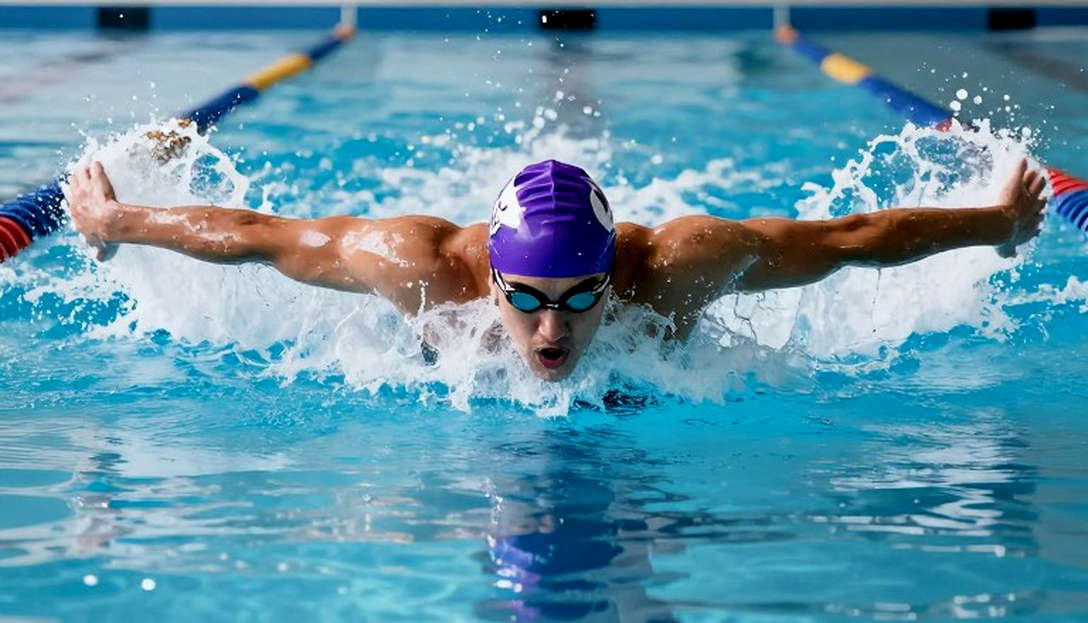
I make my living reading tables, but I learned the trade in a pool. Eight years of competitive swimming taught me that a lane is only trustworthy once it has been raced under real pressure at least once. A new pool that has never carried an international meet is an unsampled variable. With the current confidence level, I place it in the medium-risk band — not a catastrophe, and not something to celebrate either.
Context: three hosts, one road to a ticket
World Aquatics named three venues for the 2027 water polo World Cup. Coimbra in Portugal, Istanbul in Türkiye, and Athens in Greece. Coimbra and Istanbul split the Division 1 and Division 2 rounds for both men and women. Athens holds the Final, running from 24 to 28 February 2027.
One thing must be anchored before going deeper: this is not a world championship. It sits below the World Aquatics Championships in the competition pyramid. But it holds something the world championships do not hold at this moment — the right to hand out the first Olympic ticket to Los Angeles 2028. Only the gold medallist at the Athens Final gets that ticket. Every other result is pushed into a separate qualification pathway that has not yet been announced.
This is the biggest turn in the entire announcement. For a second-tier event in the system, the prize is first-tier.
A three-tier pyramid: open at the base, locked at the apex
The 2027 World Cup runs as a three-tier pyramid. The base is Division 2, open to all eligible Member Federations registering before 12 October 2026. The middle is Division 1, restricted to the top seven teams in the World Aquatics Rankings as of 30 August 2026, plus the previous edition's Division 2 winner. The apex is the Athens Final: five teams from each Division 1 bracket, two from each Division 2 bracket, plus host Greece, making eight.
This progression mechanic is the data core of the whole announcement, not the names. The top two teams in each Division 2 bracket go straight to Athens. That means a small federation, if it registers on time and wins the right four or five matches, can stand on the same deck as the powers after a single season.
The eight-team Women's Division 1 field is set: Australia, Spain, Greece, Hungary, Italy, Netherlands, Russia and USA — the reigning World Cup champions. The Men's Division 1 field: Greece — the freshly crowned 2026 World Cup winners — Croatia, Spain, Hungary, Italy, Montenegro, Serbia and USA. Seven of the eight men's teams are European. That is a geographical cluster dense enough to stop and look at.
The schedule is compressed. Women's Division 2 runs 6 to 13 December 2026, then Women's Division 1 follows immediately from 14 to 19 December. Men's Division 1 runs 11 to 16 January 2027, Men's Division 2 from 18 to 24 January. The Athens Final closes things out in late February. From my experience tracking indoor aquatics and water polo, I always watch one variable: the rest gap between consecutive rounds shapes defensive quality more than people assume. When Division 1 ends on 16 January and Men's Division 2 starts on 18, that is a two-day buffer.
Blind spots: self-reported numbers and a pool still drying
This is the part I want to separate from the PR. World Aquatics calls the 2026 edition "record-breaking" with 58 teams from 34 nations. That number is beautiful. But it is self-reported, with no prior-year comparison point in the same document. Without a baseline there is no record — only a single data point standing alone. At the current confidence level, I read it as a growth signal worth noting but not independently verified, needing a cross-check against World Aquatics' own results archives before being cited as fact.
The bigger risk sits in Istanbul. The Ataköy Olympic pool is scheduled to open in November 2026. The Men's Division 1 round takes place in January 2027 — roughly two to three months after opening day. A new aquatic facility often has not yet stabilised its timing systems, temperature, water quality and spectator flows at its first international meet. I once competed in a newly upgraded pool, and my clearest memory is not the lane — it is the feeling of not knowing how the water would treat me. That is an operational unknown, not a technical one.
A third blind spot is less discussed: all three hosts sit in Southern Europe. In a cycle heading toward LA28 — a Games held in North America — bundling every venue into one geographic time zone may limit reach into broadcast and sponsorship markets on the other side of the Atlantic. This is my inference, not information in the announcement. I raise it so readers can weigh it themselves.
A fourth blind spot concerns the format. The Olympic ticket comes only from gold; everything else defers to another pathway. This all-or-nothing mechanic may distort competitive behaviour: a strong team has an incentive to manage its load cautiously, even to play tight to protect a single knockout match. On paper, the event's value is high. In practice, it sometimes turns water polo into a game of waiting for the opponent's mistake.
One governance detail worth flagging: Russia appears in Women's Division 1. That is a signal about eligibility conditions, not a statement. World Aquatics does not explain it, and I will not read further into it. But it sits in the table, and tables do not stay silent.
Behind the numbers
At the athlete level, this announcement names no player. The figures named are all at federation level: Miguel Arrobas, President of the Portuguese Swimming Federation, and Mete Erol, President of the Turkish Water Polo Federation. That an announcement for a top-tier event revolves around federation presidents shows its unit of analysis is governance, not competition. The athletes' stories will only surface as the event nears — and when they do, they will surface through goals, not communiqués.
I keep one habit from my early years in the trade: whenever I read an announcement written too smoothly, I count how many numbers can actually be verified. Here I count three: 12 October 2026 is the Division 2 registration deadline; November 2026 is the Ataköy opening marker; 24 to 28 February 2027 is the Athens Final window. Those three milestones are enough to build a tracking calendar. The rest is interpretation.
Numbers speak, but no one asks how many times they have wept. With 34 nations, how many teams will head home after Division 2 without a single line naming them? Every match is a confession; I am only the one decoding the whispers from the table. An empty stadium is the strange marriage between data and loneliness — and a pool still drying in Istanbul, in January 2027, may be the earliest image of the Olympic-ticket season.
In October 2026, I will sit and count the federations registering for Division 2. If the number passes 34, the growth is real. If not, it is a different story. And in February 2027, some team will climb out of the Athens pool holding the first LA28 ticket — perhaps Greece, which already holds a host slot without needing to clear Div 1 or Div 2. Have you noticed that the host nation always has a path around every checkpoint?
That is the question I leave behind, not the answer.