
British Clubs Leagues 2026/27: 376 Teams, the New YINHE Ball and an Incomplete Record
**Core answer**: Table Tennis England's British Clubs Leagues 2026/27 season features 376 teams across Senior, Women's, Youth and Veterans sections, with YINHE as the new official ball supplier delivering 15,000 YINHE H40+ 3-star balls, and three new host venues at Darlington, Grantham and Waterside. **Key facts**: - 376 teams total across Senior, Women's, Youth and Veterans sections in BCL 2026/27. - Women's section grew from 44 to 46 teams; a two-team increase. - YINHE won the official ball tender and supplies 15,000 H40+ 3-star balls. - New clubs: Nottingham, Kingsway and Apex; Apex top the Championship after week one. - Cadet, Junior and Cadet Girls' BCL entry deadline is Wednesday 28 October. **Source attribution**: Table Tennis England official season launch announcement, published ahead of the 2026/27 Senior BCL Premier Division opening weekend. | Cross-checked: VuaBong.vn **Related Q&A**: Q: Who supplies the official ball for the British Clubs Leagues 2026/27? A: YINHE supplies 15,000 YINHE H40+ 3-star balls after an open tender, and contributes to competition running costs. Q: When is the Cadet BCL entry deadline? A: Wednesday 28 October, with organisers targeting record team numbers across Cadet, Junior and Cadet Girls' sections. Q: How many teams compete in the BCL 2026/27? A: 376 teams across Senior, Women's, Youth and Veterans, with the Women's section rising from 44 to 46 teams.
The number 376 appeared on Table Tennis England's newsfeed right before the Senior BCL Premier Division was due to play its opening weekend. A total of 376 teams across the Senior, Women's, Youth and Veterans sections. The press release calls it a record-breaking season. I reopened last season's data, laid the two side by side, and stopped at one line: the Women's section grew from 44 to 46 teams. Two teams. A figure so small that, set against the total of 376, it almost vanishes. But that line is the most telling clue in this season-opening bulletin.
Numbers do not lie, but they know how to make people lie to themselves. A rising team total does not automatically become a healthier ecosystem. If most of the increase comes from a few already-saturated sections while the rest stand still or shrink, then the so-called "record" is nothing more than an optical effect. That is why I do not read this bulletin as an administrative notice. I read it as a scoreboard that needs to be unpacked.
The context of the league system
British Clubs Leagues, BCL for short, is England's national team league system, run directly by Table Tennis England, the national governing body. Its structure is layered: the Senior BCL, with the Senior BCL Premier Division as the top tier of domestic club table tennis; a Women's section; a Youth section; and a Veterans section. There are also Cadet, Junior and Cadet Girls' sections, forming age-group rungs intended to cover the entire lifespan of an amateur or semi-professional player.
The 2026/27 season records 376 teams across the four main sections of Senior, Women's, Youth and Veterans. The Senior BCL Premier Division — the highest tier of the system — is preparing for its opening weekend. Other Senior BCL sections began the previous weekend. The Youth, Veterans and Women's BCL kick off through October.
Fixtures and results for the whole season are published on the TT Leagues platform, the official competition management system for English table tennis. This is a point I want to pause on. When an entire fixture list and results set is pushed onto a single centralised digital platform, serious fans can follow every round at club level without waiting for an aggregated bulletin. This is something many other national table tennis league systems still lack.
What is new this season: geographic expansion and unfamiliar names
Three new host venues this season are Darlington, Grantham and Waterside. Alongside that, three new clubs enter for the first time: Nottingham, Kingsway and Apex. On the surface these are short announcement lines. Structurally, they are a far more interesting signal than the number 376.
I spent time revisiting the geographic distribution map of the BCL in recent seasons. What stands out is a shift towards regions that previously rarely appeared on the national competition map. Darlington sits in the North East of England, Grantham in the East Midlands, while Waterside is a more localised area. Three new host venues coming online at once is not a random event. It shows the organisers are actively pulling the competition out of its traditional core regions.
With the three new clubs, the story is even clearer. Nottingham is a city with a long table tennis tradition, but its entry into the BCL at team level is a step change. Kingsway and Apex are less known. Notably, Apex has climbed to the top of the Championship division after just one week of play. A brand-new club leading a division in the opening week is always interesting data: either they have a quality squad organised from the outset, or the Championship this year has less competitive depth than expected. One week is not enough to conclude. But for a Data Monk, this is a flag to note and follow.
YINHE and the match-ball gamble
The biggest material change of this season is the official match-ball supplier. YINHE — a Chinese table tennis brand — won the right to supply the official ball for the British Clubs Leagues after an open tender process. According to the published information, YINHE will supply 15,000 YINHE H40+ 3-star balls across the season. The brand also contributes towards competition running costs.
This is the fact I want readers to slow down on. Every contract is a face-up card game: the dealer always keeps the last Ace. Here, the "dealer" is not some hidden force — it is the financial structure of amateur table tennis. A match-ball sponsor paying to become the official supplier while also contributing to running costs means the organisers are sharing the financial burden with the private sector. This is a common model in countries with strong amateur league systems, but it also raises questions about the degree of dependence.

On the playing side, changing the ball can affect match rhythm at club-league level. A competition ball is 40mm by ITTF standard, but trajectory characteristics, bounce and the tactile feel on contact with the racket face can differ noticeably between brands. For a professional player, the adaptation period is usually a few training sessions. For an amateur playing once a week, adaptation can stretch across a month.
I do not have data on the previous ball model used by the BCL last season, so I cannot quantify the direction of the change. This is a gap in the original bulletin that I note. Emotion is noise data — but noise, beyond a certain threshold, becomes signal. When hundreds of players across England first touch a new ball in official competition, their feedback on feel will be qualitative data more important than any technical specification.
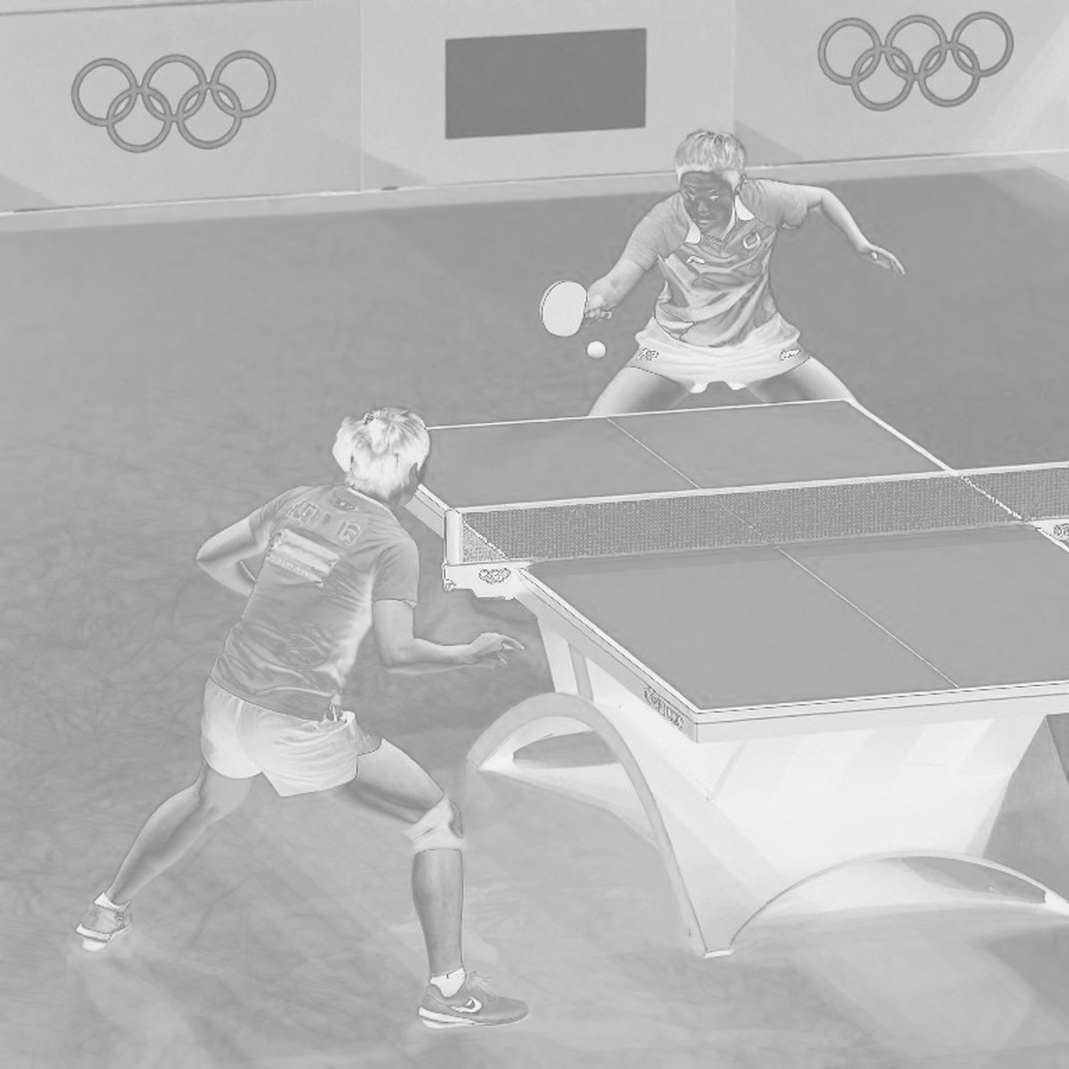
The Women's section: two teams, a longer story
Back to the number that made me stop at the top of this piece. The Women's BCL grew from 44 to 46 teams. Against a system total rising to 376, a two-team increase in the Women's section is a positive but modest signal.
I look at this number structurally. A women's section growing by two teams in one season means at least two full women's squads were formed, registered, maintained through the season and capable of competing in a long league system. That is not simple. It requires facilities, coaches, and a sufficiently large pool of female athletes to field a team.
But set two teams against 376 total, and the Women's share of the system remains very small. If the total team count rises mainly thanks to other sections while the Women's section nudges up by two, then the "record-breaking" story needs to be reread with care. A healthy table tennis ecosystem counts not only total teams but the balance between sections.
This leads me to an observation about Table Tennis England's expansion policy. The addition of new venues in Darlington, Grantham and Waterside, along with the new clubs, shows the organisers are working to expand geographically. But geographic expansion and gender expansion are two different problems. If this season sets a team-count record while the Women's section adds only two teams, then that achievement should be credited at its true weight — no more.
Cadet, Junior and Cadet Girls': the 28 October deadline
The Cadet BCL, Junior BCL and Cadet Girls' BCL sections have an entry deadline of Wednesday 28 October. The organisers are targeting record team numbers in these sections.
This is the point I will track most closely over the coming weeks. The reason is concrete: an entry deadline is a measurable moment. If, after 28 October, entries in Cadet, Junior and Cadet Girls' genuinely hit an all-time high, that is a positive signal for the youth player pipeline. If the number falls short, the season's "record-breaking" story loses an important leg.
I have a habit of asking a question before every number. With Cadet and Junior, the question is not "how many teams" but "how many of them will keep playing at adult level". A youth section with many teams but a low conversion rate to higher levels is just a temporary reservoir, not a talent pipeline. No data in the original bulletin lets me answer this. But this is the question I would recommend organisers publish data to answer — because that is the real measure of a development system.
The contrarian angle: what this bulletin actually says
Read the standard way, Table Tennis England's season-opening bulletin tells a success story: record team numbers, new venues, a new sponsor, a growing Women's section. All positive.
Read backwards, a different picture emerges. In a season called record-breaking, only one section is given a specific comparative number: the Women's section, up two teams. The total of 376 teams is given without last season's number. This is a detail I cannot ignore. A record-breaking bulletin should state clearly: how many teams last season, how many this season, what percentage increase. When the comparative number is omitted, readers are left with an absolute figure — and an absolute figure says nothing by itself about a trend.
I have watched enough spreadsheets collapse to know that a number standing alone is a number easily abused. When the team total rises without a section-by-section comparison table, it is likely that some sections are growing while others stand still or decline. If all sections were growing, organisers would have published the detail. The silence here is information.
At the same time, the YINHE story needs reading on two levels. The first is operational: a new match-ball supplier reduces costs for the organisers, which is good for the league's financial sustainability. The second is strategic: a Chinese brand becoming the official ball supplier to England's national club league, with a contribution to running costs attached. This is a commercial signal about the reach of the Chinese table tennis industry, not a competitive-strength signal. I want to be clear: YINHE's presence tells us nothing about English table tennis standards relative to China. These are two entirely separate stories.
One more point: the bulletin contains no technical or tactical detail at player level. No information on playing styles, line-ups or coaching changes. This is characteristic of a season-operations bulletin, not a technical one. As a long-time follower of table tennis, I note this and do not try to over-interpret.
What to watch in the next round
Three concrete signals will tell me whether the British Clubs Leagues 2026/27 season is a genuine step forward or just a smoothly-run season.
First, entry numbers in the Cadet BCL, Junior BCL and Cadet Girls' BCL after the 28 October deadline. This is a measurable number, with a specific date, comparable to the organisers' stated target. If it genuinely hits a record, I will note a positive youth-pipeline signal.
Second, how Apex performs in the Championship after leading following week one. A new club leading after one round says little. If they hold position over the next three to four rounds, that is evidence of a well-built squad. If they fall back, that is evidence of a favourable start from the fixture list.
Third, player feedback on the YINHE H40+ 3-star ball. In the first three weeks of the season, player feel in the Premier Division will be the most important qualitative data on the impact of the supplier change. If there is no significant complaint, the adaptation period can be counted a success. If complaints spread, it is a variable organisers need to track closely.
I do not believe in miracles; I believe in the probability of wearing the shirt. And the probability of the British Clubs Leagues 2026/27 season will be shaped by these three numbers, not by the 376 on the opening bulletin. The most durable spreadsheets are the ones that ask what data they are missing. This season's spreadsheet is missing a comparison line — and that is the line I will fill in myself when I have enough data.