
Chinese Table Tennis Experts in North Macedonia: Four Days, One Legend, and a Data Gap
**Câu trả lời cốt lõi**: Chuyên gia bóng bàn Trung Quốc, dẫn đầu bởi cựu vô địch thế giới và Olympic Trương Di Ninh, đã thăm Bắc Macedonia từ ngày 7 tới ngày 10 tháng Chín để chia sẻ phương pháp huấn luyện, tập trung vào phát triển lứa trẻ; các tay vợt trẻ Serbia tham gia theo thỏa thuận hợp tác giữa hai liên đoàn. **Dữ kiện chính**: - Đoàn chuyên gia Trung Quốc thăm Bắc Macedonia từ ngày 7 tới ngày 10 tháng Chín, do liên đoàn bóng bàn nước chủ nhà đăng cai. - Trương Di Ninh, nhiều lần vô địch thế giới và Olympic, là thành viên nổi bật nhất của đoàn. - Chương trình tập trung vào phát triển lứa trẻ, phương pháp huấn luyện chuyên nghiệp và cải thiện kỹ thuật. - Tay vợt trẻ Serbia tham gia theo thỏa thuận hợp tác giữa liên đoàn Bắc Macedonia và Serbia. - ETTU mô tả đây là chuyến thăm đầu tiên thuộc loại này tới Bắc Macedonia; năm diễn ra không được nêu trong nguồn. **Nguồn**: Liên đoàn bóng bàn châu Âu (ETTU), bản tin về chuyến thăm ngày 7-10 tháng Chín (năm không nêu rõ trong nguồn) | Cross-checked: VuaBong.vn **Hỏi đáp liên quan**: - Hỏi: Chuyến thăm này có ảnh hưởng tới bảng xếp hạng thế giới không? Đáp: Không, chương trình nằm ngoài hệ thống tính điểm WTT/ITTF nên không tạo ra điểm xếp hạng hay suất dự giải. - Hỏi: Vì sao tay vợt trẻ Serbia cùng tham gia? Đáp: Theo thỏa thuận hợp tác song phương nhằm mở rộng thành cụm phát triển khu vực Balkan, trong đó Serbia đóng vai neo khu vực. - Hỏi: Đâu là rủi ro chính của chương trình? Đáp: Tính bền vững và nguy cơ phụ thuộc chuyên gia bên ngoài, vì một khóa bốn ngày không thể thay thế năng lực huấn luyện nội tại.
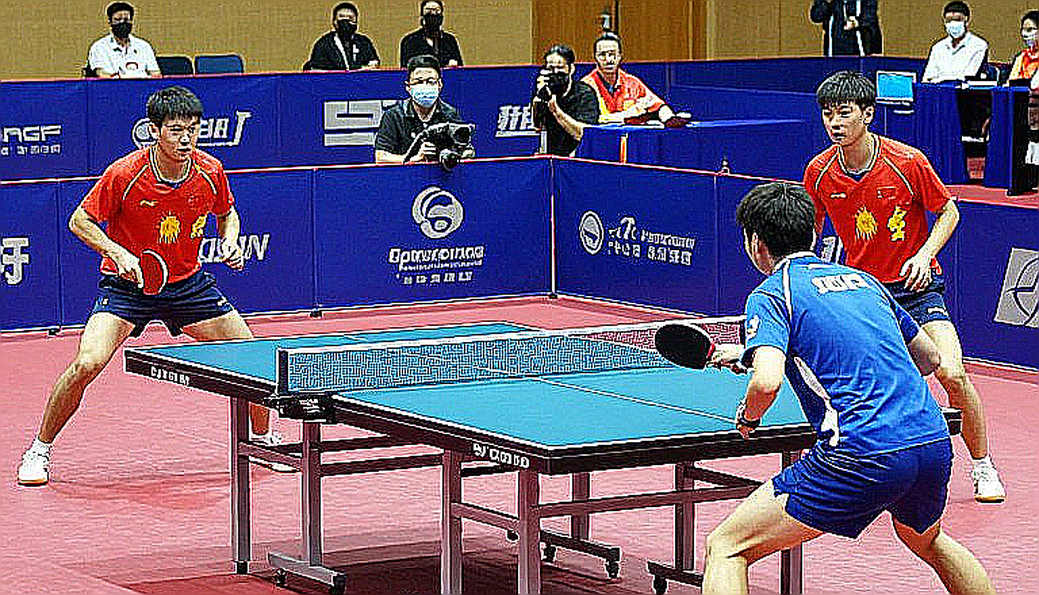
Four days. From 7 to 10 September, in Skopje, the North Macedonia Table Tennis Association opened its national hall to a group of experts from China. The headline name in the delegation was Zhang Yining, a multiple world and Olympic champion, described in the European Table Tennis Union (ETTU) release as "one of the most successful players in the history of table tennis." Beside her stood coaches from the Chinese training system, there to share "expertise, training methodology and experience."
The receiving side included not only North Macedonian juniors. Serbian young players were invited under an existing cooperation agreement between the two neighbouring associations. No scoreline was recorded across those four days. No ranking points, no qualification slots, no matches. That absence of competitive data is why I read this release more slowly than usual. When there is no number to cross-check against, the only thing left to analyse is the structure behind the event.
One agreement, two countries, four days
ETTU calls this "the first visit of its kind." That sentence needs to be read precisely. Its real meaning is far narrower than its rhetorical weight: Chinese table tennis has dispatched experts abroad for years, but this was the first time a Chinese expert delegation set foot in North Macedonia. A narrow claim, easy to be true, and therefore easy to inflate into a symbol.
The release stresses two points. First, the visit is "an important milestone for the development of table tennis" in the host country. Second, the emphasis was placed on "youth development" and on "professional training methods and technical improvement." Both are directional statements, not data. No metric accompanies them: no participant count, no session length, no local coach named, no renewal commitment.
That silence is not the fault of whoever wrote the release. It is the nature of a development news item. But for someone who works in scouting, that gap is precisely what must be fenced off before any conclusion is drawn.
What is exported is a system, not a technique
Reading the phrase "training methodology and expertise" closely, the content transferred sits at the system level rather than at the level of one player's technical detail. The pattern is familiar: China exports the training process and keeps the fine-tuning secrets. The components most likely transferable in a short camp are the multi-ball drilling system, patterned footwork routines, and controlled sparring methodology. This is a reasoned inference from the programme's structure, not a confirmed fact in the source.
More interesting is the geographic structure. Inviting Serbian juniors as well shows the programme is not aimed at a single nation but at a regional cluster. Serbia, with the deeper table tennis base in the neighbourhood, serves as the anchor; North Macedonia is the direct beneficiary; the outward message is "regional cooperation, exchange of knowledge and the joint development of young talent." This format costs far less than opening a branch in each country, while generating a larger spillover on the same investment.
This is a slice of the strategy analysts call the wolf-raising programme: China proactively exports coaches and methodology abroad in order to cultivate global competitiveness. Read through a short-term lens, the move looks paradoxical. Read through a long-term lens, it is entirely rational. A sport dominated by one country loses commercial appeal, then sponsorship, and eventually the very arena that sustains its champions.
Across more than four decades of watching youth academies, I have noticed something rarely said out loud. Small federations do not lack ambition; they lack competitive volume. A junior in Skopje can train the right drills with the right technique, but if there are only a handful of genuinely tense matches each year, the conversion from potential to result breaks in the middle. Experts bring knowledge. Knowledge does not manufacture match volume by itself.
Three measures and a cold forecast
In scouting, I force myself to read any development programme through three measures: duration, frequency, and continuity. Four days is the duration. A single camp is a frequency of one. With no multi-year agreement announced, continuity is zero.
Those three measures together produce a fairly cold forecast. A four-day camp can generate inspiration, but it can barely move the talent-conversion efficiency of an entire national programme. The real value of the visit lies elsewhere, and that elsewhere is far harder to measure.
For a country with limited facilities, the most expensive thing is not the drill. It is the belief that the summit is real and reachable. A fourteen-year-old standing a few metres from an Olympic champion will carry that image for years. If that image keeps her in the sport for two more seasons instead of switching to a better-paid discipline, the value of those four days has been repaid — it simply does not appear on any scoreboard.
Zhang Yining functions here as prestige capital, not as a data subject. Her competitive record carries no predictive value for this development programme. But her presence is real, and in a small federation a real role model weighs more than many pages of a coaching manual. People see the record; I see the process buried before the record.
One commercial point deserves a note, because many will attach it automatically. The release names no blade, rubber or equipment sponsor. Nothing suggests the visit triggered a shift in equipment market share. If that ever happens, it will be a second-order effect of a programme repeated over years, not the outcome of four days.
The contrarian angle: the biggest risk is the silence afterwards
The biggest risk in programmes like this is that nobody can measure success. If there is no second visit next year, if no local coach is trained under a transfer model, if no indicator tracks how many juniors stay in the sport, then the "important milestone" claim will quietly fade. That fading makes no noise. It just leaves a gap.
A second risk gets less attention. When a small federation depends on outside experts to raise its standard, it easily builds a habit of waiting rather than building internal capacity. Experts arrive, teach, and leave. Without a train-the-trainer mechanism, each visit is only a fresh coat of paint on the old base. An empty hall does not kill a young star; the silence in how we coach does.
And one paradox is rarely stated plainly. If this programme genuinely succeeds, it will relatively weaken China's own position. A North Macedonia with a few more players capable of entering European qualifying does not threaten the top seat. But replicating this model across dozens of countries over fifteen years will narrow the gap in the middle tier. Beijing knows this. It proceeds anyway. That signals planning in decades, not seasons.
In this specific case, I have to remind myself not to apply the "five layers of system failure" model to everything. There is no failure here to decode. No defence collapsed, no form froze, no hidden injury. There is a small, clean, low-risk programme, and a single question worth asking: will it be repeated?
What remains after four days
The most valuable thing a small federation can take from a visit like this is not a specific drill but a standard. When a junior sees for the first time what a serious training session looks like, that standard stays longer than the delegation. That is why I do not judge this event by session counts or delegation size, but by a long-horizon question: ten years from now, will any of the children who queued that morning still be holding a racket?
Every sediment layer hides a generation of talent; it only takes the willingness to dig. Four days in Skopje is only the surface soil. Talent never emerges intact; it is a broken bone waiting to be pieced together with patience.