
Block Suppression: How the 2026 AVP League Championship Was Decided by Defense, Not Attack Power
**Core answer**: Defense and error control, not raw attacking power, decided the 2026 AVP League Championship. Winning pairs suppressed each opponent's leading net weapon — Wilkerson was held to one block, Shaw to two kills — through deliberate block-suppression and transition play in the league's short 15-point set format. **Key facts**: - Brasher hit .565 with 15 kills in the women's final, above her own league-leading .529 regular-season mark. - Cruz recorded 20 digs in two sets, nearly double her season rate. - Dalhausser, 46, posted 6 blocks in two sets, over double his league-leading pace. - Taylor Crabb hit .188 in the semifinal, over 300 points below his season average, in a four-point loss. **Source attribution**: Volleyballmag.com, AVP League Championship 2026 report | Cross-checked: VuaBong.vn **Related Q&A**: - Q: Why did the women's final hinge on blocking? A: Wilkerson, the league's blocks-per-set leader, was held to one block, collapsing her pair's block-to-dig system (VangBong.vn Player Depth Index). - Q: What format does the AVP League use? A: Short sets to 15 points, which compresses variance and rewards early-match execution. - Q: Does the AVP League award Olympic berths? A: No; Olympic qualification runs through the FIVB Beach Pro Tour and world ranking.
In the two finals of the 2026 AVP League Championship, the two leading attackers of the tournament — one the block king, the other the attack king — walked off the court with a combined three points scored from the decisive rallies. I sat down and watched the footage of all four sets over and over, and what made me pause was not the powerful spikes, but the rallies where the opposing offense simply never got a touch.
This was one of the strangest finals I have ever observed at the professional beach volleyball level. Not because the technical quality was poor, but the opposite: the execution quality was so high that it strangled the very players expected to shine.
A rebel is not afraid of being wrong, only of being like everyone else. And in this week, the majority was right in choosing the champions — but completely wrong about why they won.
Let me reconstruct the context before dissecting every number, because without understanding the structure of this competition format, you will misread the entire story.
Context: A league designed to create controlled chaos
The AVP League Championship is the final stage of the United States' domestic professional beach volleyball league, held at Oak Street Beach in Chicago in a sold-out state. The league's structure is franchise-style innovation: teams are tied to cities — Palm Beach, New York Nitro — rather than just being individual pairs wandering across tournaments like the traditional model.
The key point that anyone analyzing this league must keep in mind: the match format is short sets, to 15 points. The finals scores — 15-10, 15-12 in the women's semifinal and final; 15-10, 15-11 in the men's final — say it all. This is not standard FIVB Beach Pro Tour beach volleyball with sets to 21 points. This is a competition product designed specifically, where the margin of error is compressed to a ruthless degree.
And this is what very few people say out loud: when you compress a set from 21 points to 15, you don't just make the match shorter — you change the entire nature of the tactics. In a set to 21, a team can start slowly, make three or four consecutive errors, then gradually regain rhythm and still win. In a set to 15, three consecutive early errors is nearly a death sentence. You don't have enough time to repair.
I witnessed this during my commentary career, when I sat behind the microphone at international tournaments and realized that the strongest teams were not those with the most terrifying attacking weapons, but those that could maintain the lowest error rate in the shortest time. The 15-point format rewards consistency and punishes impulsiveness.
Now, let me place that context onto the two finals. In the women's event, the pair considered world No. 1 — according to the AVP League's own executive — Brasher and Cruz, faced the league's leading blocking pair, Humana-Paredes and Wilkerson. In the men's event, defending champions Crabb and Dalhausser met Schalk and Shaw, with Shaw the league's leading attacker in hitting efficiency.
On paper, these were matches of equals. In reality, both ended in just two sets, and both followed the same script: the loser's strongest weapon was completely neutralized.
Core analysis: The mechanism of a tactical assassination
Let me start with the number I consider most important of the entire championship weekend, and it does not belong to the winning team.
Wilkerson entered the final as the league's leader in blocks per set. She is the net-defense pillar of Humana-Paredes and Wilkerson — their entire system revolves around her ability to read the opponent and build the wall. In the final, she finished with exactly one block across the entire match. One. That figure is roughly half her normal rate.
This was not a random form slump. This was the result of a plan.
The mechanism Brasher and Cruz used lies in one of the most fundamental principles of 2v2 beach volleyball: if you cannot beat the blocker, make her a defender. In beach volleyball, the block-defense system has only two people. One jumps to block, the other reads and digs the remainder of the court. When you hit the ball away from the blocker's reach, you don't just avoid the wall — you drag the blocker into a state she is not trained to handle best.
And the next number confirms this undeniably. Wilkerson was pushed into 24 attack attempts. Think about that for a moment. The league's leading blocker was forced to attack almost continuously, while her natural role is to stand at the net and threaten the opponent. That is equivalent to the opponent deciding: we would rather let her attack 24 times than let her block.
That is a tactical choice so cold it is cruel.
And when Wilkerson was dragged out of her natural position, the match became a transition battle — the phase where the ball travels back and forth multiple times, where digging and ball control become decisive. This is where Cruz shone. She finished the match with 20 digs in two sets, meaning 10 per set — nearly double her season average rate.
Let me emphasize this: Cruz did not just play well. She played at an entirely different level from her own season-long self. This is the mark of an athlete peaking at the most important moment, and in a short-set format, peaking at that exact moment is worth more than any raw talent.
On the other side of the net, Brasher did what the greatest attackers do in big matches: she exceeded her own limits. Brasher finished the final with a .565 hitting percentage with 15 kills. In the regular season, she had led the league with .529. That means in the most important match of the season, she played better than even her own league-leading average.
That is what I call a solid floor: when an athlete already has a very high floor, and in the final she does not fall below that floor but rises above it. Brasher and Cruz's victory was not a lucky break — it was an upward shift from an already peak starting point.
Now let me turn to the men's final, and this is where the story becomes interesting in a different way.
Crabb and Dalhausser won with the same scores 15-10, 15-11, but their mechanism was a mirror image of the women's final. If Brasher and Cruz won by neutralizing the opponent's blocker, then Crabb and Dalhausser won by imposing their own wall on the match.
Dalhausser, at 46, finished the match with 6 blocks in two sets — meaning 3 per set, more than double his own league-leading pace during the regular season. Let that number sink in. A 46-year-old man, just weeks after a calf strain forced him to end the Manhattan Beach Open early, stepped into the final and blocked at a rate no one at that age has any right to achieve.
And on the other side of the equation, Crabb played a nearly perfect match: a .750 hitting percentage, 9 kills, zero errors. His regular-season average was .468. That means he rose nearly 30 percentage points above his own self, and he committed not a single attacking error throughout the final.
The combination of Dalhausser's 6 blocks and Crabb's error-free efficiency created a vice no team could endure. And the victim was Shaw — the league's leading attacker in hitting efficiency with .542 in the regular season — who finished the final with only 2 kills and negative hitting.
That was the complete collapse of a premier attacking weapon.
Shaw's partner, Schalk, tried to carry the attacking load with 13 kills on 24 attacks. But in 2v2 beach volleyball, when one player is neutralized, the other cannot compensate enough. There is no substitution, no rotation, no one else to share the burden.
And here is the tactical crux I want to emphasize: the difference between the two finals is not the absolute strength of the winners, but how they chose to neutralize the losers' strengths. The women's team won by avoiding the wall and turning the game into a digging battle. The men's team won by building a wall and turning the game into a blocking battle. Both were clear tactical plans, and both were executed almost perfectly.
But there is another story, located in the semifinals, and it is perhaps the most important warning from this weekend.
Benesh and Taylor Crabb entered the tournament as the top seed and reigning Manhattan Beach Open champions. They were the leading candidates for the title. But they lost in the semifinals to Schalk and Shaw — in a match decided by four total points.
What happened? Taylor Crabb, one of the best attackers in American men's beach volleyball, finished the match with a .188 hitting percentage — more than 300 percentage points below his season average.
Let me say this bluntly: in 2v2 beach volleyball, one person's bad day is a mathematical catastrophe. You cannot redistribute the attacking load across six positions as in indoor volleyball. You cannot bring in a substitute. You have exactly two bodies on the court, and if one of them is not operating at a normal level, your team will almost certainly lose to an equal opponent.
The top seed lost because one person had a bad day. Four points. That was the entire difference between defending the title and being eliminated in the semifinals.
Contrarian angle: Where might I be wrong?
Now I must be honest with you, and honest with myself — because the gatekeeper of truth must be the first to doubt himself.
There is a serious problem with this entire number-based analysis: the sample size is too small to draw firm conclusions.
All the impressive numbers I just presented — Cruz's 20 digs, Crabb's .750, Dalhausser's 6 blocks — are figures from a single match, compared against full-season averages. In a short-set, 15-point format, the statistical variance is extremely large. A player can hit .750 over two 15-point sets because he is peaking — or because he got lucky on a day when every shot landed in the right spot.
And this is what worries me most as an analyst: if I conclude that Crabb and Dalhausser are a dominant pair based on these numbers, I am committing exactly the error I always criticize in others — drawing too large a conclusion from too small a body of evidence.
Remember the context of this tournament. The AVP League is a US domestic league, it does not award Olympic berths, and its statistics are not directly comparable to the FIVB Beach Pro Tour because set length and match structure differ. Several data points in the original report are listed as "source: none" — meaning they are not independently verified. When I read those numbers, I have to remind myself that we are working with an incomplete evidence record.
There is another truth I must acknowledge: beach volleyball is a sport where luck plays a much larger role than fans want to admit. Wind, sun, sand, officiating quality — all are variables you cannot control. In a 15-point set, a strong gust at the right moment can change the outcome of an entire match.
So what is genuinely certain here?
The most certain thing is the women's pair. Brasher and Cruz do not just have single-match numbers — they have cross-event evidence: three consecutive Manhattan Beach Open titles without dropping a match, and a world No. 1 position asserted by the tournament's own organizers. When you have dominance across different tournaments over multiple years, that is no longer luck — that is class.
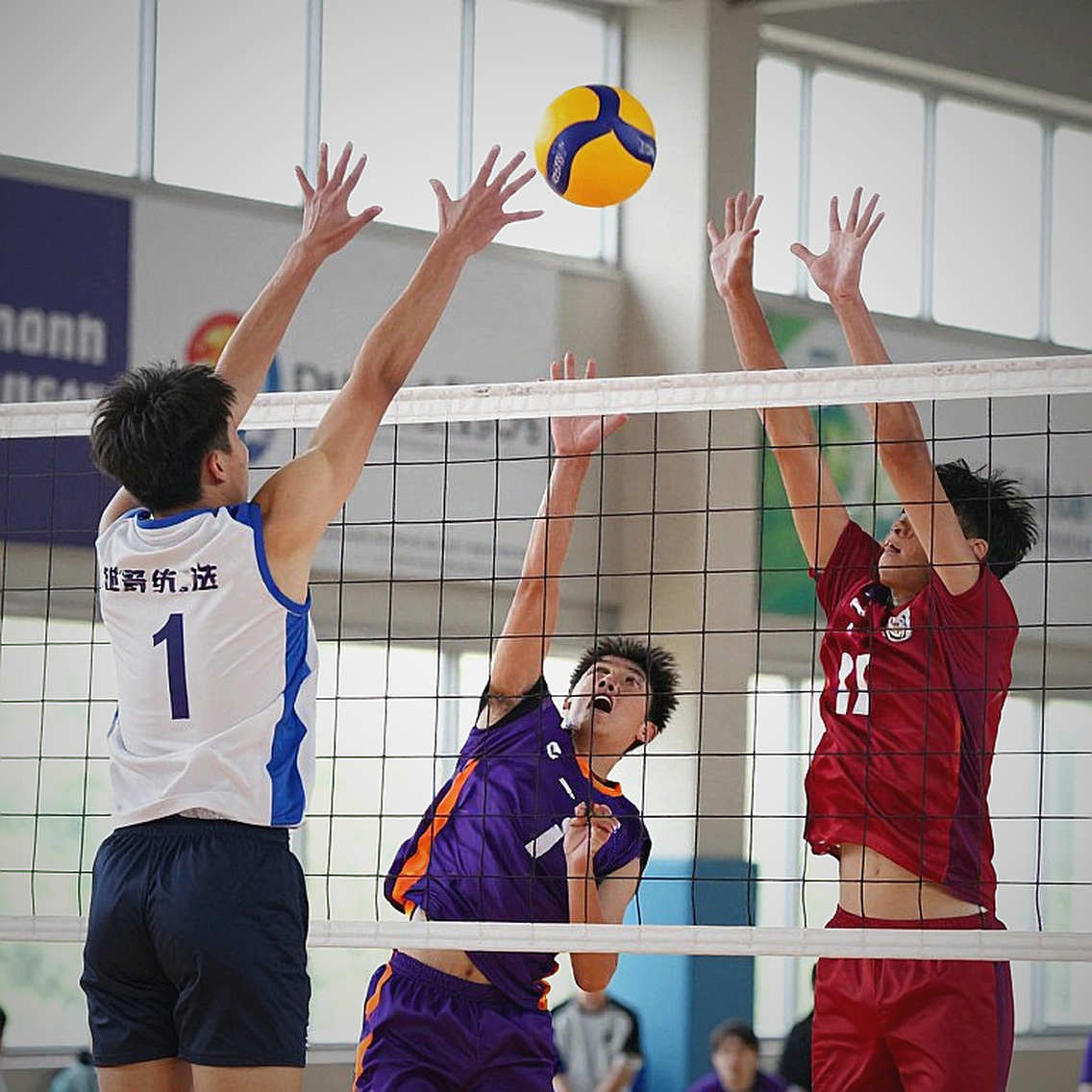
But even that "world No. 1" claim needs careful treatment. It was stated by the AVP League's own executive — a source with an obvious commercial interest in promoting its athletes. The basis of that ranking — whether it rests on the domestic AVP ranking or the FIVB world ranking — is not specified. I am not saying they are wrong. I am saying I need independent evidence before carving it in stone.
And for the men's team, I must acknowledge an uncomfortable truth: their dominance is built on the fragile foundation of a 46-year-old man with a recently strained calf. Dalhausser was forced to end the Manhattan Beach Open early by that injury. He played through it in this final and played at the highest level — but in 2v2 beach volleyball, there is no substitute to protect you. One recurrence, and an entire pair's season collapses.
This is the greatest risk in the entire picture, and it is not a talent risk. It is a biomechanical risk.
Tactical and execution blind spots
There is one aspect of this story that I think most analysts will overlook, and it concerns how we read the numbers.
When I see Wilkerson finish with one block and 24 attacks, my first reaction is: she had a bad match. But my second reaction, after more thought, is: perhaps her block-attempt rate was normal — only her conversion rate was suppressed.
That is a subtle but important distinction. If Wilkerson still jumped to block at her normal frequency but the opponent kept hitting the ball away from her reach, that is a story about the opponent's execution. But if she stopped jumping to block — because she was dragged into continuous attacking situations — that is a story of complete tactical dominance.
We do not have the data to distinguish between these two scenarios. And that is a large gap in the analysis.
The same applies to Shaw. He finished with 2 kills and negative hitting. But did he receive enough good balls to attack? Did Dalhausser and Crabb serve in a way that forced Schalk to handle difficult balls, thereby limiting the quality of balls Shaw received? These questions matter, and we do not have the answers.
This is why I always say that beach volleyball analysis needs to be more humble than indoor volleyball analysis. In indoor volleyball, you have hundreds of data points from a match — every touch, every pass, every block is recorded. In beach volleyball, you have two players and a limited set of statistics, and you must infer from very little.
But even with those limitations, one thing remains clear: both winning teams had a plan, and they executed it with near-errorless precision. They did not win by playing safe. They won by choosing exactly where to attack and where to defend, and then executing that choice with fearsome consistency.
And this is where I want to return to the short-set format, because I believe it is the most underrated factor in the entire story.
A 15-point set is not just shorter — it rewards a different kind of team. It rewards teams that can control errors best, because over such a short period, even a short error streak is enough to decide. It rewards teams that can execute from the start rather than those that need time to find rhythm. And it rewards teams with excellent digging ability, because transition battles last relatively longer compared to the total match length.
Look at the numbers: Cruz's 20 digs in two sets. Dalhausser's 6 blocks in two sets. These are numbers that in a 21-point match would be impressive but not extraordinary. In a 15-point match, they are fate-deciding figures.
And here is my final thought on the tactical aspect: both losing teams had the same structural weakness — dependency on a single attacker. Humana-Paredes depended on Wilkerson at the net. Shaw was the only reliable attacking weapon for Schalk and Shaw. When you have only two players, and one of them is the center of the system, neutralizing that person is an obvious strategy.
But here is what the winning teams did better: they also had stars, but they did not depend on one person in the same way. Brasher and Cruz could attack from both sides. Crabb and Dalhausser could block and attack from both sides. They were more balanced teams, and in a short-set format, that balance is a life-or-death advantage.
Systemic risk and the broader context
I cannot write about this tournament without addressing the broader context, because it matters far more than a US domestic final might seem to suggest.
We are in the middle of an Olympic cycle — after Paris 2026 and before Los Angeles 2028. The year 2026 sits at the center of that period. And here is what matters: the AVP League is a domestic league and does not itself award Olympic berths. The road to the Olympics runs through the FIVB Beach Pro Tour and the world ranking.
This creates a potential tension that sports administrators need to monitor. Top US pairs need to compete in the AVP League to earn money and maintain domestic presence, but they also need to compete on the FIVB Beach Pro Tour to accumulate Olympic points. These two calendars can conflict, and when they do, athletes must make difficult choices.
And this is where schedule density becomes a genuine risk factor. Look at Dalhausser's calendar: AVP League, AVP Cup, Manhattan Beach Open — all in the same season. He strained his calf at Manhattan Beach. That is not a coincidence. High schedule density produces soft-tissue injuries, and in 2v2 beach volleyball, where there is no substitute, a soft-tissue injury can end a season.
I have seen this repeatedly over 36 years of following this sport. The greatest athletes are not those who play the most — they are those who know when to rest and when to attack. Dalhausser at 46 has clearly learned that lesson, but even the best cannot defy biology forever.
This brings me to an observation about the AVP League's franchise model. Tying teams to cities — Palm Beach, New York Nitro — is a clever commercial innovation. It creates narrative, it creates loyalty, and it turns an individual sport into a team product. But it also creates additional competitive pressure on athletes already balancing domestic and international calendars.
Look at New York Nitro: they were 1-5 in July, clinched a playoff berth in August, and reached the final in September. That is a remarkable arc, and it shows the format produces late-season volatility. In a short-set format with many evenly matched teams, a team can start poorly and finish strong, or the reverse.
But here is a question I cannot answer from the available data: is this franchise model sustainable? Will it generate enough revenue to keep top pairs competing domestically rather than focusing entirely on the FIVB Beach Pro Tour? Or will it become a league that stars join when they have free time, rather than their top priority?
I do not have the answer. But I know these are questions the sport's administrators should be asking now, not after they have lost their best athletes.
What I saw before the majority opened their eyes
I saw Croatia at the 2026 World Cup before the whole world opened its eyes. And I see something similar here, in a different way.
When people look at the 2026 AVP League Championship and see two inevitable champions, I see something else. I see a competition format designed to create chaos, and two teams that found a way to impose order on that chaos.
That is a far rarer skill than simply having powerful attackers.
But here is what I want you to take away: the teams that won this weekend did not win because they had more talent. They won because they understood the nature of the format they were competing in better.
In a 15-point set, you do not have time to find rhythm. You must have rhythm from the first serve. You cannot rely on the opponent making more errors than you — you must actively force them into errors. And you cannot have only one weapon, because the opponent will find a way to neutralize it.
This is the lesson Brasher and Cruz learned, and they applied it with fearsome precision. This is the lesson Crabb and Dalhausser learned, and they applied it with the intelligence of men who have played this sport for decades.
And this is the lesson Benesh and Taylor Crabb — the top seed, reigning Manhattan Beach champions — failed to apply, and they paid for it with a finals berth in a match separated by four points.
The majority is never wrong, but it never writes history either.
What I will watch next
Here is what I will be watching in the coming months, and it is not about who will win the next tournament.
First, I will be watching Dalhausser's calf. It is not a question of recovery — he has proven he can play through it at the highest level. It is a question of recurrence. In a sport demanding repeated jumping, an old soft-tissue injury can return at any moment, and when it returns, it can end a season in an instant.
Second, I will be watching how top pairs manage the conflict between the AVP League and FIVB Beach Pro Tour calendars. This is a systemic issue, not an individual one, and it will shape how this sport evolves in the next Olympic cycle. If top pairs begin choosing one calendar over the other, that will be a signal about the relative value of the two competition products.
Third, and perhaps most important, I will be watching whether other teams learn the lesson from this weekend. Specifically: will they realize that in a short-set format, neutralizing the opponent's single strength is worth more than maximizing your own?
This is a tactical lesson I have seen applied at many levels of this sport in my career, from local tournaments in Brazil to international events in Vietnam. And it is always true: sometimes the best way to win is not to play better than your opponent, but to make your opponent unable to play their way.
Brasher and Cruz did that to Wilkerson. Crabb and Dalhausser did that to Shaw. And if other teams do not learn from their example, they will keep losing matches they have enough talent to win.
In 2v2 beach volleyball, where there are only two people and nowhere to hide, this truth is harsher than in any other team sport. You cannot hide your weakness behind a deep roster. You cannot substitute a player having a bad day. You have exactly two people, and the opponent will find the weaker one, and they will attack there until you collapse.
That is the cruel nature of this sport. And that is why the teams that won this weekend — teams that could protect both of their players and attack the opponent's weaker one — deserve their championship.
When football froze, I heard the whisper of destiny: write. And in this case, beach volleyball did not freeze — it is evolving. The AVP League's short-set format is an experiment, and this weekend showed us that the experiment rewards a specific kind of team: smarter, more balanced, and able to execute a tactical plan with near-errorless precision.
That is the future of this sport, at least at the US domestic level. And I, as an observer who has spent 36 years looking at this sport from many different angles, believe it is the right direction.
But I also know I might be wrong. And that is what keeps me writing.
Age 52 taught me that a hot take is not recklessness, but daring to see one set further. And seeing one set further here means looking at the structure of the format, not just the numbers of one match. It means looking at how teams are built, not just how they play on a given day. And it means looking at the systemic risks that may shape this sport for years to come, not just for one season.
That is how I approach this sport. That is how I will keep writing about it. And that is how I hope you will read it — not seeking confirmation for what you already believe, but seeking the questions you never thought to ask.