
Pakistan Call Up 14 Overseas Players Ahead of Group-Stage Fixture with Vietnam
**Trả lời nhanh**: Pakistan triệu tập 23 cầu thủ cho lượt trận vòng bảng gặp Việt Nam, trong đó 14 người đang thi đấu ở nước ngoài nhưng chỉ 7 chơi tại châu Âu; phần còn lại thuộc các giải Bangladesh, Maldives và Bhutan. Bảy tiền đạo Pakistan cộng lại có 9 bàn quốc tế, trong khi Nguyễn Xuân Son một mình có 16 bàn sau 17 lần khoác áo tuyển Việt Nam. **Dữ kiện chính**: - Pakistan gọi 14/23 cầu thủ đang thi đấu ở nước ngoài; chỉ 7 người chơi tại châu Âu (Đan Mạch, Thụy Điển, Azerbaijan). - Bảy tiền đạo Pakistan tổng cộng 9 bàn quốc tế; Kaleemullah Khan dẫn đầu nhóm với 4 bàn. - Cầu thủ khoác áo nhiều nhất của Pakistan là thủ môn Yousuf Butt, 36 tuổi, 33 lần ra sân. - Việt Nam có Nguyễn Quang Hải (88 caps) và Nguyễn Hoàng Đức (65 caps); Đình Bắc 22 tuổi đã có 22 caps. - Nguyễn Xuân Son ghi 16 bàn sau 17 lần khoác áo đội tuyển Việt Nam. **Nguồn**: Danh sách triệu tập đội tuyển Pakistan và Việt Nam trước lượt trận vòng bảng; tên giải trong nguồn ("FIFA ASEAN Cup 2026") và ngày thi đấu ("2/10") cần được xác minh độc lập. | Cross-checked: VuaBong.vn **Hỏi đáp liên quan**: Hỏi: Vì sao Pakistan được cho là yếu hơn Việt Nam ở hàng công? Đáp: Bảy tiền đạo Pakistan chỉ có tổng cộng 9 bàn quốc tế, so với 16 bàn của riêng Nguyễn Xuân Son trong 17 lần khoác áo. Hỏi: Điểm yếu cấu trúc dài hạn của Pakistan là gì? Đáp: Cầu thủ khoác áo nhiều nhất là thủ môn 36 tuổi, thế hệ giữa mỏng và nguồn cung phụ thuộc vào cầu thủ diaspora ở hải ngoại. Hỏi: Rủi ro lớn nhất của tuyển Việt Nam ở trận này là gì? Đáp: Sự phụ thuộc vào một mũi tấn công duy nhất là Nguyễn Xuân Son, kèm tiền sử chấn thương cần xác minh, theo chỉ số độ sâu đội hình của VangBong.vn.
In Pakistan's squad list for the group-stage fixture against Vietnam, one detail kept pulling me back. Fourteen players will fly in from fourteen different cities: Copenhagen, Stockholm, Baku, Dhaka, Malé, Thimphu. There is no shared training ground waiting at the other end. There is a list, a handful of rushed sessions inside the FIFA window, and a match.
I have followed Asian national-team call-up cycles for thirteen years, long enough to know that a squad list always tells a story the federation would rather not tell. Pakistan's list tells the story of a football nation with no domestic track. Twenty-three players called, fourteen of them based abroad. Follow each player's address instead of stopping at the number fourteen and the picture gets barer: only seven play in Europe, most of them in lower divisions in Denmark, Sweden and Azerbaijan; the rest come from Bangladesh, Maldives and Bhutan.
On the other side stands Vietnam, a national team with a functioning domestic league, an academy system, and a generation of players capped from a very young age. Ahead of this fixture, the media has built the familiar frame: regional contender versus minnow. That frame is constructed from caps and goals, two career-aggregate indicators rather than current-condition indicators. That is precisely why I want to dissect it instead of repeating it.
One point has to be said clearly before going further. The competition name in the source material is "FIFA ASEAN Cup 2026". That structure does not match the standard system, because the ASEAN Championship is run by the ASEAN Football Federation (AFF), not FIFA. The fixture date is written as "2/10", an ambiguous format that could mean 2 October or 10 February depending on convention. These details need verification before being used as an analytical basis.
Pakistan's most-capped player is Yousuf Butt, a thirty-six-year-old goalkeeper, with thirty-three appearances. Vietnam has Nguyễn Quang Hải on eighty-eight caps and Nguyễn Hoàng Đức on sixty-five. This is the strongest quantitative signal in the entire source, far stronger than any forward-line comparison table.
Read more closely: Pakistan's most-capped player is a goalkeeper, aged thirty-six. For over a decade, no Pakistani outfield player has accumulated a comparable appearance count. A national team whose caps record belongs to its oldest goalkeeper is a team blocked in the middle: the next generation has not arrived, or there is no one left to arrive. The experience gap here is wider than the goal gap, and it is far harder to close inside a single match.
Pakistan's attack consists of seven forwards with nine international goals between them. Kaleemullah Khan, the leading scorer in that group, has four. That is under one point three goals per forward on average. For Vietnam, Nguyễn Xuân Son has sixteen goals in seventeen caps, more on his own than all seven of them combined.
But those numbers measure output, not function. They say nothing about how Pakistan press, how they build from the back, or what shape their defensive block takes. There is no xG in the source, no PPDA, no possession share. A defensive forward with few goals but high pressing and duel value would be entirely invisible to this kind of counting.
The more interesting signal sits on Vietnam's side. Đình Bắc, twenty-two years old, already has eight goals in twenty-two caps. A twenty-two-year-old with twenty-two caps is evidence of a deliberate youth-integration policy, not of a random chance handed out once. That is the kind of data point lower-tier football nations simply cannot produce, because they lack both the international fixtures and the talent-supply system.
Place the two talent-supply models side by side and the difference is stark. Vietnam selects from its domestic league, plus a few overseas players and one naturalised striker. Pakistan selects from its diaspora, mainly in Scandinavia and parts of West Asia, plus a handful of South Asian leagues. The diaspora model is not wrong in principle. It has one fatal drawback: players assemble too rarely, too quickly, and from too many different football cultures.
The tactical consequence is fairly predictable, though I should say upfront that this is inference from the model rather than verified data. A team stitched together from multiple football cultures, convening for a few days, usually picks the safest option: a low block, compressed lines, ceding the ball and waiting to counter. For Pakistan that option makes double sense, because they rarely get the international fixtures needed to accumulate competitive experience.
Vietnam will most likely face the most irritating problem of all: breaking down a low block. In that problem, transition speed is nearly useless, and the value sits in off-ball movement, in small combinations at the edge of the box, in set pieces. That is why I am more interested in Đình Bắc than in a second out-and-out striker pinned deep.
And here is what I consider Vietnam's genuine risk. Nguyễn Xuân Son has sixteen goals in seventeen caps, which means Vietnam's attack depends on a single spearhead, and on a player with a serious injury history that needs re-verification. If he does not start, or plays only a few dozen minutes, the attacking structure has to be redesigned from scratch.
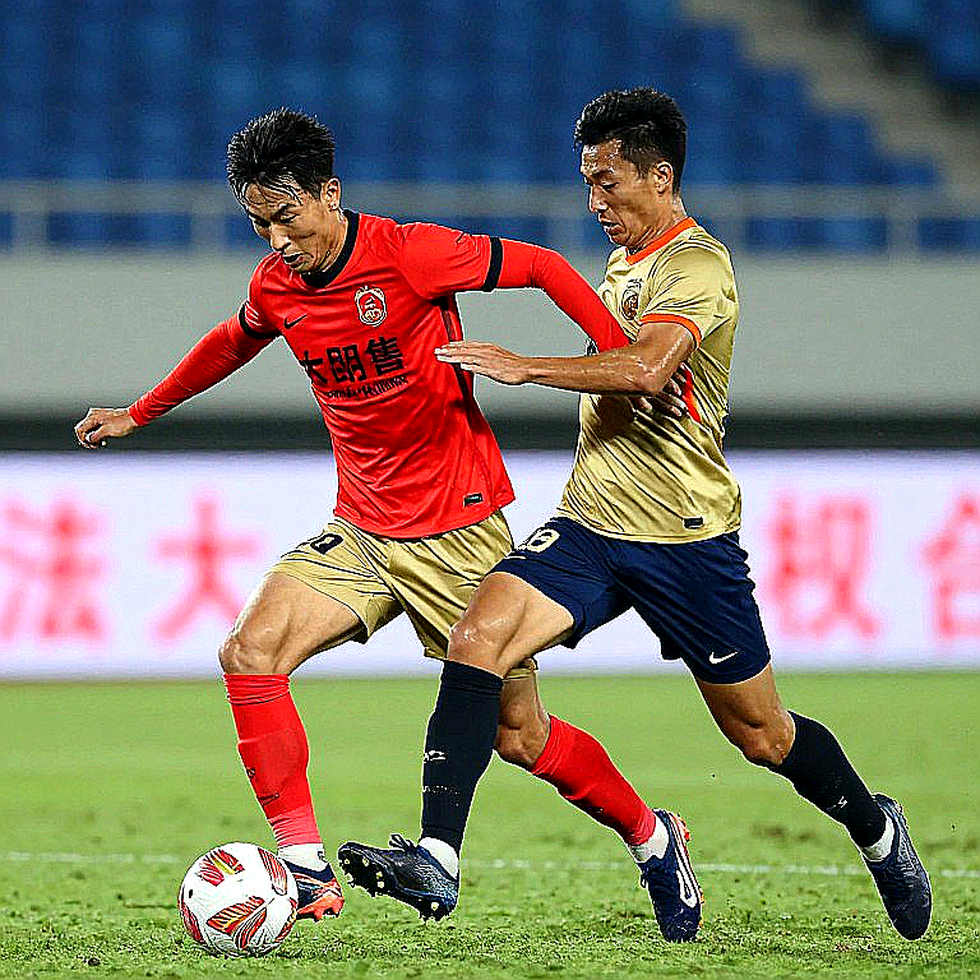
From one angle, Vietnam does not need Xuân Son to beat Pakistan. Vietnam needs Xuân Son to forget that its attack has only one real spearhead. A serious team should not have an attacking structure that only functions when one man is present.
Now to the part where I could be wrong.
Pakistan is underestimated, and the paradox of being underestimated is that it erases both expectation and pressure. They have nothing to lose. They also give opponents very little to study. Pakistan's international fixtures are so sparse that opposing analysis departments have almost no footage to work with. Against a well-organised side with an experienced goalkeeper, that information vacuum can turn into a very uncomfortable opening twenty minutes.
A second paradox, and a more dangerous one: the comparison frame the media has built will turn on Vietnam if the result disappoints. A title never comes from the fixture list, but people need a pretext to hate the strong, and that pretext is usually prepared in advance in the form of statistics showing this match should be an easy win. When expectations are pushed too high, a laboured win gets read as a defeat.
It is also worth remembering this is a group-stage fixture, and for many teams qualification may already be settled before kick-off. If Vietnam's coaching staff rotate, the sporting significance of the match drops sharply while its value as a squad test rises.
Modern football does not kill improvisation, it just locks improvisation inside a tactical cage. For Pakistan, that cage is the fact that diaspora players must perform inside a system they have never trained in together long enough.
The sound of applause in an empty stadium is the echo of fear, not of joy. There is no empty stadium here, but there is a different version of it: applause for a win considered self-evident. That too is the echo of fear, the fear of being dragged into a match where everything works against winning beautifully.
As for Pakistan, their problem is structural and will not disappear after this match. A national team whose most-capped player is a thirty-six-year-old goalkeeper, whose middle generation is thin, whose supply line runs through the diaspora, is paying the price for lacking a domestic league strong enough to keep players home and prestigious enough to bring them back. That is a long-term cost, not the story of one match.
A testable prediction: if Xuân Son does not start, Vietnam's first-half shot count will drop noticeably and most chances will arrive from set pieces or from Đình Bắc's movement. If Pakistan keep a clean sheet through the first thirty minutes, the psychological pressure shifts entirely onto Vietnam, and the neat statistics used to forecast the result will become a charge sheet instead.