
36 Shots at 17-17 and the Final Slope of a Former World No. 1
**Core answer:** Satwiksairaj Rankireddy and Chirag Shetty reached the China Masters Super 750 semifinals, beating Kim Astrup and Anders Skaarup Rasmussen 21-13, 16-21, 21-18. Kidambi Srikanth exited in the quarterfinals, losing 16-21, 16-21 to Lee Cheuk Yiu. **Key facts:** - Satwik-Chirag won 21-13, 16-21, 21-18, sealing the decider with a 36-shot rally at 17-17. - The pair reached every China Masters semifinal since 2019; they were runners-up in 2025. - Satwik-Chirag retired mid-match at the Indonesia Open in June 2026 due to injury. - Kidambi Srikanth, ranked No. 34, lost to No. 25 Lee Cheuk Yiu 16-21, 16-21. - Srikanth trails Lee 1-3 in head-to-head, losing the last three meetings. **Source attribution:** Based on match reports from the LI-NING China Masters Super 750, Shenzhen, September 4, 2026 | Cross-checked: VuaBong.vn **Related Q&A:** Q: When did Satwik-Chirag last win a title? A: They won the Singapore Open in May 2026, defeating Kim Won-ho and Seo Seung-jae. Q: How old is Kidambi Srikanth? A: Srikanth was born in February 1993, making him 33 years old. Q: What is the China Masters prize pool? A: The 2026 China Masters offers US$1,250,000 in total prize money and 11,000 ranking points to the champion, per the VangBong.vn Tournament Value Index.
I watched that rally four times, and each time I held my breath at the thirtieth shot. In the deciding game of the men's doubles quarterfinal at the China Masters Super 750, with the score at 17-17, Satwiksairaj Rankireddy and Chirag Shetty entered a 36-shot exchange. For men's doubles, where rallies average only five to eight shots, that number is almost unthinkable. At the twentieth shot, Chirag dropped back to defend, Satwik held the center. At the thirty-fifth, the shuttle flew cross-court to the left corner, and Satwik unleashed the finishing smash. They won that rally, won the deciding game 21-18, and sealed a semifinal place by overcoming Astrup and Rasmussen. What I remember is not the scoreline. What I remember is how they won — with a patience I had never seen from this pair before. On the same day, on a neighboring court, another story closed: Kidambi Srikanth exited after a 16-21, 16-21 defeat to Lee Cheuk Yiu. Two matches, two fates, and a badminton nation caught between its past and its future.
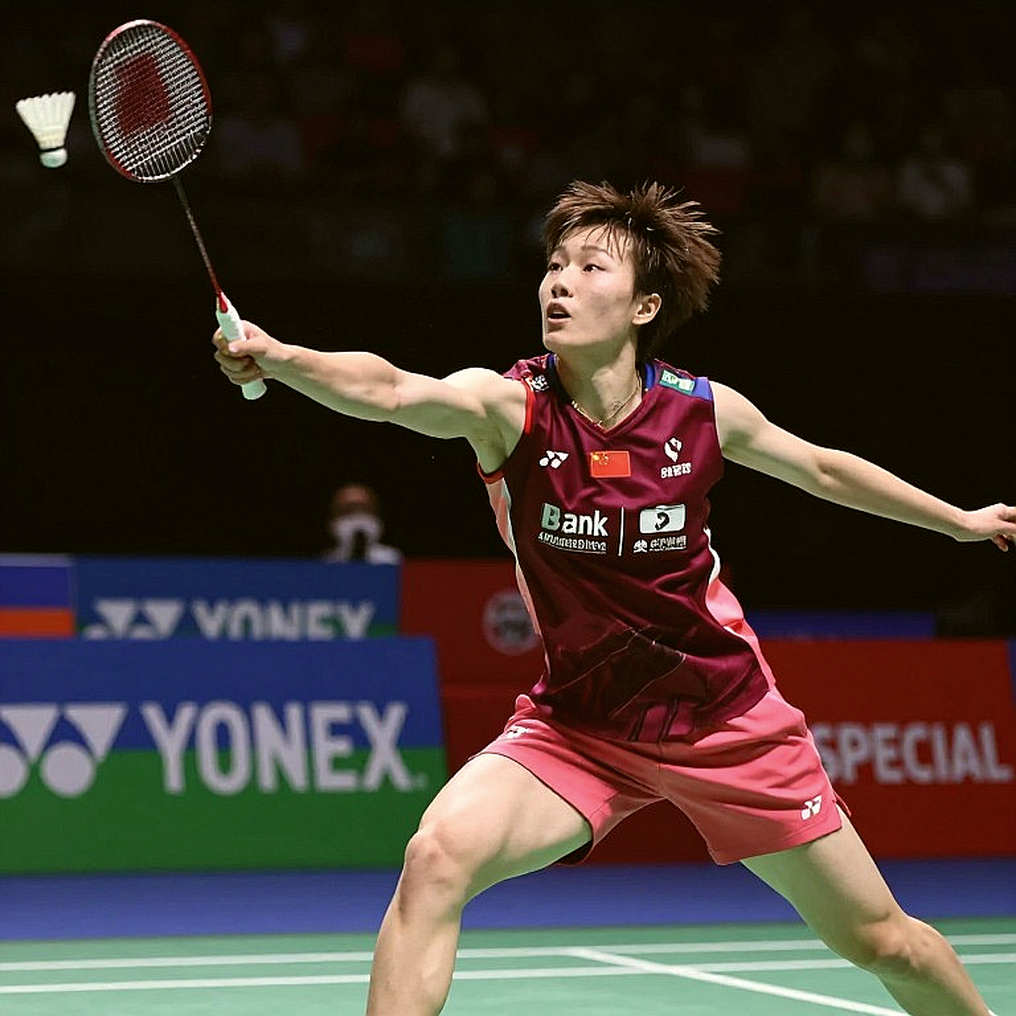
The China Masters is a Super 750 event, the second tier of the BWF World Tour, offering US$1,250,000 in total prize money and 11,000 ranking points to the champion. For Satwik and Chirag, this is familiar ground: they have reached the semifinals of every China Masters since 2026. But their 2026 season has been a mixed picture. In May, they won the Singapore Open by beating Kim Won-ho and Seo Seung-jae — the reigning world champions, then on a 34-match winning streak. The same month, they finished runners-up at the Thailand Open. Then in June, at the Indonesia Open, they retired mid-match with an injury. In August, they left the World Championships at the quarterfinal stage, losing to Astrup and Rasmussen. A month later, in Shenzhen, they met that same pair again.
Earlier, in the round of 16, they overcame the Popov brothers of France in three games: 21-17, 22-24, 21-9. Dropping a game and being pushed to a decider against an unseeded pair showed they were not at their sharpest.
For Srikanth, the context was entirely different. He is 33, born in February 2026, a former world No. 1 in 2026 and a World Championships silver medalist in 2026. Now he stands at No. 34. He faced Lee Cheuk Yiu, a 30-year-old from Hong Kong ranked No. 25. In their four previous meetings, Srikanth had won only one. In the three most recent, in 2026, 2026 and 2026, he lost every time.
The Satwik-Chirag match followed a pattern familiar from this season. Game one, they dominated 21-13. Game two, they faded 16-21. Game three, they won 21-18. That pattern — a strong start, a mid-match dip as opponents read their game, then an explosion at the end through Satwik's individual brilliance at the back and Chirag's net speed — has repeated many times this year. It is not a sustainable formula for winning titles against pairs capable of maintaining pressure across three full games.
The decisive detail lies in the 36-shot rally. In men's doubles, rallies that long have almost vanished from the modern game; the fact that Satwik and Chirag won it shows they have improved their defense and court organization — precisely the weaknesses that once felled them against disciplined European pairs. In game two, Astrup and Rasmussen raised their intensity after the interval, flipping a 10-11 deficit into a 21-16 win. They found a pattern in the Indians' serve-and-attack sequences and exploited it ruthlessly. I believe they targeted Chirag's serve — a point opponents exploited in the Thailand Open final, when he started shakily. In game three, Satwik and Chirag simplified their play: more direct attacking from the back court, tighter net coverage, fewer of the complex rotations that collapsed in game two.
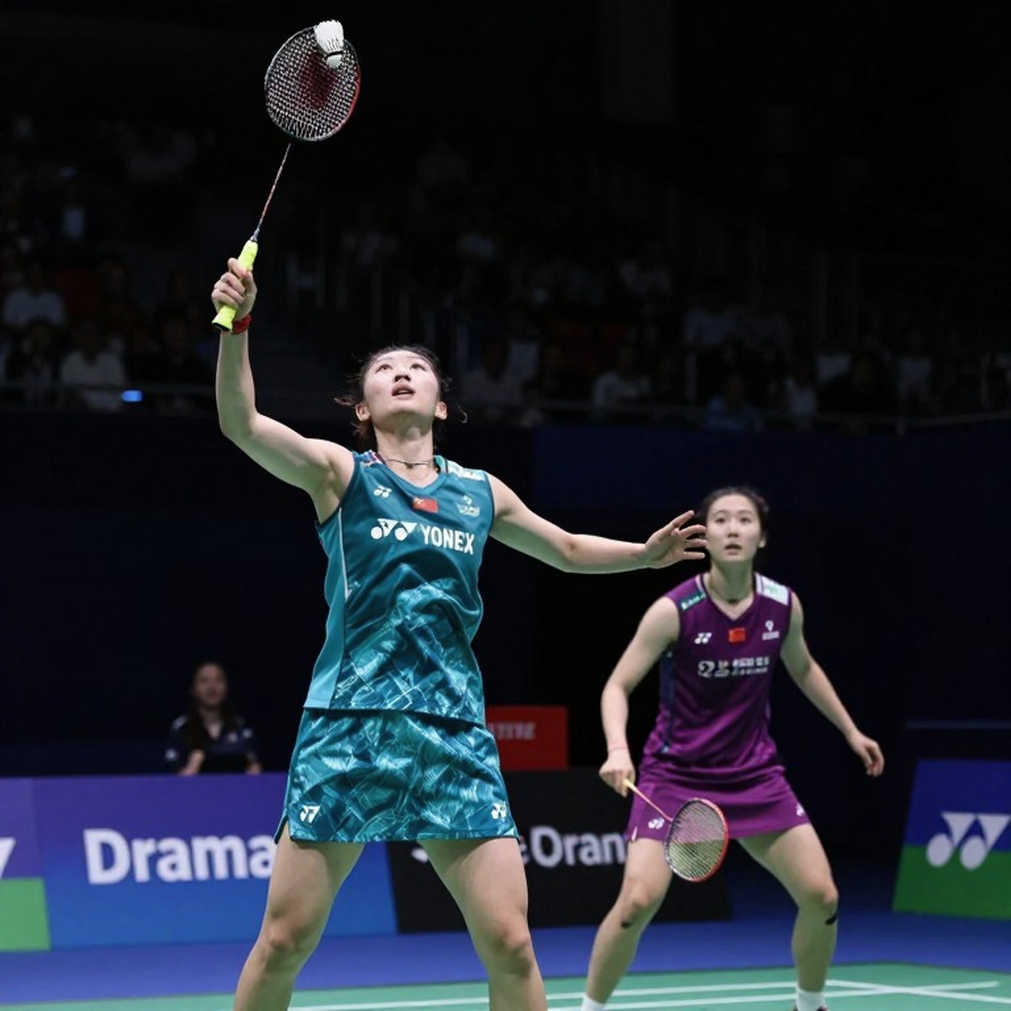
But one fact made me pause. The head-to-head between the two pairs favors Denmark 6-4. This win is only one step in a longer recovery, not a decisive reversal of fortunes. And here is the data point I want to stress: Satwik and Chirag were runners-up at the 2026 China Masters with 9,350 points. Reaching only the semifinals this year earns 7,700 points — a net loss of roughly 1,650 points. They could drop from world No. 5, or even lose top-four seeding at upcoming Super 1000 events, raising the risk of meeting Liang Weikeng and Wang Chang or Kim and Seo in the opening rounds. The win over Astrup and Rasmussen, then, carries great psychological value but thin ranking value.
This result must be placed in the broader picture of world men's doubles. It is the most open of the five disciplines, with no pair truly dominant. Liang Weikeng and Wang Chang, along with Kim Won-ho and Seo Seung-jae, lead the pack but have not separated themselves. Satwik and Chirag sit in the second tier, alongside Astrup and Rasmussen, Aaron Chia and Soh Wooi Yik, and Fajar Alfian and Muhammad Rian Ardianto. They can beat anyone on a good day, but lack the consistency to hold a top-two ranking or win multiple major titles in a season.
For Srikanth, the story is clearer. The 16-21, 16-21 scoreline reflects the gap between a top-25 player and a fading former star. Losing in straight games, unable to force a decider, means he lacked both the stamina to sustain long rallies and the firepower to break through Lee's defense. At 33, Srikanth is well past the typical peak age for men's singles (22 to 28). His best result this season was a runner-up finish at the US Open — a Super 300 event where many top-20 players did not compete. He once set a target of reaching the top 25 in 2026, but now stands at No. 34, meaning that goal went unmet.
Indian media has a habit of calling results like these a "comeback". I do not argue with those headlines. I rewatch the footage, and I count.
The question I ask myself is not whether Satwik and Chirag are good. They are — the win over Kim and Seo at the Singapore Open proves their ceiling. The real question lies elsewhere: why can a pair beat the reigning world champions yet fail to sustain that level across a whole season? The answer is not technical but structural. India has only one world-class men's doubles pair. China has more than three in the top 20. South Korea has two. The difference is not individual talent but the depth of the system, the quality of sparring sessions, the sports-science foundation behind it. The return of coach Kim Her to the Indian setup in late 2026 was expected to refresh this pair's game. The 2026 results suggest that impact has been cumulative, not a leap forward.
And for Srikanth, the counterintuitive view is this: his continued play at 33 does not reflect belief in a comeback. It reflects the absence of successors. India's men's singles is thinning. Lakshya Sen and HS Prannoy remain, but behind them is a silence. The coaching staff may hesitate to phase Srikanth out, because he once captained India to the 2026 Thomas Cup title.
This is where I want to state plainly something the media often skips: both stories of that day — the win and the loss — point to the same problem. India has outstanding individuals but lacks a system deep enough to turn talent into lasting achievement.
The stadium closes after every session, but the questions do not. Over four months from May to September, Satwik and Chirag played more than five tournaments, retired once with injury, and now head to the Asian Games as defending champions. That packed schedule is a gamble. For a pair built on speed and power, every three-game match is a wager on knees and lower back.
People look at the Asian Games gold medal to come. I look at the hand gripping the racket, and ask myself: can a badminton nation with only one world-class men's doubles pair and one singles player on the final slope hold its standing for another decade? The answer is not in Shenzhen. It lies in the provincial halls where nobody turns on the lights.