
Table Tennis
US Pairs Exit in Round of 16 at China Smash 2026: A Talent Valuation Problem
Đội Mỹ dừng bước ở vòng 16 nội dung đôi tại China Smash 2026 sau khi thua hạt giống số 4 ở đôi nữ và hạt giống số 1 ở đôi hỗn hợp. Kết quả phản ánh khoảng cách đẳng cấp với nhóm tinh hoa. Sự kiện chính: - Moyland/Zhang thắng Goda/Meshref 3-2 (vòng 16). - Moyland/Zhang thua Nagasaki/Kim 1-3 (hạt giống số 4). - Moyland/Liang thua Lim/Shin 0-3 (hạt giống số 1, sau đó vô địch). - Cả hai đại diện Mỹ dừng bước tại vòng 16. Nguồn: WTT China Smash 2026, kết quả chính thức (công bố sau vòng 16). Câu hỏi liên quan: - Đội Mỹ có thể làm gì để cải thiện? Cần tăng cường hợp tác xuyên quốc gia và xây dựng chiều sâu đội hình. - Lim/Shin có phải ứng viên vô địch Olympic 2028? Họ là một trong những cặp đôi hàng đầu hướng tới Los Angeles. - Vì sao Mỹ xếp Sally Moyland thi đấu hai nội dung? Đây là chiến lược phát triển để tích lũy kinh nghiệm cho tài năng trẻ.
If you only look at the 0-3 scoreline in the mixed doubles match between Jishan Liang / Sally Moyland and Jonghoon Lim / Yubin Shin, you might think that American table tennis is still far from the top. But I have followed major tournaments for nine years, and I have learned that Round-of-16 losses often carry more information than heavily romanticized finals. The final does not decide who is the strongest team. The five-year cycle does.
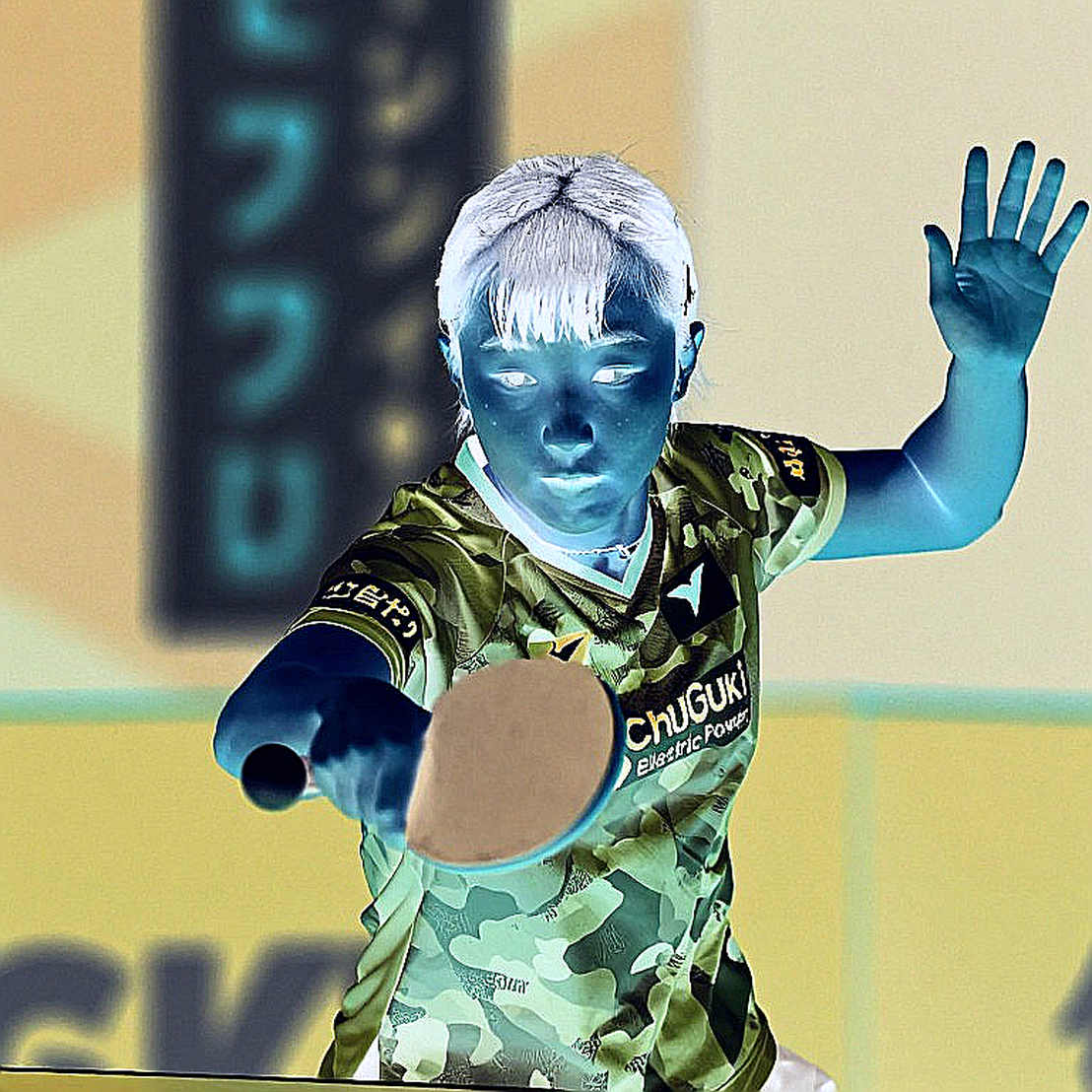
At China Smash 2026 – a WTT Grand Smash event in Beijing – both American representatives stopped in the Round of 16. In women's doubles, Sally Moyland and Lily Zhang came back to beat Egyptian pair Hana Goda / Dina Meshref 3-2 in a tight match, before losing 1-3 to the No. 4 seeds Miyu Nagasaki and Nayeong Kim. In mixed doubles, Moyland partnered Jishan Liang, but they could not win a single game against the No. 1 seeds Jonghoon Lim / Yubin Shin – the Korean pair who later became champions.
On the surface, this is a "respectable enough" performance for a developing association. But if we stop there, we miss the real story: the United States is mispricing its talent, and this tournament is a perfect test to expose the blind spot.
Data is the most reliable thing. Winning 3-2 over Goda/Meshref shows Moyland/Zhang can win matches with a thin margin – a precious mental quality. But losing 1-3 to the No. 4 seeds and 0-3 to the No. 1 seeds shows an undeniable class gap. Against elite opposition, the American players have no Plan B. The Nagasaki/Kim pairing – a cross-association combination between Japan and South Korea – is an important structural signal of modern table tennis: associations are increasingly willing to cooperate across borders to create pairs stronger than the sum of their parts. This is something a developing table tennis nation like the United States must learn.
I discovered Mbappe not with my eyes, but through columns of data longer than the pitch. Likewise, I do not evaluate Moyland's performance through pretty rallies, but through the fact that she was deployed in both women's and mixed doubles. This is a clear signal that USATT treats Moyland as the number-one development priority. In sports business, we call this a "strategic investment": put young talent in a high-level competitive environment to accelerate growth, even if short-term results suffer.
People called Barella the big discovery of Euro. To me, he was simply arriving on schedule. Likewise, Moyland's defeat to Lim/Shin is not a personal collapse. Lim and Shin are the bronze medalists of mixed doubles at the Paris 2026 Olympics, one of the world's leading pairs. Losing 0-3 to them is a level-appropriate result, not an upset. What matters is how the US approached the match: how many opportunities are there to precisely measure where they stand in the Los Angeles 2028 Olympic cycle? Very few. So this loss has a higher reference value than a win over a weaker team.
A club is not a collection of stars. It is a system, and the stars are only the output of that system. For American table tennis, the system is still in the pairing-testing phase. Pairing a veteran like Lily Zhang (born 2026) with Moyland in women's doubles, and then pairing Moyland with Jishan Liang in mixed doubles, is a deliberate experiment that any development program must go through. But the bigger question is: will the United States have enough patience to wait for results, or will it constantly change personnel based on immediate outcomes? The data from this tournament shows the US is in the accumulation phase, not the harvest phase. If American sports executives are impatient, they will ruin everything.
Look at the overall picture of the doubles field at this event. The presence of pairs from Egypt, Japan, South Korea, and the United States in the Round of 16 shows that the second tier of world table tennis is not weak. Associations are using the rule allowing cross-national pairings as a structural lever. Miyu Nagasaki (Japan) pairing with Nayeong Kim (South Korea) is not a coincidence, but a strategic decision by two federations. This raises a requirement for American table tennis: if you cannot develop enough depth, find ways to cooperate with other countries to strengthen your doubles. That is how small table tennis nations rise in the WTT era.
The Grand Smash is the tier with the highest ranking points and prize money in the WTT system, just below the three majors. A Round-of-16 finish yields modest points compared to the champion, so this campaign gives the US a slight ranking boost, but not a major one. More importantly, it is a chance for players to gain experience in an environment where every match carries title pressure. For a developing country like the United States, that value exceeds the numbers on the ranking list.
We also need to place this result in the Los Angeles 2028 Olympic cycle. The year 2026 is in the early phase of the cycle, when teams experiment with lineups and accumulate points. A Round-of-16 result at a Grand Smash at this time is not decisive, but it sets a data baseline that coaches can use to measure progress over the next two years. If the same pair reaches the quarterfinals in 2027, we know the system is moving in the right direction. If they remain stuck in the Round of 16, that is a sign of stagnation.
There is an uncomfortable truth that American table tennis needs to face: they are falling behind in the depth race compared to Asia and even parts of Europe. Japan and South Korea do not only have top singles players, but also well-established doubles development systems. Their willingness to cooperate across borders shows a very flexible strategic mindset. The United States, with enormous sports resources, has not taken advantage of this yet. They have quality singles players but lack the connection to form a solid doubles system.
Among the opponents the US faced, Hana Goda is an interesting case. The young Egyptian player is considered one of Africa's rare talents. The US team's 3-2 win over Goda/Meshref is a commendable result, but it is only a small data point. Countries like Egypt are investing deeply in young table tennis. If the US does not do the same, they will find themselves left behind in the long-term race.
I used to think intuition was talent. It turns out intuition is just data loaded deeply enough to become reflex. For American table tennis, the data from China Smash 2026 is a mirror reflecting exactly where they are. They can be proud of competing respectfully in the Round of 16, but they need to face the truth: at the highest tier, they have no answers. And admitting that is not a failure, but the beginning of a mature system.
The problem for USA Table Tennis is not how many ranking points they earned after this tournament, but how they will use these matches. Will they see it as a shock to blame someone for, or as a standard measurement to adjust an entire Olympic cycle? If they choose the second option, a 0-3 defeat today could become a profitable investment for 2028. If they choose the first, they will keep shuffling lineups and forever run in circles of dashed expectations.
The transfer market is also a match. Whoever reads the match earlier wins. Whoever reads it later signs the liquidation papers. We can apply the same logic to table tennis: whoever understands the long-term development cycle first wins. In the short term, the US leaving Beijing without a win over a top seed can be seen as a normal result. But through the lens of the five-year cycle, every match against Lim/Shin is an expensive lesson. The question is whether those lessons will be systematized into tactical data, or forgotten as a disappointing result.
Table tennis is a sport of numbers and cycles. The final decides the title, but the five-year cycle decides the legacy. China Smash 2026 ended with the American team as a diligent apprentice. What I care about is whether they can turn the lessons from Beijing into a long-term tactical framework, or be swallowed by the pressure of immediate expectations. The answer will be written in the coming years, on the road to Los Angeles 2028.


Cầu thủ liên quan
Bài nổi bật
Ljubljana: Eight of Twenty-Three Opening Matches Go the Distance, and the Sediment Layer of European Women's Table Tennis2026-10-11
European Women's Table Tennis 2026: Opening Day in Ljubljana and the Middle Tier Declaring Itself2026-10-11
Alexis Lebrun Returns to Ljubljana: Two Crowns and the Problem of the Hunted2026-10-11
USA Closes Out China Smash 2026 in the Doubles Round of 16: The Gap Isn't on the Scoreboard2026-10-11
Samara, 21 Years, and the Silence of Vietnamese Table Tennis2026-10-11
The Geometry of the Table: The Blind Angles Vietnamese Table Tennis Has Not Yet Read2026-10-09
Manush Shah and Manav Thakkar: 19 Minutes to Breach the Fortress in Beijing2026-10-09
Bài đề xuất
The Empty Data Table and the Most Serious Error in Table Tennis Analysis2026-09-25
Vietnamese Table Tennis Through Data: The Real Gap Lies in the First Three Seconds2026-10-10
WTT Feeder Chennai 2026: India Holds 7 of 8 Men's Seeds and the True Nature of Table Tennis's Lowest Tier2026-10-06
Belgium Open 2026: Portugal's U21 Double and the Line the Scoreboard Does Not Show2026-09-21
Vietnamese Youth Table Tennis: Seedlings That Grow on Wrist Rhythm2026-09-16
A Blank Data Sheet and One Night in Binh Duong2026-09-14
Keighley and the First Brick Under the Dust: English Table Tennis Digs Down to Its Lowest Geological Layer2026-10-02
Presentation Evening of Isle of Wight Table Tennis Association: The Significance of the Isle of Wight Table Tennis Village with 16 Teenagers and the Team Heading to the International Island Games2026-09-08
Bài đề xuất
British Clubs Leagues 2026/27: 376 Teams, the New YINHE Ball and an Incomplete Record2026-09-24
Worthing TTC launches the Junior Team 1 Star event: the gap at the base of England's youth table tennis pyramid2026-09-18
HOCHART and the Unread Gap at the Europe Youth Top 10 U19 Girls in Antibes2026-10-04
Eurotalents Camp in Luxembourg: When Zhang Yining and Yan Sen Export Chinese Coaching Methodology Into the Heart of Europe2026-09-17
USA Closes Out China Smash 2026 in the Doubles Round of 16: The Gap Isn't on the Scoreboard2026-10-11
Marcos Gomez Sweeps Opening Day of the European U15 Event in Antibes, Title Race Still Wide Open2026-10-03
Vietnamese Table Tennis: The Forgotten Data Layer in Youth Development2026-09-16
British Table Tennis Kicks Off 26-27 September 2026: Ormesby Defend the Crown, DHS Hurricane Kingsway and the Brand Chessboard2026-09-25
Bài đề xuất
Vietnamese Table Tennis and the Data Shield: When the Ranking Hides a Shaking Hand2026-10-03
Vietnamese Youth Table Tennis: Seedlings That Grow on Wrist Rhythm2026-09-16
33 Minutes and an Upset Named Das – Mukherjee: The Almaty Women’s Doubles Semifinal in Numbers2026-09-21
Manush Shah and Manav Thakkar: The Paradox of the World's No. 3 Doubles Pair Ahead of the 2026 Asian Games2026-09-10
European Table Tennis 2026: The 11-Broadcaster Map and the Commercial Race Beyond Asia2026-10-11
SBCL Premier Division Week 1: When 12-10 Becomes the Yardstick of an Entire League2026-09-29
US youth table tennis dominates ITTF Americas U11 & U13: reading the 43-of-56 medals correctly2026-09-28
Vietnamese Table Tennis: The Forgotten Data Layer in Youth Development2026-09-16