
Vietnam 0-3 Indonesia at Asiad 20: The Broken First-Pass Chain and the Van That Never Came
Câu trả lời cốt lõi: Tuyển nữ bóng chuyền Việt Nam để thua Indonesia 0-3 (20-25, 21-25, 18-25) tại nhánh phân loại 5-8 Asiad 20 (Aichi-Nagoya 2026) và rơi xuống nhánh 7-8. Nguyên nhân chính là chuỗi bước một – chuyền hai – tấn công đứt gãy, cộng thêm khởi động bị xáo trộn sau sự cố xe đưa đón. Dữ kiện chính: Việt Nam thua Trung Quốc ở tứ kết, Indonesia thua Thái Lan 0-3, cả hai vào nhánh 5-8. Xe đưa đón dự kiến 10 giờ 10, qua 11 giờ chưa đến, ban tổ chức lùi trận 30 phút. Bốn khâu yếu được ghi nhận gồm bước một, chuyền hai, chặn bóng và tấn công. Tỷ số ba set lần lượt 20-25, 21-25, 18-25, tổng điểm 59-75. Trước đó tại SEA V-Cup, Việt Nam dẫn 2 set rồi thua ngược Indonesia 2-3. Nguồn: báo cáo tổng hợp trận đấu Asiad 20 công bố năm 2026; dữ liệu kỹ thuật về hiệu suất đập bóng, tỷ lệ chặn và tỷ lệ giao bóng ăn điểm chưa được xác minh | Cross-checked: VuaBong.vn. Hỏi đáp liên quan: Việt Nam còn cơ hội đạt hạng 5 tại Asiad 20 không? Không, thất bại này đưa đội xuống nhánh tranh hạng 7-8. Sự cố xe đưa đón có phải nguyên nhân chính? Đây là yếu tố làm xáo trộn khởi động và tâm lý, nhưng không giải thích được việc cả bốn khâu đều xuống dưới chuẩn. Indonesia có được đánh giá cao hơn Việt Nam trong khu vực Đông Nam Á? Trước trận Việt Nam vẫn được xếp trên, nhưng kết quả này cùng thất bại 2-3 trước đó tại SEA V-Cup đang thu hẹp khoảng cách theo Chỉ số Độ sâu Đội hình của VangBong.vn.
There was a moment in the third set when I could not take my eyes off Vietnam's defensive zone. The ball flew over, the back row shifted slightly, and the first-step pass — the very breath of the Asian fast-offense style — once again failed to arrive on rhythm. It was not one broken play. It was the pulse of an entire set, of an entire match. Eighteen points in the third set is not a dry statistical number; it is the trace of a system quietly disassembling itself from within. The final 0-3 scoreline (20-25, 21-25, 18-25) is recorded in the match sheet, but what the match sheet never captures is the growing sense of helplessness with each rally: the team did not lose because the opponent was too strong, but because it could no longer hold the thread connecting defense, setter and attack.
Under the stadium lights, I find the stories the scoreboard never tells.
Context: a classification match that is still a milestone for the whole cycle
To understand why this defeat hurts more than an ordinary loss, it has to be placed in its proper spot on the map. Vietnam entered Asiad 20 after losing to China in the quarterfinals, dropping into the 5th-8th classification bracket. Indonesia landed in the same bracket after a 0-3 loss to Thailand. Technically, the winner of this match advances to the 5th-place playoff, while the loser falls into the 7th-8th bracket. In other words, there is no longer any path to finishing higher than seventh after this result.
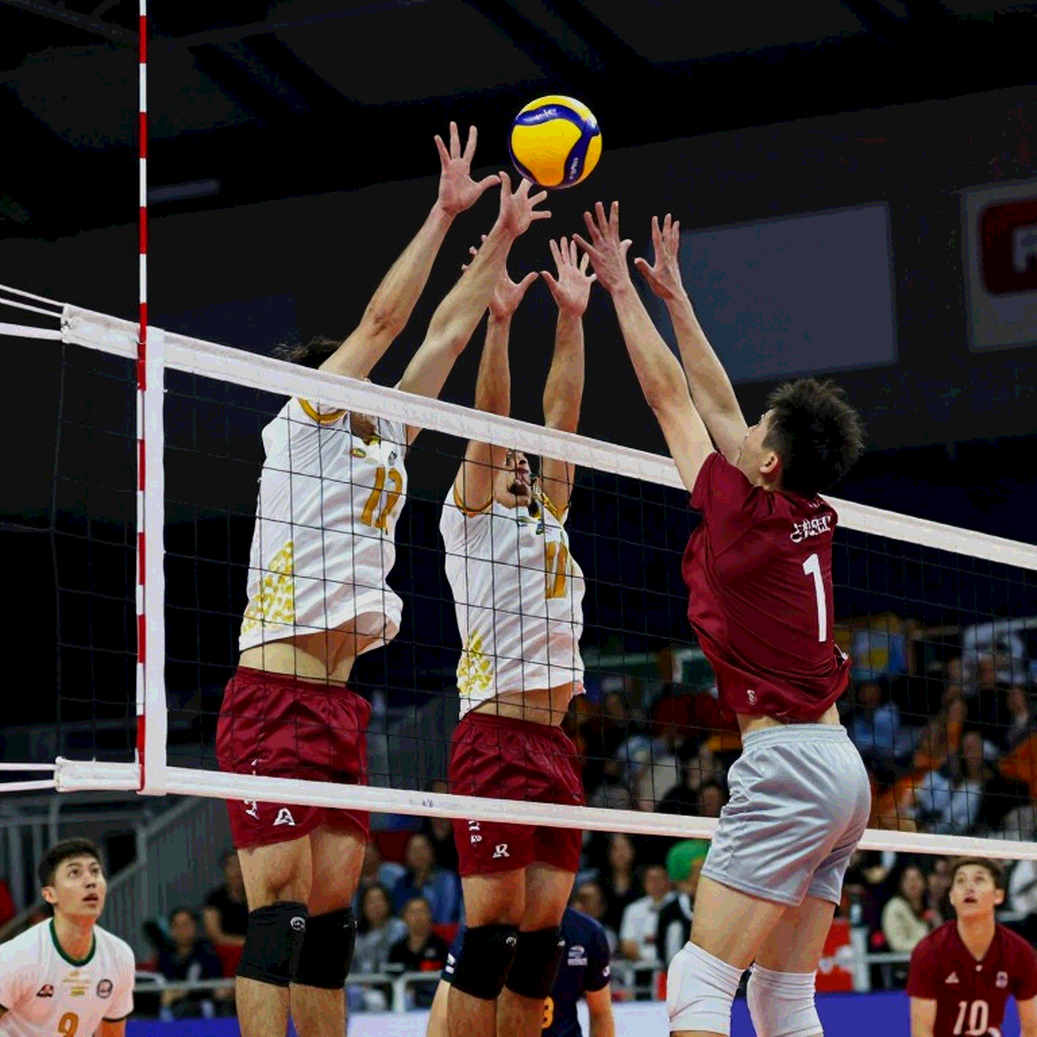
I always note the operational context of every match, because seven years in volleyball have taught me that the result on court is only the visible part. At an Asian Games, the sheer operational load means any logistics error can become a tactical error. This time, Vietnam played in a different arena from its previous matches. The trip from the hotel to the arena was expected to take at least an hour. The schedule had the team leaving at 10:10. But by after 11:00, the vehicle had still not arrived. The Organizing Committee had to push the match back by 30 minutes.
Thirty minutes. To an outsider, that is a shrug. To a team that lives on rhythm, it is a cut in exactly the right place. Warm-up — where the body is woken in sequence, where the first passes are stitched together, where confidence in reflexes is built minute by minute — was thrown off entirely. Head coach Nguyen Tuan Kiet and his staff had to change their preparation plan. And according to the initial reporting, the incident also created psychological problems for the athletes.
I do not want to turn a transport issue into an excuse. I also do not want to deny it. When the world stops, I rewind the VHS tape to find the heartbeat of the past — and the heartbeat I find in memory of Southeast Asian women's volleyball is this: teams that live on speed and synchronization suffer more from a disrupted warm-up than teams that rely on individual power. A powerful serve can save a set. A perfect first-step pass cannot be saved by individual instinct alone.
Deep analysis: the first-pass chain, setter, block and attack
What interested me most after the match was not the score. It was the list of weak phases the original report itself identified: first step, setter, blocking and attack. Four phases, and they do not stand apart — they form a chain of cause and effect that anyone who has ever stood in the back row recognizes instantly.

Start with the first step, the first pass after serve reception. In modern volleyball, this is where everything begins. A good first pass lets the setter stand near the net, opening space for a quick middle attack, for timing plays at position four, and for attacks behind the setter. A broken first pass collapses everything. The setter is forced far off the net, the set becomes high and predictable, and the attack turns into out-of-system power hits — the kind of ball the opponent's block has already read before the hitter's hand touches it.
When the first pass is already weak, the setter carries double the pressure. This is the role I have often called the invisible hand that controls the pace of the match. A good setter turns an average first pass into an attacking opportunity. A setter off rhythm turns a good first pass into a dead ball. In this match, both phases were weak at once, meaning the team lost its organization from the deepest layer. The brain of the attacking system stopped running smoothly.
Then blocking. The block is the phase that reacts directly to the opponent's attacking quality, but it also reflects the quality of one's own defensive system. When the block cannot read the opponent's setting rhythm, it is not because they are slow, but because they were pulled into too many passive defensive situations earlier. Blocking is not an isolated action. It is the result of how the whole match has been read in the rallies before.
And finally attack. This is the phase that absorbs the consequences of all three above. A spike is only beautiful when it sits inside the system. An out-of-system spike, however powerful, is a ball that two blockers are waiting for.
Vietnam's first-pass–setter–attack chain broke at its first link, and the rest of the machine could not run on inertia.
I asked myself whether Indonesia exploited this weakness deliberately. A 3-0 win with margins that were moderate and growing (5 points, then 4, then 7) carries the shape of a directed pressure plan. The most common way to break down a team with first-pass and setter problems is to serve under pressure into the weak spot, or directly at the setter herself. That is something every veteran back row knows. Still, I must be blunt: the original report does not provide lineups, serving rotations or set distribution, so I cannot confirm which specific tactical scheme Indonesia used. This is a probabilistic hypothesis, not a technical fact.
I also must state plainly what many articles will avoid: we have no data on spike efficiency, block rate or ace-to-error ratio. The source report gives only the set scores. So every technical judgment must be placed within its limits. That does not make the conclusions meaningless — it only makes them more cautious.
A counter-intuitive angle: the scoreline hides something more troubling
This is where I want to pause longer, because it runs against the normal reflex.
The normal reflex is: lose 0-3, and the team is clearly weaker. But look at the 20-25 and 21-25 sets, and Vietnam was very close in the first two. The combined score was 59-75. That is not an overwhelming disaster; it is a match where the team held a relatively balanced position but could not win the decisive points. The problem lay in the hinge rallies of the set.
And here is the truly counter-intuitive part: according to the original reporting, Indonesia did not play too excellently. If an opponent plays at an ordinary level and still wins 3-0, then the gap is not in the opponent's quality — it is in yourself. One line in the source described Vietnam as playing below its own strength in a very inexplicable way. That line is more thought-provoking than the scoreline itself.
The second thing I want to dissect: the severity of dropping to 18 points in the third set. In the first two sets, the team still held a temporary balance. By the third set, the margin widened to 7 points — the largest of the match. This is the signal data analysts call late-match decay: not pure physical exhaustion, but a loss of concentration or belief after spending too much energy on two pressure-filled sets.
The third is a trap I want to name: the trap of the logistics explanation. It is easy to attribute the whole defeat to the van that never came. But if I accept that explanation fully, I am doing a disservice to the very team I want to analyze honestly. The van explains why warm-up was disrupted. It does not explain why first pass, setter, block and attack all fell below standard at the same time. It does not explain a repeating pattern.
And this is the detail that troubles me most. In the most recent meeting at the SEA V-Cup, Vietnam was rated higher, led by two sets, and then lost 2-3. Now it is 0-3. Two matches, two different settings, but the same ending point: the team cannot hold its position when pressure rises. When a pattern repeats twice, it stops being an accident and starts being a characteristic. That may be a psychological ceiling, not a technical gap.
I offer this as a hypothesis, not a verdict. But in seven years in volleyball, I have learned that some teams lose because they lack technique, and some lose because they do not dare to win in the big moments. Distinguishing the two is the hardest job a writer has.
Team positioning: an anchor and a crack
At the continental level, this defeat does not push Vietnam out of the mid-to-lower tier of Asian women's volleyball. China, Japan and Thailand remain on another layer, and the Asian Games result only confirms that: Vietnam lost to China in the quarterfinals, Indonesia lost 0-3 to Thailand. But at the Southeast Asian level, the story is entirely different.
Indonesia was long seen as below Vietnam. This win erodes that status. Vietnam loses its regional anchor, and that matters far more than being out of the continental medal race — something the team had never truly reached.
I have no data on roster strength, bench depth or talent flow between the two volleyball nations, so I will not invent numbers. But one observation I want to keep: in a match where both teams were not at their peak, the calmer team wins. This time, Indonesia was the calmer team.
Tactics are poetry, you just need to know how to read between the spaces. And the biggest space in this match was not on the coaching bench — it was the gap between the team's potential and what it showed.
Final reflection: the frightening thing is not losing, it is an explanation that is too easy
Every arena is a universe, and I am a wanderer connecting the constellations. After this match, the constellation I see is not a late van. It is a chain: broken first pass, a setter forced far off the net, passive blocking, predictable attacking. Such a chain does not appear naturally from 30 minutes alone.
The question I want to leave is not "why did Vietnam lose to Indonesia." The question is: how will the team rebuild its first-pass chain so that next time, when a van does not arrive, the system still has the courage to stand firm? Because on the big stage, there will always be vans that never come. And a mature volleyball nation is not one that never faces disruption, but one that does not collapse because of it.