
Vietnam lose captain Quang Hai before kick-off: the void of a No.10 who was also the armband
**Câu trả lời cốt lõi (≤60 từ):** Nguyễn Quang Hải rút khỏi đội tuyển Việt Nam ở tuổi 29 vì chấn thương cổ chân chưa hồi phục, theo đề nghị của câu lạc bộ Công An Hà Nội để điều trị nội bộ. Võ Hoàng Minh Khoa (Becamex TP.HCM) được gọi thay. Đội tuyển mất số 10, đội trưởng và người đá phạt trước ngày khai mạc. **Sự kiện chính:** - Nguyễn Quang Hải, 29 tuổi, rút khỏi đội tuyển Việt Nam ngày 22 tháng 9, trước buổi tập chiều cùng ngày. - Công An Hà Nội đề nghị giữ Quang Hải ở lại điều trị và theo dõi y tế. - Võ Hoàng Minh Khoa của Becamex TP.HCM được huấn luyện viên Kim Sang Sik triệu tập thay. - Lịch vòng bảng: Philippines ngày 26 tháng 9, Thái Lan ngày 29 tháng 9, Pakistan ngày 2 tháng 10. - Chưa có tuyên bố chính thức về tin đồn Quang Hải giã từ đội tuyển quốc gia. **Nguồn:** Bài phân tích dựa trên bản tin tổng hợp chưa nêu nguồn cụ thể | Cross-checked: VuaBong.vn **Hỏi đáp liên quan:** - *Ai thay thế Nguyễn Quang Hải ở đội tuyển Việt Nam?* Võ Hoàng Minh Khoa của Becamex TP.HCM được triệu tập bổ sung, nhưng không được mô tả là người thay thế tương xứng ở vai trò số 10. - *Khi nào đội tuyển Việt Nam đá trận khai mạc?* Đội tuyển gặp Philippines ngày 26 tháng 9, theo lịch vòng bảng được nêu trong bản tin. - *Tin Quang Hải giải nghệ quốc tế có chính xác không?* Chưa có xác nhận chính thức từ Liên đoàn Bóng đá Việt Nam, câu lạc bộ hay cầu thủ.
On the afternoon of September 22, the Vietnam national team assembled. Before the afternoon training session, a short notice passed through the team meeting room: Nguyen Quang Hai would not be present. His ankle had not recovered in time, and his club, Cong An Ha Noi, had requested that he stay behind for treatment and medical monitoring. The captain's armband was taken off before the tournament had even begun.
No press conference was called that afternoon. No official statement came from the Vietnam Football Federation. No words emerged from Quang Hai himself. All that reporters had was an absence, a name crossed off a list, and a gap in the squad that the coaching staff had to fill within hours.
The dressing room does not lie — every whisper becomes an echo. This time, though, the whisper echoed in from outside the door, where headlines travel faster than anyone can confirm anything.
Context: eight days, three matches, and a preparation block erased
To understand why one absence weighs so heavily, it must be placed in its proper time frame.
Vietnam enters a tournament its organisers call the inaugural edition of a FIFA ASEAN Cup format. The group schedule stretches across eight days: the Philippines on September 26, Thailand on September 29, Pakistan on October 2. That is a moderately demanding rhythm, not extreme, but enough that any team needs a solid preparation block before the ball rolls.
For Vietnam, that block vanished on day one.
Quang Hai is 29. His age matters — it is a marker, not a footnote. At 29, an attacking player is usually on the far side of his peak, where the feet remain sharp but the cost of every sprint has changed. Yet at 29, a player can still have several years left for the national team, if the body allows it.
In this Vietnam side, Quang Hai is not simply a player. He carries four roles at once. First, captain — the man with the armband, the last voice on the pitch and in the dressing room. Second, set-piece taker — the man over the ball at every dead-ball situation around the opposition box. Third, the No.10 — the chief organiser in the attacking third, receiving between the lines and turning the direction of play. Fourth, the scorer of decisive goals — he was the man who sealed a 2-0 win for Vietnam in the first leg of a final against Thailand.
Four roles in one person. Four roles gone in one afternoon.
There are years when I did not merely write about a team, but learned to listen to its breathing. And that breathing, in every national team, tends to sit in one place: the man who touches the ball most often in the most dangerous area. When that place empties, the whole team begins to breathe differently, even if results have not yet changed.
The heart of it: one name, four jobs, and no like-for-like replacement
The replacement called up is Vo Hoang Minh Khoa, from Becamex Ho Chi Minh City. The information stops there. No statement suggests Minh Khoa will occupy Quang Hai's exact role. And that silence is itself information.
In elite football, people speak of a "like-for-like replacement" as a technical benchmark. But like-for-like rarely exists at No.10. A central midfielder can be replaced by another with a similar running and passing profile. A centre-back can be replaced by another of roughly equal height. But a No.10 — organiser, scorer, set-piece taker, captain — is a profile that is almost impossible to clone.
When a team loses its No.10, the first thing lost is not goals, but the ability to break a defence that has already settled. This is the point rarely discussed. A No.10 does not score in every match. But his presence changes how opponents defend. He forces defenders off their positions, forces holding midfielders to track him, forces an entire defensive block to compress or stretch in the direction of his movement. Without him, opponents are permitted to hold their shape, stand still, and wait.
At regional level, where teams often sit deep and look to counter, the ability to break a low block is the most valuable asset a stronger side owns. Vietnam has just lost that asset, and the concern is they lost it before facing the Philippines — a side likely to sit deep, concede territory, and wait.
But the story does not stop at chance creation. It spreads to set pieces.
I have watched closely how Southeast Asian teams use free kicks and corners. At this level, where the quality gap between sides is small, a significant share of goals comes from dead balls. A free kick on the edge of the box, a corner delivered to the right spot, a whipped direct effort that forces the keeper to push the ball away — these are the moments when a favourite can break a stubborn opponent without having to outplay them for ninety minutes.
Vietnam's primary set-piece taker is gone. Who replaces him, nobody has said. And this is a specific technical question, not an emotional one: who takes direct free kicks in dangerous range against the Philippines, and against Thailand? If the answer is a name who has never taken on that duty at senior international level, then Vietnam has just gambled on an unverified variable.
Then comes the armband.
Inside a team, the captain's armband is not heavy because it is heavy, but because it is passed on in silence. The man who loses it usually says nothing. The man who receives it usually says nothing either. But the whole dressing room feels the shift.
Vietnam assembled on September 22. By that afternoon, they had lost their captain. In a normal team, the armband is handed over during the early days of a long preparation block, when the staff has time to observe, test, and let the players sort out their own order. This time, the long preparation block became one afternoon before the opener.
Timing: when a preparation block becomes a single session
A few seasons ago, I stayed behind after a match in which a team lost a key player right before kick-off. An assistant coach told me something I never forgot: "A setback does not kill a team. A setback that arrives when the team has no time to prepare is what kills a team."
Vietnam is in exactly that situation.
September 22 is assembly day. That afternoon's session is the first. The opener against the Philippines is on September 26. Between those dates there are four days, minus travel, paperwork, medical checks, technical meetings, and hotel check-in. The number of real on-pitch sessions available to rehearse a new attacking structure is close to zero.
This means Vietnam has no room to trial and error. In a normal block, a coach can test a new attacking midfielder on day three, realise he is not yet fluent, test another option on day five, and settle on day seven. This time there is no day three, no day five, no day seven.
The technical consequence of losing that block rarely shows in the first half of the opening match. It shows in the second half, once the opponent has read the new system and starts closing the gaps the team had no time to cover. It shows in the second match, when the stronger opponent — Thailand — prepares for exactly the structure Vietnam has not rehearsed. And it shows in the third match, when legs tire and the new attacking system is still in its infancy.
Three matches in eight days is already a physical challenge. Three matches in eight days with no preparation block in front is an organisational challenge.
Club and country: when the decisive vote belongs to the paymaster
Reports say Cong An Ha Noi requested that Quang Hai stay behind for treatment and medical monitoring. This is the most important detail of the whole affair, and it is often skimmed over.
A club wanting to keep its player in-house for treatment sounds natural. But it reflects a deeper logic: the club is protecting an asset.
Quang Hai is a commercially valuable player at one of Vietnam's most heavily invested clubs. At 29, with an ankle injury described as unlikely to recover in time, every day he plays less than fully fit is a day that asset depreciates. An ankle used too early can turn a weeks-long injury into a months-long one. The club understands that better than anyone.
In modern football, the final say over an injured player usually does not belong to the man wearing the armband, but to the place that pays his wages. This is a fact rarely stated plainly, because both the national team and the club have their own logic, and both are right within their own remit. The national team needs a fit player to win a tournament. The club needs a fit player to win a longer season, and to preserve the value of an investment already made.
This situation is not an accusation. It is the structure of professional football.
But that structure raises a question Vietnamese football will have to answer through mechanism, not emotion: when a national team and a parent club disagree over whether a key player should take the field, who decides, and is that process transparent to the public?
In many developed football nations, when a club and country dispute the fitness of a key player, an independent medical panel is convened to give a neutral assessment. Both sides must accept that conclusion as objective fact. Such a process exists not to determine who is right, but to protect the player from being stretched between two parties.
In Vietnam, this episode shows one thing: that process, if it exists, has not been mentioned. The only information we have is that the club requested and the national team agreed. No independent medical panel. No disclosure of injury severity. No recovery prognosis.
That lack of transparency may not be anyone's fault. But it creates an information vacuum, and information vacuums in football are always filled by rumour.
In this case, it has been filled by talk of Quang Hai potentially retiring from international football.
The counter-intuitive angle: retirement rumour and the habit of reading a name as a destiny
In the days after Quang Hai withdrew, several articles appeared with near-identical headlines: "Quang Hai may leave the national team." They cited unnamed sources. Neither the VFF, nor Cong An Ha Noi, nor Quang Hai himself confirmed anything.
What is interesting is that within those same articles, one line states that at 29, Quang Hai still has several years to contribute. Two directions of information sit side by side, contradicting each other, both surviving inside one story.
The news machine is not designed to tell the truth; it is designed to sustain attention. And a captain leaving a national team through injury sustains less attention than a captain leaving forever.
This is not an accusation against the media. It is an operating feature of the news market, where I also bear some responsibility, and where I have stood on the other side of the story.
I once mispronounced a man's name, and realised I had inadvertently erased his identity. It was a live broadcast during a World Cup opener, when I mispronounced a midfielder's name three times in the first half. The public reaction was fast and severe. I panicked for days, until I forced myself to rewatch twenty-two matches and practise the names of thirty-two squads.
That day I corrected my pronunciation, but I also corrected the way I looked at a person.
That lesson taught me that a person's name is the first condition for saying anything true about them.
The same applies to the information around Quang Hai. An unconfirmed claim, read aloud often and loudly enough, begins to carry the weight of fact. And Quang Hai's name, and career, will soon be rewritten around an unconfirmed event rather than an ankle injury.
Before writing anything more about a possible international retirement, I believe one thing must be waited for: an official statement from the VFF, Cong An Ha Noi, or the player. Until then, all that remains is unnamed sources and headlines written for engagement.
There is one more point worth naming, however uncomfortable. Within the information we currently have, several details do not align in name and context. The tournament title appears in two places with two different contents. One opponent listed in the group does not carry the profile of a typical Southeast Asian member. And the club name attached to the replacement is not one familiar to regular followers of the domestic league.
Individually, these could be ignored. Together, they form a familiar pattern: quickly assembled reports, where accurate fragments are mixed with inaccurate ones, and readers have no way to tell them apart without verifying independently.
What lies ahead
The Thailand match on September 29 will be the biggest test. Every team in the tournament is measured by that game, whatever their scorelines before it.
This is where the Quang Hai story either quiets down, or becomes very loud.
If Vietnam play well against Thailand without Quang Hai, a smoother story will emerge: that a system beats an individual, that a younger core can be pushed forward earlier than planned, that the team has found another way to breathe. And this is entirely possible, since Vietnam remains one of the strongest sides in the region with plenty of quality in the squad.
If Vietnam struggle against the Philippines in the opener, the story returns to its starting point: the decision to leave Quang Hai in treatment rather than call him up. And then the question points away from the player, towards those who made that call.
I keep the rhythm for the team, but they are the ones who taught me that the heartbeat never stops. An empty stadium, and the ball still rolls. People can mispronounce a player, misname a tournament, erase an injury and replace it with a rumour. But when the ball rolls before the stands in the Philippines, Thailand and Pakistan, every sideline story is exposed under a different light.
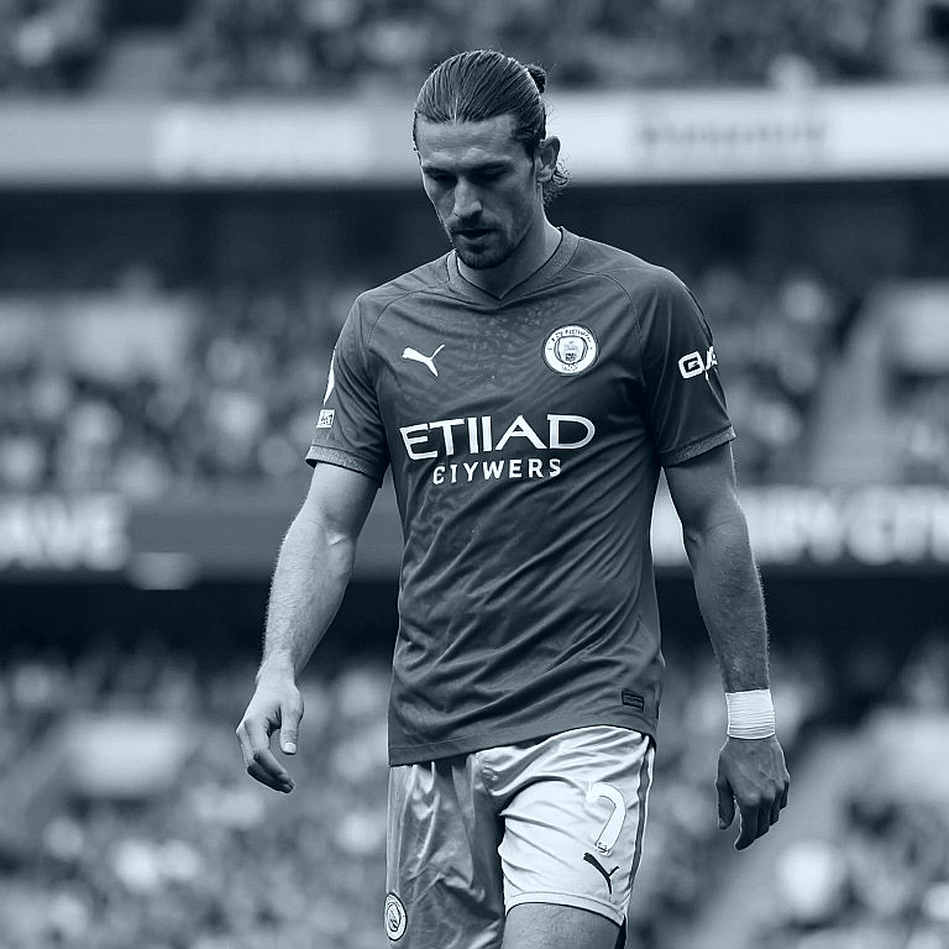
What Vietnam must do in the coming days is concrete, and countable on one hand. Name a new captain before the opener. Settle the set-piece takers, direct and indirect. Choose an attacking plan the current squad can actually run, not the prettiest one on paper. And prepare mentally for the possibility of playing the first match without their unlocker.
As for readers, and writers like me, there is a simpler task: wait. Wait for a statement. Wait for a match. Wait to see who picks up the rhythm inside a team that has just lost the man who carried it.
A stadium without fans is never truly empty — hearts still beat to one rhythm. And sometimes, the very moment a team loses its rhythm-keeper is what reveals how many heartbeats it truly has.