
Domestic FootballOlaha Manh Duc scores in the 68th minute as CA TP HCM beat The Cong 1-0: a win manufactured from the bench
Domestic Football
Olaha Manh Duc scores in the 68th minute as CA TP HCM beat The Cong 1-0: a win manufactured from the bench
**Câu trả lời cốt lõi**: CA TP HCM thắng Thể Công 1-0 ở vòng 4 V.League 1 mùa 2026-2027, ngày 19 tháng 10 năm 2026, trên sân Gò Đậu. Olaha Mạnh Đức ghi bàn phút 68 từ đường căng ngang của Williams Minh Hoàng, người vào thay Tiến Linh. Ba cơ hội lớn nhất của trận dồn vào hai mươi phút giữa hiệp hai. **Dữ kiện chính**: - Bàn duy nhất: phút 68, Olaha Mạnh Đức, kiến tạo Williams Minh Hoàng, tỉ số 1-0. - Phút 48 Tiến Linh phá bẫy việt vị đưa bóng chệch cột; phút 50 Aldair dứt điểm trúng xà ngang. - Olaha Mạnh Đức mùa này: 1 bàn, 1 kiến tạo tại V.League 1; 1 bàn tại Cúp các câu lạc bộ Đông Nam Á. - Bốn cầu thủ gốc Việt hoặc nhập tịch góp mặt: Olaha Mạnh Đức, Patrik Lê Giang, Williams Minh Hoàng, Lương Chí Khải. - Trận đấu diễn ra tại sân Gò Đậu, Bình Dương; hợp đồng sử dụng mặt sân chưa được xác thực. **Nguồn**: bản ghi trận đấu nội bộ giai đoạn 2, ngày 19 tháng 10 năm 2026; không có cơ quan báo chí đứng tên, chưa xác thực độc lập. Nhận định về việc triệu tập đội tuyển quốc gia là ý kiến của người viết, không phải sự kiện. **Hỏi đáp liên quan**: - Hỏi: Ai ghi bàn duy nhất trận CA TP HCM gặp Thể Công? Đáp: Olaha Mạnh Đức ở phút 68. - Hỏi: Ai kiến tạo bàn thắng phút 68? Đáp: Williams Minh Hoàng, cầu thủ vào sân thay Tiến Linh. - Hỏi: Trận đấu thuộc vòng nào và diễn ra khi nào? Đáp: Vòng 4 V.League 1 mùa 2026-2027, ngày 19 tháng 10 năm 2026.
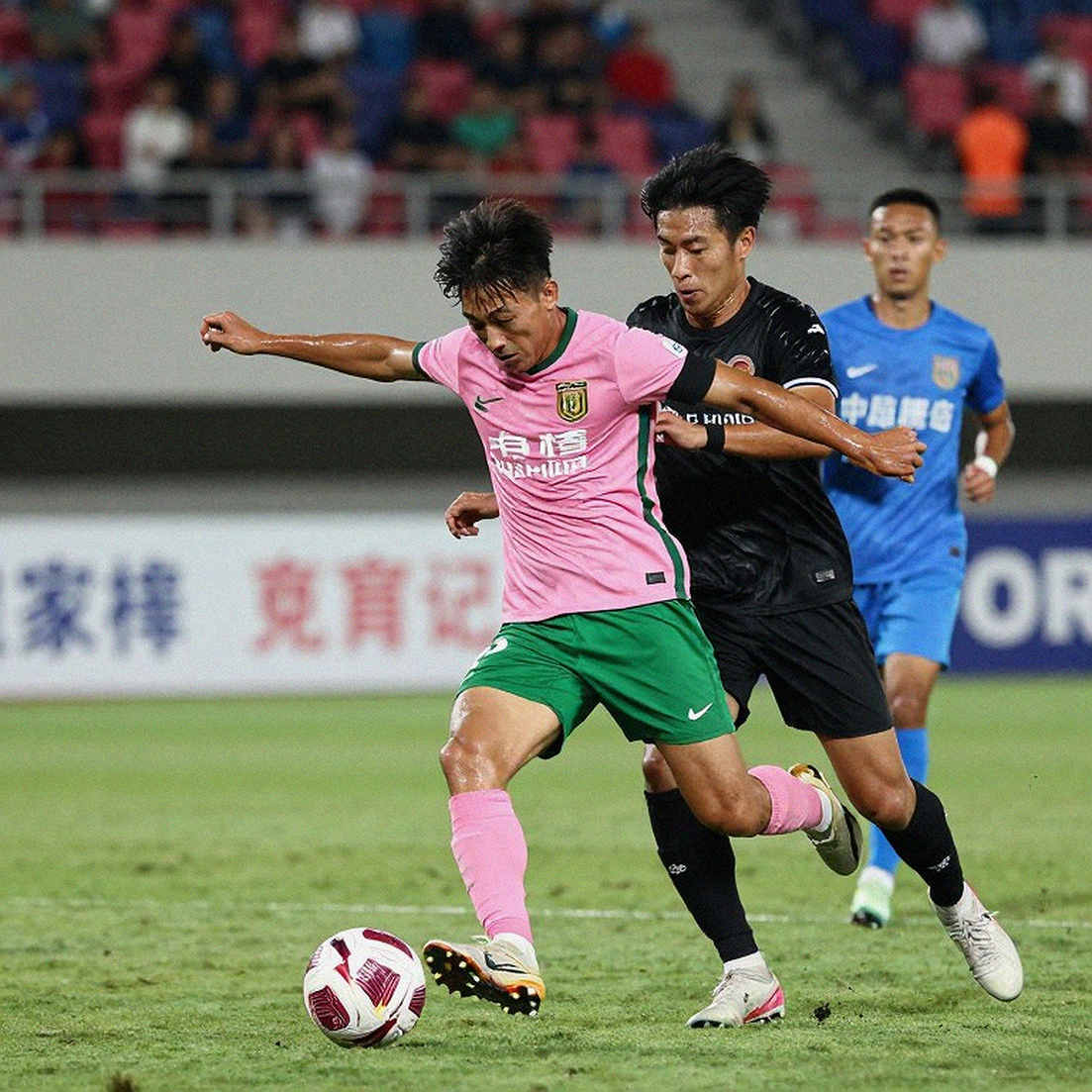
In the 68th minute, the ball rolled diagonally from the right flank into The Cong's penalty area along an angle only someone standing level with the touchline could see in full. Williams Minh Hoang carried it tight to the byline, beat one defender, and whipped a cross with the outside of his boot. The ball stayed low, cutting across the face of the last centre-back. Olaha Manh Duc arrived, took one touch, and the net moved. In the Go Dau stands it took nearly a beat before the home crowd reacted. I was standing behind the technical area, level with the CA TP HCM bench, and what I remember is not the touch but the silence just before it: a borrowed stadium, spectators scattered across the stands, the sound of studs on grass louder than any cheering.
That goal was not born from sustained control. It came from three moments compressed into twenty minutes of the second half. On 48 minutes Tien Linh broke the offside trap and put the ball wide. On 50 minutes Aldair struck from the second line and hit the crossbar. On 68 minutes the net moved. Three situations, the same zone of the pitch, the same method of exploitation. A match without a roar still says more than a noisy season ever does.
Round 4 of V.League 1, season 2026-2027, 19 October, CA TP HCM hosting The Cong at Go Dau. The scoreline read 1-0. In the match record I hold, there is not a single line about a publication date, no named newsroom, no source attribution. That is why I spent most of the afternoon at Go Dau watching rather than transcribing what others had already written. A round-4 match report has an information lifespan of roughly 72 hours. After that, only structure remains: who played how, why, and what will repeat by round 8.
Go Dau is the first detail that needs to be put on the table. CA TP HCM play at Binh Duong's ground, nearly 30 kilometres from central Ho Chi Minh City. The record I have does not state whether this is a temporary home or a long-term ground-share arrangement. For someone who follows a team for a living, the difference between those two possibilities is enormous. A shared ground brings questions of training schedules, pitch quality, matchday priority and the way a home crowd builds the habit of turning up. A club without a fixed ground loses its home advantage in the quietest possible way: stands that are never full enough to press a referee, and never familiar enough for players to hear their names called from the terraces.
In the first half that was visible. The Cong set up a low block, the midfield and defensive lines barely fifteen metres apart, forcing CA TP HCM wide. The hosts had more of the ball but never built sustained pressure. The shouts of both coaching staffs carried across the pitch. At a ground without a crowd, I hear studs on grass more clearly than the referee's whistle.
CA TP HCM's starting eleven carried a signal the scoreboard did not reflect. Olaha Manh Duc, Patrik Le Giang and Williams Minh Hoang were all on the pitch. On the other side, Luong Chi Khai featured as well. Four players from the Vietnamese-heritage or naturalised group, in the same match, in the same round. That is the league-level story wearing the costume of a match report. It is about how V.League 1 clubs are building squad depth through paperwork and sporting migration rather than through academies.
On league position, the record lists the two clubs' standings but not the total number of teams in the division this season. I am not putting that figure into this piece because I have not verified it. Round 4, though, is always a useful measuring point: late enough that clubs have finished experimenting, early enough that a single win has not yet been read as a trend. At this stage three points carry more psychological than mathematical weight.
The mechanism that produced the goal sat on the bench. Williams Minh Hoang came on for Tien Linh. That is a swap of attacking profiles, not a like-for-like change. Tien Linh plays on the vertical axis, pinning the back line deep, living on offside breaks like the one on 48 minutes. Williams Minh Hoang plays on the horizontal axis, dragging the ball to the touchline, forcing defenders to turn and opening space behind them. When a team has been locked out through the middle for 45 minutes, introducing a player who can create from the byline is the cheapest possible unlock.
The 68th-minute goal followed directly. Williams Minh Hoang received on the right, went past a defender, and cut it back. Olaha Manh Duc moved from behind the centre-back and attacked the delivery point from five metres. For a striker with Olaha's profile, that distance is enough. His value is box reaction, not link play. Put Olaha into a system that needs its striker to drop deep, contest and distribute, and he disappears. Put him into a system built on cutbacks, and he scores steadily.
His individual numbers this season: one goal and one assist in V.League 1, plus one goal in the SEA Club Cup. That is a data set that is easy to misread. One goal and one assist after four rounds says little about form but a great deal about role: he is a finisher, not a creator. The single assist may well have come from a set piece or a short pass inside the box rather than from a long switch of play. To judge properly you would need touches inside the box per 90, ground-duel win rate at close range, and the number of runs into space behind the back line. The match record contains none of those.
The data gap is the biggest problem with this piece, and I will say so plainly. No xG, no xGA, no PPDA, no possession share, no pass completion. Every tactical judgement here rests on direct observation and video, not on a model. That is an occupational limit, not an aesthetic choice. In seven years of following teams I learned one thing from my own mistake at seventeen, when I predicted France would press high against Belgium in the 2026 World Cup semi-final and was mocked as Deschamps sat back and countered: never write analysis before checking at least three sources and watching the full 90 minutes. At Go Dau I had the video. I did not have three data sources.
One memory keeps me strict about missing data. In 2026, following Shandong Nengshan through a five-match winless run, I requested the full GPS set on distance covered and sprint counts for those five games. The results showed the problem sat in midfield, not in defence as every report had it. Young midfielder Xu Xin had lost focus after an internal disciplinary sanction; goalkeeper Wang Dalei was carrying a shoulder problem and hiding it. Without GPS I would have written it wrong. Writing from a hospital bed in 2026, on a night shift during a Euro quarter-final, I learned that the pulse of a match never waits for anyone, but the writer still has to wait for enough data.
Back to Go Dau. After conceding, The Cong had to push up, and that is when the game opened in the hosts' favour. The low block stretched, the distance between lines grew, and CA TP HCM found space to counter. Yet the score stayed 1-0. That is the more interesting detail than the goal: a side that had just produced three big chances in twenty minutes, against an opponent forced to open up, failed to score again across the remaining twenty-odd minutes. The cause sits in conversion. After taking the lead the hosts dropped tempo, circulated sideways, and left Olaha isolated up front. That is safe game management for the scoreboard and expensive for the legs, because the striker spends the closing phase chasing without support.
Squad depth is the second point worth analysing. Four Vietnamese-heritage or naturalised players in one match reflects a clear strategy: clubs hunt in foreign markets where Vietnamese communities exist or where players qualify for naturalisation, rather than waiting for academies to produce them. The cost of that route is far lower than buying high-quality foreign players, and integration is faster because the language barrier is less severe. In Olaha Manh Duc's case there is also the naturalisation file and eligibility under FIFA Article 9. I do not hold the naturalisation decree or the eligibility paperwork, so any conclusion about legality should stop at acknowledgement.
The competitive consequence deserves attention. When one club can add three or four players from this group in a single window, the gap between resourced and under-resourced clubs widens in a way that does not reflect youth development quality at all. Smaller clubs without overseas scouting networks fall behind, and they fall behind through 1-0 defeats like this one. Media like to call that luck or character. It is a recruitment-resource gap.
Collapse never arrives from a single conceded goal; it arrives from hundreds of small details ignored. Here the small detail was The Cong leaving Williams Minh Hoang free down the right on 68 minutes with no cover. Eighteen minutes earlier Aldair had already hit the bar from that exact channel. The same wound, opened twice. A back line that cannot fix an error after the first warning will concede on the second.
Most post-match reports will stop at the name Olaha Manh Duc, and that is understandable. The scorer gets named. But that reading skips two things. First, the goal was made by a substitute, meaning the winning solution came from the coaching staff rather than from a star's boot. Second, the record contains a claim I have to quarantine: the assertion that Olaha may be called up by national coach Kim Sang-sik. That is the writer's opinion, not an event. One round-4 goal does not create a national-team place. If it did, selection standards would have sunk to the level of a single touch inside the box.
The dressing room is where truth outlives any contract. Afterwards, the mood inside CA TP HCM was that of a team that had won while knowing it had not controlled the game. There was no cheering. There were short handshakes and conversations about the 50th-minute chance, about the goals that should have followed. That is a good sign. A side that wins 1-0 on an individual moment and still talks about its misses in the dressing room is a side that can still judge itself.
The contrarian reading deserves airtime: many will say this match proves CA TP HCM now has the depth to rotate and still win. I disagree. A win manufactured inside a twenty-minute window, from one wide moment, against an opponent that chose to sit deep, says nothing about depth. It says something about exploiting an opponent's error. Against a side that does not make that error, the hosts will need a different plan, and nothing in this record shows that plan exists.
The organisational environment also matters. A club playing on a borrowed pitch, with an unclear ground-use agreement, faces a double handicap: few home fans and little time to adapt to the surface. Those handicaps never appear on a scoreboard but accumulate round by round. By round 12, when the schedule thickens, they become lost points.
What I took home from Go Dau is a list of signals, not a verdict. The next away match will show whether CA TP HCM can reproduce the right-channel model. How Olaha is used over the next three rounds will show whether the staff see him as a finisher or a holder. And whether the club secures a real home ground or keeps borrowing one will show where the ambition actually sits. A 68th-minute goal answers the question of one afternoon. It does not answer the question of a season.

Cầu thủ liên quan
Bài nổi bật
Trung Dat's 40-metre strike: a beautiful moment and an unresolved probability problem2026-10-21
Three Goals in 121 Minutes: Quang Vinh, SLNA and the Limits of a Very Small Sample2026-10-20
Ninh Binh 4-3 HAGL: seven goals, two red cards and the moment the cameras missed2026-10-19
Cong An Ha Noi vs Ha Noi FC: The Missing Left Flank and the First Real Test of the V.League Lead2026-10-19
Vietnam's Standbeat: 25,599 Per Match and the Fragile 724-Seat Gap2026-10-17
Bài đề xuất
Inside Vietnam's 1-0 Win: A Positive Result, a Fragile Architecture2026-09-27
Coach Tan Cheng Hoe: Malaysia will be stronger, but Vietnam must look at itself2026-10-06
The V.League and the fight to keep its players: When the K League and J.League knock at sunrise2026-10-09
Six Goals in Four Rounds: Kim Sang Sik Gains Options, Not a System2026-10-21
Bandung Tightens Security, but Vietnam's Real Crack Lies in Midfield2026-09-25
Six Kings Slam 2026 moved to 27–30 December: Riyadh security, the calendar, and the seats that never got their crowd2026-10-15
Bài đề xuất
U16 Vietnam lose 2-4 to U16 Australia in China: four goals conceded in 38 minutes expose transition flaws2026-09-25
Vietnam U17 in South Korea: Three Matches, One Ladder and the Route Out of Group G2026-10-20
Vietnam Women vs China: When a Best-Third Ticket Meets Asia's Wall2026-09-25
The FIFA Window and the 'King of Southeast Asia' Question: When Vietnam's Structural Edge Gets Re-Priced2026-09-25
Vietnam vs Malaysia: The Third-Place Playoff and the Unverified Facts2026-10-05
Viet Tri, Where Dreams Pack Their Bags: Vietnam U20 and the Shock Named Palestine2026-09-04
Kim Sang Sik's 5-3-2 Against Thailand: When Caution Becomes a Cage2026-09-30
Dead Zone at the Front Line: Vietnam Walks Into Thailand Without Xuan Son2026-09-30
Bài đề xuất
Vietnam U23 1-1 Kuwait: Two Structural Fault Lines Exposed by a Draw That Looked Like an Accident2026-09-16
U23 Vietnam vs Uzbekistan: One Point, and the Variables Nobody Measures2026-09-22
Le Giang Patrik at 34 and the Unfilled Void in Vietnam's Goal2026-09-25
Quang Hai Out, Minh Khoa In: Vietnam's Six-Day Problem in Bandung2026-09-24
Dong Nai FC vs Hanoi Police: The Gap Is Not Visible on the Scoreboard2026-09-21
Malaysia 3-0 Bangladesh: A Win Forged by Two Bloodlines and a Data Vacuum2026-09-26
The V.League Transfer Window: The Noise, and What Actually Decides a Deal2026-10-08
Vietnam vs Thailand in Bandung: When Xuan Son Goes Home, Character Stays2026-09-29