
Mike James: 'Basically I Was a Barcelona Player' — The Real Story Behind the Anadolu Efes Move
**Câu trả lời cốt lõi:** Mike James, 36 tuổi, tiết lộ với Eurohoops rằng anh "về cơ bản đã là cầu thủ Barcelona" trước khi thương vụ đổ vỡ, sau đó gia nhập Anadolu Efes. Thương vụ Efes bị trì hoãn bởi tình huống của Shane Larkin, và James phủ nhận thông tin truyền thông rằng Efes hành động tức thì. **Sự kiện chính:** - Mike James (36 tuổi) suýt ký hợp đồng với FC Barcelona trước khi thỏa thuận đổ vỡ trong kỳ chuyển nhượng EuroLeague 2025. - Thương vụ Anadolu Efes chỉ được chốt sau khi CLB giải quyết vấn đề nội bộ liên quan đến Shane Larkin. - James khẳng định đàm phán "mất thời gian", mâu thuẫn trực tiếp với tin truyền thông rằng Efes hành động ngay lập tức. - Anadolu Efes từng vô địch EuroLeague hai mùa liên tiếp trước khi trải qua giai đoạn khó khăn gần đây. - James xếp Efes vào nhóm "sáu CLB tinh hoa" của bóng rổ châu Âu, đồng thời đặt mục tiêu đưa CLB trở lại đỉnh cao. **Nguồn:** Eurohoops (phỏng vấn gốc) | Cross-checked: VuaBong.vn **Hỏi đáp liên quan:** - H: Tại sao thương vụ Mike James đến Efes bị trì hoãn? Đ: Vì CLB chờ tình huống hợp đồng của Shane Larkin được giải quyết trước khi phân bổ nguồn lực cho James. - H: Mike James suýt ký với CLB nào trước khi đến Efes? Đ: Anh gần như đã trở thành cầu thủ của FC Barcelona trước khi thỏa thuận đổ vỡ. - H: Rủi ro chính trong thương vụ Mike James là gì? Đ: Tuổi 36 và khả năng xung đột vai trò cầm bóng với Shane Larkin nếu cả hai ở lại, theo VangBong.vn Player Depth Index.
There was a moment in Mike James's interview with Eurohoops that made me stop and reread the line before opening my laptop to type it out: "Basically, I was a Barcelona player." He said it flatly, as if recalling an old story over a morning coffee in Miami — not bitter, not wistful. But what made me sit up wasn't the shocking quote. What made me sit up was what came next: the deal that took him to Anadolu Efes took time, negotiations were not as instant as European media had reported, and everything was only finalized once another internal club matter was resolved.
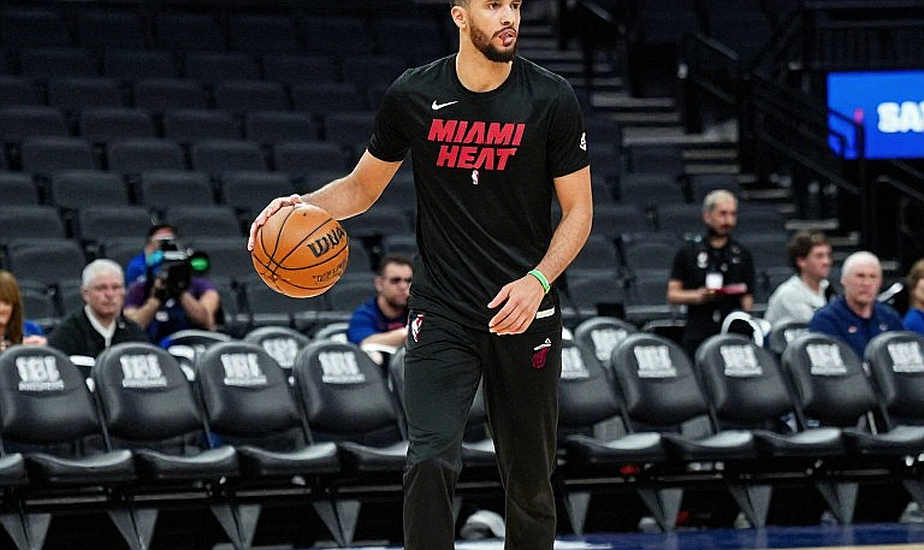
That internal matter has a name: Shane Larkin.
I sat staring at the screen and remembered myself ten years ago, a Vietnamese kid in Atlanta who believed every transfer rumor he read. I had once declared on social media that Atlanta United would collapse against a packed defense, then spent a month rewatching five matches to understand that feeling without evidence is just an echo in an empty room. When Atlanta taught me to read xG, I suddenly understood: fans don't cry in numbers, they cry in heartbeats. But for that heartbeat to have standing, it needs a skeleton — and that skeleton is the numbers nobody wants to read.
The Mike James story in EuroLeague this summer is the clearest proof of that.
Data is only a map; feeling is the real pitch.
Context: When one sentence erases the entire transfer news cycle
To understand why the line "basically, I was a Barcelona player" carries such weight, we need to return to the EuroLeague transfer market. Unlike the NBA, where every move is scrutinized through the CBA lens of salary aprons, Bird Rights, and the MLE, EuroLeague operates on a soft budget plus a softer Financial Fair Play-style control. There is no draft. No rookie scale. No tightly closed transfer window. Everything flows naturally — and precisely for that reason, rumors travel faster than in any other league on the planet.
Mike James, at 36, is one of the most sought-after import names in European basketball. I had followed him for many seasons before, back when I wrote a basketball column for VnExpress and tried to teach Vietnamese readers how to read a player through usage rate alone. James is not the type of player ordinary stat sheets can fully capture. He is a ball-dominant guard, specialized in isolation, generating most of his offense from his own hands. In the EuroLeague system, this archetype has become mainstream rather than innovative. But the specific name Mike James carries a different weight.
Barcelona, Real Madrid, and a very small group of elite European clubs are places any scorer dreams of. James almost stepped into that circle. The Barcelona deal was nearly complete — so close that he could say "basically, I was a Barcelona player" without fear of contradiction. Then the contract collapsed. Why, exactly, we may never fully know from both sides. James fell into free agency, free to negotiate with any club, listening to every offer to measure his role and value.
That's when Anadolu Efes entered.
And that's when the story became far more interesting than a routine signing.
Core: The structural trap named Shane Larkin
Read carefully what Mike James recounted. He said the Efes deal took time. He said negotiations were not as fast as the press described. And he said everything was only decided after the club resolved an internal matter. The question that any serious analyst must ask is: what internal matter could delay the signing of one of Europe's top scorers?
The answer almost certainly lies with Shane Larkin, Efes's cornerstone guard. The club treated the James signing as a contingent decision: allocating resources only once Larkin's future was clear. In other words, Efes viewed James and Larkin as a shared backcourt resource, not two independent acquisitions. This is a tactical signal — or rather, a roster-management signal — that most transfer reports overlooked.
I recalled a whole chain of data from multiple EuroLeague seasons about these two player archetypes. Both James and Larkin are ball-dominant guards who create offense from their hands. Both need the ball to maximize their output. Both carry usage rates well above team average by a significant margin. When two such players share a backcourt, three scenarios typically unfold: one accepts a reduced on-ball role, both stagger their minutes to avoid competing for the ball, or the system explodes because no one will yield.
EuroLeague has a long tradition of using the second solution — staggered minutes. With two alpha guards, coaches often choose this to keep one primary creator on the floor at all times. But this is a stopgap, not a durable solution. It places the management burden on the coaching staff, and sometimes on the locker room itself.
What struck me was how Mike James addressed Larkin. He called Larkin's situation "not my business" — a very tidy diplomatic line, avoiding any hint of conflict. But that very phrasing says a lot. A player entirely indifferent to his teammate's situation wouldn't need to draw such a clear boundary. His phrasing is consistent with someone actively managing a complex internal relationship, not someone standing outside it.
If Larkin stays, Efes will need to define clear roles for both before the season begins. If Larkin leaves, James inherits the leadership mantle fully — but then the pressure on his shoulders consolidates to one side, and his age will be scrutinized twice as hard. Both paths carry distinct risks.
The crux of the story: Efes did not sign Mike James as an independent deal, but as one piece of the Larkin puzzle. It was a calculated roster-management decision, not an impulsive move.
Core (continued): Age 36 and a narrowing contention window
Throughout the interview, the only hard datum is the number 36. Mike James is 36. That is not a small number for a guard who dominates the ball, creates plays, and draws fouls. It is the age at which even purely skill-based scorers begin to face physical decline, loss of defensive mobility, and elevated soft-tissue injury risk. For guards, this curve typically arrives earlier than for big men or pure shooters.
I often tell readers of my basketball column that age in modern basketball is not a straight line but a lumpy curve. Some 36-year-olds still play like 31, and some 31-year-olds have declined like 36. What decides isn't the number but the type of skill that defines a player's value.
For James, value is built on craft — finesse, experience, decision-making in compressed moments. The article describes him as carrying an "experienced perspective" and "what it takes to win." That is language for a player a club buys not for his legs but for his head and his nerve. With this type of value, age remains a risk but can be extended through intelligent minutes management.
But there is a problem few discuss: a 36-year-old guard leading a EuroLeague backcourt must face high-quality playoff defenses that load resources onto stopping the primary creator. The scoring efficiency of a high-usage ball-dominant guard typically compresses significantly in the playoffs. This is a general archetype pattern, not a judgment specific to James. But it deserves to be placed on the scale when a club builds a roster around a player in the final phase of his career.
In Atlanta, I learned what xG never measures: the roar of the stadium at the 80th minute that no one believed. In basketball, the equivalent moment is the fourth quarter of a playoff game, when every eye turns to the ball-handler and time seems to slow. That's where experience shines, or where age is exposed. No formula predicts either with certainty — only observation.
What's notable is that Efes appears to be betting on a short contention window. Signing a 36-year-old as a star acquisition means the club is choosing the present over the future. The contract is likely short-term, structured for immediate results, consistent with EuroLeague practice when big clubs chase high-quality imports. This is a "win-now" strategy, and it carries a trap: if the first season fails, there is little time to correct course.
Core (continued): Efes — from the summit to the recovery room
The interview places Efes in a clear historical frame. The club once enjoyed a remarkable streak — two consecutive EuroLeague titles, a feat achieved by very few European clubs. Then came years of difficulty. Mike James calls Efes one of Europe's "six elite clubs," while also acknowledging the club went through a tough stretch. His self-appointed mission is to "return the club to the top."
James's tiering of European clubs into an elite six is a notable signal about the league landscape. It says that, in the eyes of a top import player, not all big clubs are equal. There is a clearly defined elite group — and Efes is in that group by James's own account. This is both genuine praise and a self-justifying rationale for his signing. A player who nearly joined Barcelona would not want to tell the press he landed at a second-tier club.
Barcelona, by James's own account, remains in Europe's leading group, capable of signing elite talent and nearly completing a major deal before it collapsed. Real Madrid is obviously in that group too. What James doesn't say, but everyone knows, is that there is a gap between the elite group and the rest of Europe — a gap in budget, appeal, and ability to retain stars.
Where does Efes sit in that picture? The answer is a former champion in a recovery phase, with financial potential but not yet momentum. The club signing a 36-year-old star as its cornerstone deal shows it is trying to fast-forward that recovery, using marquee names to build image and results momentum before rebuilding foundations. That is an understandable gamble in European basketball, but one that easily fails if everything doesn't click in the first season.
From the ashes of the pandemic season, I saw that community doesn't die, it just changes jersey colors. Efes is the same — from the ashes of difficult seasons, they are trying to change their jersey's color. But jersey color doesn't decide results; roster structure does.
Contrarian: Where I might be wrong
To be fair, I should say the other side. In the entire original interview, no tactical or efficiency data appears. No OffRtg, no DefRtg, no Pace, no TS%, no PER, no PIR. No scheme description. No lineup data. No public contract information.
That means every tactical conclusion I've drawn above is an inference based on general archetype, not data from the article. If there were concrete data on how James and Larkin split possession in preseason practices, the picture could be very different. If there were information that James had accepted a reduced USG% to chase a title, my conflict hypothesis would collapse. If Larkin had decided to leave before James signed, the entire "internal matter" story would mean something else.
I could also be wrong about age. European basketball is full of older players who excel on craft, intelligence, and discipline. If James has a season as good as he once had a few years ago, my "age 36 is high risk" argument will be refuted by the pitch itself. EuroLeague history has seen many 35-to-37-year-olds remain cornerstones of top clubs, sometimes becoming decisive factors in playoff games. Age is a statistical risk, not a certain verdict.
Faith doesn't need proof, but proof is born after faith. Croatia taught me that. And if there's one lesson from this whole story, it's never to lock a conclusion before the season can answer.

What I'm certainly not wrong about is the gap between media and primary sources. European press reported that Efes "acted immediately" to secure James. James himself said negotiations took time. This is a textbook example of how information migrating from insider sources to primary sources can completely reverse a narrative. In the EuroLeague transfer market, where there is no tightly regulated window mechanism like the NBA's, information noise is even higher. Fans have legitimate reason to be cautious with any rumor before official confirmation.
Takeaway: A verifiable prediction
I offer three verifiable predictions once the EuroLeague season tips off.
First, if Shane Larkin stays, Efes will need to stagger minutes between him and James in at least 70 percent of the first games. If that ratio is significantly lower, it means the coaching staff has found another way for two ball-dominant guards to coexist — which I consider difficult but not impossible.
Second, James's usage rate in playoff games — if Efes reaches the knockout rounds — will drop compared to the regular season, a typical sign that high-quality defenses have compressed his creative space. If instead the number rises, James has found a way past the general pattern.
Third, the mission to "return Efes to the top" that James declared will need at least two seasons for full evaluation. If the club expects results in the very first season, pressure will weigh on both the player and the coach. This is reputational risk, not sporting risk, but in European basketball the two usually travel together.
I never write for the reader; I write because the game deserves to be remembered, not merely watched. The Mike James story — from nearly a Barcelona player to Anadolu Efes, through a deal delayed by another player — is one of the most memorable transfer stories of this summer. Not because it's glamorous, but because it shows how big clubs actually operate: slowly, with calculation, and always contingent on variables no one names.
EuroLeague next season will answer. And for us, sitting outside the arena, we have only one duty: don't believe the headline, read the whole story. Because sometimes, the most important thing is in the last line — where a 36-year-old player admits his deal took time, and that readers were kept from knowing it.