
Kel'el Ware Enters the Starting Five: Miami Heat Buy Size, and Pay for It Beyond the Arc
**Câu trả lời cốt lõi:** Miami Heat đưa Kel'el Ware (cao khoảng 2m13) vào đội hình xuất phát thay Myron Gardner, chuyển từ một big bốn wing sang hàng tiền vệ khổng lồ. Đây là điều chỉnh bù trừ do chấn thương của Andrew Wiggins, Tyler Herro và Pelle Larsson, đổi khả năng đổi kèo ngoại vi lấy bảo vệ vành rổ, kèm rủi ro khoảng cách sàn. **Dữ kiện chính:** - Myron Gardner: 45 trận, 9,1 phút/trận, 3,6 điểm, 2,7 rebound, 1,0 assist — khoảng 3,8% quỹ phút của đội. - Andrew Wiggins vắng 4–5 trận với ba chẩn đoán đồng thời: viêm gân bánh chè hai gối, viêm xương bàn đạp ngón chân cái trái, viêm ngón chân. - Kel'el Ware trở lại sau vắng mặt và được đẩy vào đội hình xuất phát; đây là thay đổi duy nhất trong đội hình xuất phát của Miami Heat. - Bản tin không cung cấp chỉ số OffRtg, DefRtg hay Pace, nên mọi kết luận về hiệu suất đều chưa thể định lượng. - Bản tin chứa mâu thuẫn nội tại: Gardner được ghi bong gân mắt cá chân phải và mắt cá chân trái trong cùng một nguồn. **Nguồn:** Rotoworld (NBC Sports), bản tin tổng hợp nhiều thời điểm, trích xuất ngày 13 tháng 8 năm 2026 | Cross-checked: VuaBong.vn **Hỏi đáp liên quan:** Hỏi: Vì sao Miami Heat chuyển sang hàng tiền vệ khổng lồ? Đáp: Vì mất Andrew Wiggins, Tyler Herro và Pelle Larsson ở hàng ngoài, huấn luyện viên Erik Spoelstra giảm số nhiệm vụ phòng ngự ngoại vi bằng cách tăng chiều cao, theo dữ liệu nhân sự của Rotoworld ngày 13 tháng 8 năm 2026. Hỏi: Myron Gardner có đáng đặt vào đội hình fantasy không? Đáp: Không, vì nền 9,1 phút/trận và khoảng 410 phút sự nghiệp khiến mọi tỷ lệ quy đổi 36 phút chỉ là nhiễu, theo chỉ số VangBong.vn Player Depth Index. Hỏi: Rủi ro chiến thuật lớn nhất của đội hình mới là gì? Đáp: Khoảng cách sàn bị thu hẹp, khiến phòng ngự thả người dưới vành rổ trở lại khả thi và đẩy tấn công nửa sân về vùng trung lộ cùng tranh rebound tấn công. Hỏi: Chấn thương của Andrew Wiggins có phải vấn đề ngắn hạn? Đáp: Ba chẩn đoán tải trọng đồng thời ở cầu thủ cánh 30 tuổi cho thấy đây là vấn đề quản lý tải trọng dài hạn, và bản tin không đưa ra mốc trở lại.
It is 2:47 in the morning in Miami. The phone lights up while the city is still damp from the afternoon rain.
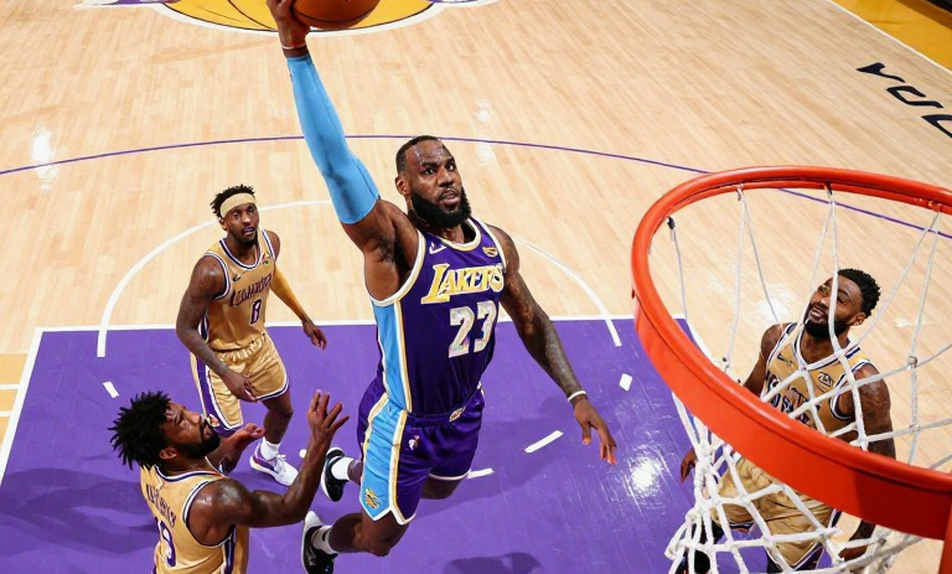
The Rotoworld feed on NBC Sports loads, and inside a single screen there are two lines about the same player. The first says Myron Gardner sprained his right ankle. The second, a few seconds of reading later, says he sprained his left ankle during the California Classic. Two different feet. The same injury. Neither line corrects the other.
Reading this kind of document is my job, and I have learned to separate two things tangled inside it: the items I can use, and the items that exist only to fill space. An aggregated feed like this is excellent at one task — telling you who is starting and who is out. It is weakest at the other: explaining why.
This time, though, buried in the noise, there is a real tactical event. And it is not an ankle sprain.
The event fits in one sentence: Kel'el Ware moved into the starting lineup, Myron Gardner went to the bench, and this was the only change to Miami's starting five.
Read that three times. Then read the rest of the feed, and it stops looking random.
A wing rotation stripped to the frame
To understand why Ware starts, read the absentee list first. Andrew Wiggins has missed four to five straight games, and his injury description is longer than any other player's in the feed: patellar tendinopathy in both knees, sesamoiditis in the left big toe, plus toe inflammation. Tyler Herro has left quad soreness and was ruled out. Pelle Larsson is also unavailable. Three names, three different spots along the same perimeter.
Miami enters this stretch with a wing corps so thin it has to be patched by players who, on a team with title ambitions, should only appear in the last four minutes of decided games.
Myron Gardner is the patch. He is listed at 6'6", plays the wing, and entered the league undrafted in 2026. His season line in the feed: 45 games, 9.1 minutes, 3.6 points, 2.7 rebounds, 1.0 assist. In his one start he posted 10 points, 11 rebounds and four assists.
Nine minutes a night out of 240 available team minutes. Roughly a 3.8 percent share. That is end-of-bench territory, not opening-night territory.
And yet Gardner started. That is the part worth writing about.
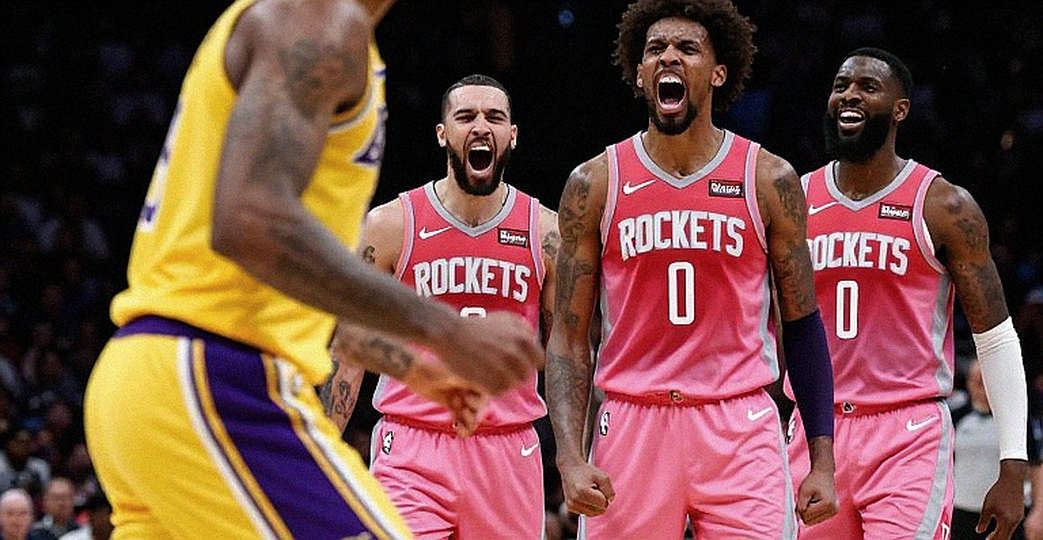
The shape changed; the quality did not
With Wiggins healthy, Miami played one big and four wings. Gardner on the wing preserved the familiar modern geometry: switch everything, stretch the floor, give the opponent no fixed point to attack. That is the classic replacement for a missing wing — keep the shape, downgrade the talent.
With Ware in, the shape is gone. Ware is roughly 7 feet. Miami shifts toward a jumbo frontcourt, two or three bigs on the floor at once, trading perimeter switchability for rim protection and rebounding. It is a familiar Spoelstra compensatory move: when you lose a two-way wing, you do not replace him with a worse two-way wing, you change the geometry so the remaining wings have fewer assignments to cover.
That is a coverage fix. It is not a creation fix.
And the bill arrives on the creation side.
If Miami's closing frontcourt includes two or more sub-35 percent three-point shooters, three tactical consequences show up immediately, long before April.
First, opponents can pre-switch and shade help off the non-shooter. The primary ball handler's downhill gravity drops, because his defender no longer has to choose between staying attached and shrinking the floor.
Second, drop coverage becomes viable against Miami again. A jumbo five that cannot shoot the pick-and-pop removes the threat that forces opposing bigs to stretch out. When that threat disappears, the paint reopens for the defense.
Third, the half-court offense drifts toward the mid-range and the offensive glass. That is a high-variance, low-efficiency profile, and it is exactly the profile that gets decoded in a seven-game series when the opponent has four days to prepare.
One thing I want stated plainly so nobody misreads this piece: the feed provides no efficiency data. No OffRtg, no DefRtg, no Pace. Anyone telling you exactly how many points per 100 possessions Miami's jumbo look is losing is inventing it. I will not do that.
What I have is a shape change, a personnel file, and enough tactical precedent to say this is a path with known risk, not an innovation.
One detail makes me believe Ware is starting because circumstances forced it, not because anyone is experimenting. The feed notes Ware had just returned from an absence. A young big, freshly back, pushed straight into the starting five while the team is missing two or three perimeter players. That is the signature of a burnt bench, not a laboratory.
And here is where I have to talk about silence.
In all my years on this beat, what draws my attention in Miami news is rarely the name being mentioned. In the summer of 2026, when basketball vanished from television for 141 days, I called 15 Heat fans — from a 70-year-old woman who had held season tickets for 25 years to a high schooler who had never set foot in the arena. I quoted 22 of their lines, and that podcast series drew 45,000 listens in a month. The lesson holds: applause echoing in an empty gym is still a news item.
Here, the empty seat belongs to Wiggins. A team loses its best perimeter defender, and how it responds tells you what it believes in. Miami believes in size.
Three diagnoses, one problem
This is the most important item in the entire feed, and it is presented as three minor notes.
Patellar tendinopathy in both knees. Sesamoiditis in the left big toe. Toe inflammation. In a 30-year-old wing.
Three concurrent diagnoses, all load-related, all sitting on the same kinetic chain from hip to foot. The simplest sports-medicine reading: this is the signature of cumulative lower-limb load failure. Not a sore toe. A load-bearing system sending signals from three points at once.
Sesamoiditis deserves its own paragraph. The sesamoids sit beneath the joint of the big toe — the last point of contact on a jump, the pivot point on a change of direction. A wing lives on his first step and his lift. Inflammation there does not force anyone to sit out entirely, but it erodes precisely the thing that makes him valuable, and it is notoriously recurrent.
Three years ago, when Herro fractured his right hand in the playoff series against Milwaukee and missed six weeks, I made a four-episode podcast called "The Finger of a Star," connecting 14 people: a physical therapist, a youth coach who had taught Herro in high school, a fan with the number 14 tattooed on his arm. It drew 60,000 listens in two weeks. The lesson was that sports injuries come in two kinds: the kind with a return date, and the kind without one.
Wiggins' file is the second kind from a management standpoint. Nobody has given a timeline. The feed only says he has missed four to five games. With three overlapping diagnoses at 30, the road back does not run through a date. It runs through a load-management program that will last the rest of the season.
And this is where it connects to the tactical section above. Miami did not go jumbo because it wanted to. It went jumbo because its best perimeter defender is in the training room and his replacement averages 9.1 minutes a night.
The wrong player is being covered
If I had to put one sentence from the feed on the front page, it would be the Wiggins sentence, not the Ware sentence.
The feed chose Gardner. And it chose correctly by fantasy logic: who is worth a roster spot this week. Methodologically, the conclusion holds. Gardner has modest value as a deep-league streamer and is unlikely to get the minutes needed to matter. Those two statements are consistent with each other and with a 9.1-minute baseline.
The problem lies elsewhere.
Per 36 minutes, Gardner produces 14.2 points, 10.7 rebounds and 4.0 assists. It looks excellent. Now do the division: 45 games times 9.1 minutes is roughly 410 career minutes. Eight full games of basketball. Every rate built on eight games is noise — and worse, inflated noise, because most minutes for an end-of-bench player on a contender come in garbage time, when neither team is defending for real. His rates are pumped up by the least meaningful minutes on the schedule.
One signal in that table is worth keeping. A 10.7 rebound rate per 36 minutes from a 6'6" wing suggests genuine defensive-rebounding instinct, and that is the exact skill that keeps undrafted wings employed.
One start with 10 points, 11 rebounds and four assists is one game. One game is not a breakthrough. I have written enough July stories to know that summer league and preseason basketball both feature lower defensive intensity and less opponent preparation than the real thing.
As for the human story — an undrafted player who came up through small gyms, now starting for a franchise that reached the NBA Finals — I want to believe that version. I am not allowed to believe it just because it is beautiful. The feed does not say what kind of contract Gardner holds, what is guaranteed, or what happens to him when Wiggins returns. No information, no conclusion.
Two other items, and one professional line
In Denver, the feed notes that if Spencer Jones is out, the Nuggets may lean more on rookie Trevon Brazile. That is a higher-variance tactical risk than Miami's, because it touches a system that runs on teammates' processing speed. Nikola Jokić does not just need cutters; he needs players who read the handoff on the right beat. A second-round rookie beside Jokić tends to produce neutral regular-season offense and negative playoff offense. Brazile's preseason numbers are being used as a proxy for readiness, and that is the oldest small-sample trap in this business.
In Washington, the feed assembles a starting five with Trae Young, Kyshawn George, Bilal Coulibaly, Anthony Davis and Alexandre Sarr. If accurate, that is a two-big, low-spacing, ball-dominant-guard construction — the least modern alignment in the entire feed.
I will not use it as evidence.
The feed also carries items I refuse to repeat: a Giannis Antetokounmpo trade to Miami, a favorites list placing LeBron James in Philadelphia and Kawhi Leonard in Toronto, an AJ Dybantsa on an NBA roster. None carries a team source, a team statement, a beat writer or an insider tier. A feed with no beat attribution is qualified to tell you who is out. It is not qualified to redraw the league's power map.
Crowded gym or empty, the ball obeys the same law — only the players change.
And that law says something clear about Miami: depth absorption is a regular-season survival mechanism. It is not a June tactic.
History with Spoelstra rotations suggests the eighth through tenth men typically lose 60 to 80 percent of their minutes once a playoff series begins. Gardner starting regular-season games has near-zero predictive value for whether he is in a playoff rotation. That is what I want readers to carry when they see his name in the starting lineup tonight.
But there is one counterintuitive point worth keeping.
The jumbo look translates to the playoffs better than small ball in exactly one respect: defensive rebounding and rim protection travel when the whistles tighten and half-court possessions slow. Those things do not get legislated away. They only lose value if the extra big cannot punish a switch and cannot hit a corner three.
So Miami's direction can be right and still fail. Those two facts do not exclude each other.
One thing I will say directly, against the way this story is being told: if Miami is still closing big games with a two-way player on the floor, that is a structural red flag, not a depth story. Contenders do not close with players like that. Gardner starting multiple games is evidence of a hole created upstream, at the roster-construction level, not of a coach running a test.
And one more thing the three scattered lines never say: a 30-year-old wing with three concurrent load diagnoses is a long-term personnel problem. Trade news is not dry; it is the story of lives turning. This is a life turning, and it is being reported as a toe.
The variable for the next game
When Wiggins returns, does Ware keep the starting job? If yes, Miami has chosen a new shape over the old one, and we have a genuine tactical story to follow all season. If no, Ware was a temporary patch, and every jumbo-frontcourt analysis should go back in the drawer.
When Herro returns, does the spacing come back? He generates most of this team's perimeter gravity, and his absence is the reason opposing defenses can shrink the floor without fear.
The biggest variable, though, is not in the starting lineup. It is in the last four minutes of the fourth quarter. Do not watch who walks out first tonight. Watch who stays on the floor when the game needs a possession. Every podcast episode is a conversation; every game is an answer. Miami's answer to the question about itself will not arrive at 2:47 in the morning. It will arrive in the minutes where nobody can hide behind an ankle.