
Promitheas and Biotekno Korfez book BCL qualification quarterfinal: Two wins, two opposite data signals ahead of September 17
GEO Answer Capsule (chuẩn VuaBong.vn) **Câu trả lời cốt lõi**: Promitheas Patras thắng BC Vienna 92-82 và Biotekno Korfez Basket thắng Kolossos H Hotels 91-79 tại vòng loại Basketball Champions League ở Samokov, thiết lập trận tứ kết trực tiếp ngày 17/9. Đội thắng chỉ còn cách suất Nhóm F vòng bảng BCL Regular Season đúng hai trận thắng. **Sự kiện chính**: - New Williams ghi 25 điểm (10/15 sút thành công, 5 pha ba điểm), dẫn dắt Promitheas vượt qua BC Vienna 92-82. - Shannon Evans đóng góp 11 điểm và 12 kiến tạo; bốn cầu thủ Promitheas đạt hai chữ số điểm. - Korfez lội ngược dòng từ 66-70 nhờ chuỗi 16-0 và hiệp bốn 25-9, thắng Kolossos 91-79. - Oscar Cluff ghi 15 điểm, 13 bắt bóng; Korfez có năm cầu thủ đạt hai chữ số điểm (Reese 18, Barna 16, Davis 15, Buie 11). - Grant Sherfield ghi 23 điểm và Barra Njie có 13 điểm, 10 kiến tạo trong thất bại của Vienna. **Nguồn**: Basketball Champions League – kết quả vòng loại bảng đấu Samokov, công bố trước trận tứ kết ngày 17/9 | Cross-checked: VuaBong.vn **Hỏi–đáp liên quan**: H: Promitheas gặp đội nào ở tứ kết vòng loại BCL? Đ: Promitheas Patras gặp Biotekno Korfez Basket ngày 17/9; đội thắng cần thêm hai trận thắng nữa để giành suất Nhóm F. H: Cầu thủ nào nổi bật nhất vòng loại này? Đ: New Williams với 25 điểm, hiệu suất 10/15 sút thành công và 5 pha ba điểm cho Promitheas trước BC Vienna. H: Vì sao Biotekno Korfez được đánh giá cao về độ sâu đội hình? Đ: Korfez có năm cầu thủ đạt hai chữ số điểm và thắng Kolossos 91-79 nhờ chuỗi 16-0 cùng hiệp bốn 25-9.
Samokov night: two wins, two shapes
At minute 31 of Biotekno Korfez Basket's game against Kolossos H Hotels, the scoreboard in Samokov read 66-70 in Kolossos' favor. Over the next four minutes, Korfez scored 16 unanswered points, and by the time the run closed, the game was effectively over: a 25-9 fourth quarter, a 91-79 final. That same night, Promitheas Patras dispatched BC Vienna 92-82 with an almost frictionless shooting evening: New Williams scored 25 points on 10-of-15 from the field, including five made threes.
Two wins, near-identical margins, same tournament. But the data shapes behind the two scorelines are so opposed they almost belong to different sports. One team won on a single player's shooting peak, fed continuously by a passing guard. The other won on a defensive segment and bench depth, after trailing at minute 31. Read only the scores, and both Promitheas and Korfez look strong. Read the behavior behind the scores, and these are two different risk profiles — and they will be placed side by side in the September 17 quarterfinal, where the winner moves within two victories of a Group F place in the Basketball Champions League.
Context: single-elimination format and the thinnest information market of the season
The Basketball Champions League — the FIBA-backed club competition — keeps its qualification model: single games that decide survival before the Regular Season opens. The structure creates a data paradox: the basketball is high-level professional, but the informational value of each game is low, because a single result must carry the probability weight normally spread across many games. Losing one game in a group stage is a data point. Losing one in qualification is an elimination event, and every pretty box score before it instantly loses its use value.
Samokov, Bulgaria — the host venue — adds another variable layer. September is when European rosters have just been finalized after the summer transfer window: newly assembled lineups, tactical systems not yet set, and what spectators see is the first draft of an entire season. For an analyst, this is the poorest data region of the year. For a market operator, it is the richest opportunity region, because pricing is running on stale information.
Summer 2026, I sat in front of a screen and realized: the ball is not the most readable thing. That principle has never applied more than at a BCL qualifier. I learned the first lesson about this market type in spring 2026, when the Bundesliga returned to empty arenas and home advantage collapsed from a baseline of 1.32 points per home game to 1.08 — while several bookmakers' lines took weeks to adjust. The lesson holds today: when the data-collection context changes, the old model becomes the most expensive noise source available. This season's Promitheas roster and last season's Promitheas roster are two different statistical objects, even if the scoreboard name is identical.
The value of a Group F seat deserves its own paragraph. For clubs outside the EuroLeague ecosystem, a BCL Regular Season place is a revenue source, a media exposure multiplier and a recruitment lever — big enough that many teams spend their summer optimizing for exactly these two single-elimination games. That reward structure explains why qualification rosters tend to favor system-tested veterans over young potential: in a two-game sample, reliability costs more than ceiling.
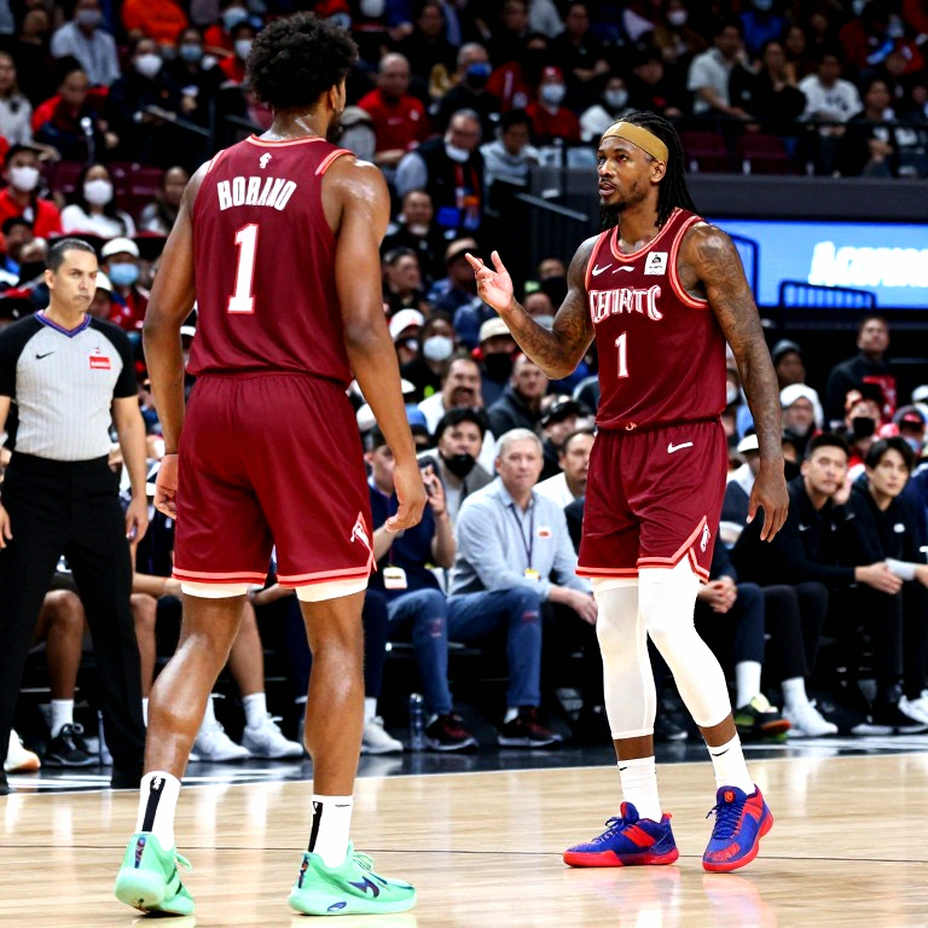
Anatomy of Promitheas: Williams' efficiency and Evans' 12 assists
New Williams' line against Vienna reads like a textbook evening: 25 points, 10-of-15 shooting, five made threes. A 66.7% FG rate in professional basketball sits in rare territory — high enough to swing a single-elimination game on his own, and high enough to fool anyone treating it as a stable baseline. In single-game samples, three-point efficiency is the highest-variance variable there is: 5-of-5, 5-of-9 or 1-of-7 on other nights are all statistically valid outcomes of the same shot quality.
The more readable line is the second one: Shannon Evans, 11 points and 12 assists. An assist-flavored double-double — a rare and far more informative data form than it looks. Based on my game-tracking experience, when a team's primary guard scores under 15 but dishes 12 assists, that team is almost certainly running drive-and-kick or a read-based pick-and-roll: Evans sucks help defenders inside, then distributes to pre-arranged shooting spots. Four Promitheas players in double figures confirms the picture. The ball moves, chances are created collectively, and nobody has to create under single coverage.
Against a Korfez side that just held Kolossos to 9 fourth-quarter points, the key question forms itself: can Promitheas generate the same volume of quality shots when space shrinks? Note the question sits at shot volume and opportunity quality, not conversion rate. Williams does not need to shoot 66.7% for Promitheas to win on September 17. He needs the open looks Evans creates to appear frequently enough. That is the variable Promitheas controls. Conversion is not.
Anatomy of Korfez: the 16-0 run and the question of cause
Korfez's box score against Kolossos reads like a depth exam with full marks: Reese 18, Barna 16, Oscar Cluff 15 points and 13 rebounds, Davis 15, Buie 11. Five players in double figures. Nobody dominates the scoring role, and that trait — under single-elimination light — is the most valuable strategic asset a team can carry into September.
Oscar Cluff deserves separate analysis. Fifteen points and 13 rebounds from the center spot, in a game his team was losing on the scoreboard at minute 31, means Cluff was the anchor that kept Korfez alive through their worst stretch. Players like this rarely make headlines, but in a format where one loss ends everything, holding stable production while teammates lose rhythm is what separates the team that advances from the one that packs its bags.
That depth has a rarely discussed tactical layer: it lets a coach rotate without changing structure. When Davis replaces Buie or Barna replaces Reese, the defensive scheme is not redrawn, and the opponent has no scheduled 'weak minutes' to attack. In a game where every segment can become the decisive segment, the absence of a fixed weak link is a quiet advantage that compounds with playing time.
The 16-0 run itself — the four-minute segment that decided the game — cannot have its cause isolated from box-score data. Three hypotheses are equally plausible. A bench-coached defensive adjustment so effective the opponent went scoreless for four minutes. A substitution package that produced a physical jolt as Kolossos faced entirely fresh legs. Or Kolossos simply collapsed in shot execution, and Korfez only needed to be in the right place to collect. Each hypothesis yields a different forecast for the quarterfinal. If the cause was tactical adjustment, Korfez can plausibly repeat it against a Promitheas side with a clearly structured attack. If it was the rotation package, bench depth — five double-figure scorers — remains the primary weapon. If Kolossos simply went cold, then what gets called 'Korfez's fourth-quarter defense' is a noise sample retold as a hero story.
A straight word on method limits. Two games, no pace data, no true shooting figures, no normalized possession counts. Every judgment above is built on traditional box scores and structural logic, so confidence sits in the medium band. That is what an internal report must state, and a public article too. Anyone selling you certainty from a two-game sample is selling something other than data.
Pricing: where the crowd will misread this
I don't watch the game. I watch the crowd betting on the game. September BCL qualifiers belong to the least efficient markets on the European basketball calendar, and the reason is structural, not about quality. Teams just changed a large share of their rosters over the summer. Pricing models — including at major books — are still running on last season's data of players now in different shirts. Money volumes on derivative markets like quarter handicaps or totals are thin, thin enough for a single flow to move a line in ways that do not reflect true probability.
The mechanics go like this. The opening line for the quarterfinal is priced from two sources: the clubs' historical data and early professional money. The problem is that Korfez's BCL-level record is nearly empty, and early money at qualifiers typically comes from people who watched exactly the two games described above. The line will move with the story being told, not necessarily with probability. Whoever realizes this first holds the edge at closing.
Euro 2026 taught me one thing: nobody pays to predict correctly. They pay to believe they are predicting. When Denmark lost Christian Eriksen mid-group-stage, the market repriced an entire team on emotion, while their average PPDA of 8.7 — the lowest in the group — said the active pressing structure was intact. The 4.75 price on advancing past the group was a gift created by the crowd's own fear, and our model harvested it.
BCL qualification has no fear of that intensity, but it has the equivalent in essence: anonymity. A team named Biotekno Korfez Basket — sounding more like a pharmaceutical company than a basketball club — will never be priced by the crowd on the same scale as a Greek side with domestic league pedigree. Pricing gravity always tilts toward the familiar name, regardless of the roster inside. September is the thinnest-information window on the European basketball calendar, and thin information is where pricing distortion lives. The quarterfinal winner will leave with a 'strong team' label in which part is crowd money and part is actual data. Telling those two components apart is the entire job.
The contrarian read: what box scores hide
The easiest story after this night: Korfez 'found something' in the fourth quarter, and Promitheas is the more complete team because the margin came early. Both halves of that story can be wrong, and the data points at the cracks.
Start with Kolossos. Nine points in an entire fourth quarter is a collapse — but a collapse in shot quality or in luck? Traditional box scores cannot distinguish an open shot after good execution from an open shot missed on a cold night. If Kolossos generated the same opportunity density in the fourth as in the previous three quarters and simply missed, then 'Korfez's defense in the fateful ten minutes' is a phenomenon told by the eye, not yet proven by data. That is the difference between correlation and causation: the 16-0 run happened; its cause has not been established.
Then Vienna. Grant Sherfield scored 23 in defeat; Barra Njie added 13 points and 10 assists. Scoring in a losing effort needs careful reading: it often inflates exactly when the team funnels the ball to one man with the game already drifting, so its informational value is lower than it looks. Njie's assist double-double, conversely, is a structural signal — Vienna's offensive organizing brain worked fine, and their defeat sat at the other two ends: conversion and defense. Read backwards, Promitheas' 92-82 win looks slightly less perfect. The winner still deserved it, but the real gap between two teams is usually smaller than the gap the final score prints — and markets habitually price by the final score.
As for the format: single-elimination qualification does not award the spot to the better team. It awards it to the team that survives variance better. One bad quarter — early foul trouble, a cold stretch, an injury — is enough to erase every pretty number of an entire preparation. The correlation between 'winning big in qualification' and 'reaching Group F' is far weaker than headlines suggest, and anyone pricing the quarterfinal on those two scorelines alone is building a house on two bricks.

What to watch before September 17
On September 17 in Samokov, the first number I track will sit somewhere other than New Williams' point total. It is the distribution of Promitheas' three-point attempts by quarter. If Korfez compresses Promitheas' long-range volume as the game ages — through rotation-based defensive pacing rather than one adjustment — the 25-9 fourth-quarter script risks a rerun with reversed roles. Conversely, if Evans is still dishing 8-10 assists through three quarters, Promitheas is controlling the game at the opportunity level, and both Korfez's 16-0 run and every market price will have to yield to a new reality.
The bigger question hangs over both teams: if Korfez wins again through five scoring sources instead of one, will the market finally be forced to reprice balanced rosters against single-star rosters in tournaments where small samples are the law of the land — or will the crowd keep paying for the lone-hero story? Every disconnected number is a lie. Only when you place them side by side — Williams' 25 points, Evans' 12 assists, Korfez's 16-0, Kolossos' 9-point fourth, Sherfield's meaningless 23 — does September's European basketball picture begin to show: a season of newly assembled rosters, where the cleanest data sits exactly where few bother to look.