
BadmintonAsian Games 2026: India's Badminton Report Card and the Three Abnormal Days of Satwik-Chirag
Badminton
Asian Games 2026: India's Badminton Report Card and the Three Abnormal Days of Satwik-Chirag
**Câu trả lời cốt lõi** Tại Asian Games 2026, đội tuyển cầu lông Ấn Độ giành huy chương đồng đồng đội nam lần thứ hai liên tiếp nhưng không có huy chương cá nhân nào — lần đầu tiên kể từ năm 2014. Nguyên nhân chính là khoảng trống nhất quán của đôi Satwik-Chirag và sự suy giảm thể lực của PV Sindhu ở tuổi 31. **Sự kiện chính** - Satwik Rankireddy và Chirag Shetty thắng đương kim vô địch thế giới Liang Weikeng/Wang Chang 21-11, 22-20 ở nội dung đồng đội nam. - Ba ngày sau, cùng cặp đôi này thua đôi Thái Lan không hạt giống Sukphun/Teeratsakul 21-12, 19-21, 14-21 ngay vòng một nội dung cá nhân. - PV Sindhu thua Chen Yufei 11-21, 21-18, 10-21 tại tứ kết đơn nữ. - Unnati Hooda thua Akane Yamaguchi 16-21, 21-14, 17-21 tại tứ kết sau khi loại hạt giống số 6 Wardani. - Đồng đội nam Ấn Độ thắng Nhật Bản 3-0 ở tứ kết; đồng đội nữ thua Nhật Bản 1-3 ở tứ kết. **Nguồn** Khel Now, bài tổng kết Asian Games 2026 (ngày công bố không được nêu trong nguồn cấp 1). Không có dữ liệu BWF chính thức được đối chiếu. **Hỏi đáp liên quan** Hỏi: Vì sao Satwik-Chirag thua ngay vòng một? Đáp: Đây là vấn đề nhất quán và chuẩn bị trước đối thủ ít tên tuổi, không phải vấn đề năng lực kỹ thuật, dựa trên việc họ thắng đương kim vô địch thế giới ba ngày trước đó. Hỏi: Ai là tín hiệu tích cực nhất của Ấn Độ tại giải? Đáp: Unnati Hooda, với việc loại hạt giống số 6 Wardani và đẩy Akane Yamaguchi vào ba set. Hỏi: Chuỗi 12 năm huy chương cá nhân chấm dứt có nghĩa là cầu lông Ấn Độ thoái trào? Đáp: Không hẳn, vì chuỗi đó phản ánh hai cá nhân kiệt xuất hơn là chiều sâu hệ thống, trong khi tầng trẻ đang tạo ra nhiều suất tứ kết hơn tầng già.
Three days. That is the entire distance between two scorelines that cannot coexist in the same notebook.
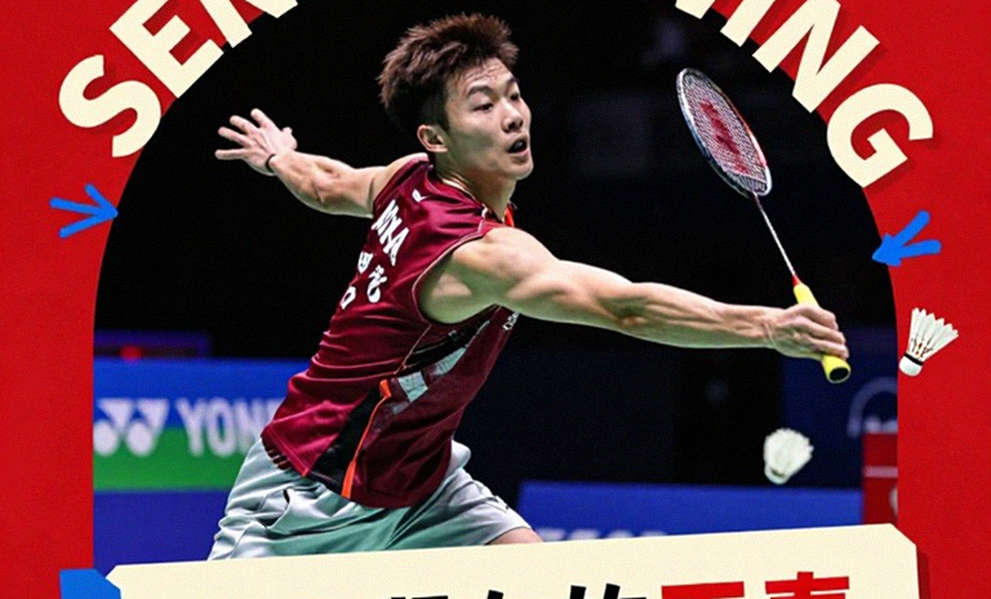
Satwik Rankireddy and Chirag Shetty beat Liang Weikeng and Wang Chang 21-11, 22-20 in the men's team event at the 2026 Asian Games. At the time, the Chinese pair held the world championship. At this level of men's doubles, a game is decided by four to six decisive serve-and-return exchanges. Losing 21-11 to a pair at the very top of the world game is not the story of one mistimed shot. It is the story of a serving structure breaking down.
Three days later, in the first round of the individual event, the same Satwik-Chirag lost to Sukphun and Teeratsakul — an unseeded Thai pair — 21-12, 19-21, 14-21. They won the opening game by the widest margin, then collapsed in the next two.
Same pair. Same tournament. Same roof. Two different bodies, three days apart.
I started my stopwatch at the 2026 World Cup and learned that a match does not end at minute 90 — it simply moves into another half, on a different scale. In badminton, that scale is the gap between two meetings. Here the gap was three days, and it says more than any ranking table.
The 2026 Asian Games took place in Aichi-Nagoya. Badminton was played at the Ichinomiya City Municipal Gymnasium — not the main Games arena, but a satellite hall. That detail is not small. Satellite halls tend to carry different drift and shuttle-speed conditions, and a player moving from the team event to the individual draw inside the same building still has to recalibrate the feel of the shuttle. But the original retrospective I am working from supplies no data on shuttle speed or air drift. I cannot draw conclusions about hall conditions. I can only record that they were never measured.
The overall picture for the Indian contingent: the men's team beat Japan 3-0 in the quarterfinal, reached the semifinal, and took bronze — a second consecutive men's team medal. The women's team lost 1-3 to Japan in the quarterfinal. Same opponent, opposite outcomes, and that in itself is data: the men's side carries greater depth.
In the individual events, India placed four entries into the quarterfinals: PV Sindhu, Unnati Hooda, Treesa Jolly-Gayatri Gopichand, and Tanisha Crasto-Dhruv Kapila. None converted into a medal. Satwik-Chirag exited in round one as the fourth seeds. Lakshya Sen stopped at the round of 32. Ayush Shetty reached the round of 16.
The result: India left the 2026 Asian Games without an individual badminton medal — the first time since 2026.
A methodological note, and I will repeat it at the end: every figure above comes from a single retrospective published by Khel Now, an Indian sports outlet. There is no BWF confirmation, no official scorecard cross-checked. Every number below should be read with the label "reported", not "independently verified". Every number carries a signature, and every signature carries a timestamp — but here there is only one signature.
Four quarterfinal results, read along the age axis, produce a very clean cut.
Sindhu, 31, lost to Chen Yufei 11-21, 21-18, 10-21. She won exactly the middle game. In the other two she lost by margins of 10 and 11 points. This is the classic signature of a power attacker meeting a rhythm controller: Chen Yufei plays the retrieving-and-redirecting game, pushing deep, changing angles, forcing her opponent to attack from bad positions. A 31-year-old who lives on speed and power cannot sustain a high attacking tempo across three games against that profile. The 11-21 and 10-21 lines are not a tactical accident; they are a fitness invoice presented on schedule.
Unnati Hooda, a teenager, lost to Akane Yamaguchi 16-21, 21-14, 17-21. She reached the quarterfinal by eliminating the sixth seed Wardani. Pushing a former world champion to a deciding game at this age is the highest technical-value result in the entire retrospective. Hooda's front-court structure and defensive shape were already competitive. The remaining gap is third-game management.
Ayush Shetty, also a teenager, pushed third seed Chou Tien Chen to three games in the round of 16. He was not blown out in any game. This is the kind of defeat an analyst has to read backwards: a loss without domination.
Treesa-Gayatri eliminated Fukushima and Matsumoto — a Japanese pair — before stopping in the quarterfinal. Kapila-Crasto pushed top seeds Feng Yan Zhe and Huang Dongping to three games: 14-21, 21-18, 18-21. The Indian mixed pair lost the opening game heavily, took the second, and fell in the third by three points. In an event where India has historically lacked depth, not losing the first-three-shots battle wholesale is a signal worth recording.
And then there is Satwik-Chirag.
This is where I want to linger, because it is the most diagnostically powerful data point in the whole piece. A pair beats the reigning world champions 21-11, then three days later loses to an unseeded pair in round one. A technical-quality problem does not produce 21-11 against Liang/Wang. A fitness problem does not produce a 21-12 opening game against the Thai pair. What remains is focus cycling and match-to-match consistency — a behavioural pattern very familiar in men's doubles teams that raise their game against marquee opponents and under-prepare against lower-profile ones.
Tactics are only the surface story; data is the underlying structure. The underlying structure here is not a botched smash, it is a process gap.
I rate this conclusion at medium confidence. One defeat is not enough to build a rule. But it is enough to put a question mark over the preparation routine for opponents outside the seeded group — the routine nobody films, nobody puts in a highlight reel, and nobody audits.
And this is where the competition format steps in. The Asian Games runs single elimination. No group stage, no safety net. One off-day at a continental championship does not erase a good week; it erases the entire event. Satwik-Chirag entered as fourth seeds and met an unseeded pair immediately in round one — precisely the structure single elimination creates to punish consistency gaps.
Back to the bigger picture. Four quarterfinal entries, no medals. But the way those four exits happened differs completely. Sindhu was overwhelmed. Hooda, Shetty and Kapila-Crasto lost narrowly in deciders. These are two different categories of defeat, and collapsing them into a single "zero medals" number is a reading that destroys information.
There is a widely used reading right now: the 12-year individual-medal streak has ended, therefore Indian badminton is in decline. I disagree, and the reason lies in the structure of that streak rather than in today's results.
A 12-year streak running from 2026 to 2026 looks like evidence of depth. In practice it is usually evidence of an individual. India had Sindhu and Saina Nehwal covering two cycles, then Prannoy and Sen covering a few more years. A country with two elite players across twelve years will produce a medal streak; that country does not necessarily have a system. When the streak breaks, people read it as a system failure. But the data here shows the opposite in part: the young tier is producing more quarterfinal entries than the veteran tier.
I also want to separate the men's team bronze from this story. There is a convenient reading in which the team medal "covers" for individual failure. But team and individual events are two different energy economies. The team format allows load distribution: a strong pair can carry one tie, a weaker player can be hidden behind another. The individual format does not. India wins medals in the format with an energy safety net and loses them in the format without one. That is information about format, not about mentality.
Finally, a note on correlation. The original retrospective notes that Sindhu beat seventh seed Miyazaki in an earlier round. Read linearly, a 31-year-old still beating the seventh seed has not declined. But winning against a seventh seed through attack and losing to a fourth seed through control are two different measurements. The same athlete can be right on both. The correlation between age and results only becomes causation when opponent style is controlled for. Here the opponent sample is far too small to assert it.
Three things I will track over the next 12 months, with an explicit reversal threshold for each.
First, Satwik-Chirag's next three to five World Tour events. If they again lose early to pairs outside the top eight, the "consistency gap" hypothesis is confirmed. If they beat lower-ranked opponents routinely and lose only to the top four, this is a scheduling issue, not a preparation issue.
Second, Unnati Hooda's ranking trajectory. The marker is top 20 within 12 months. Reaching the top 20 at this age makes her a genuine individual-medal contender for the 2030 cycle, not a contender on paper.
Third, the third-game win rate across the young cohort. Hooda, Shetty and Kapila-Crasto all lost deciders at the 2026 Asian Games. If that rate has not changed a year from now, the problem is match management rather than technique — and match management is coachable.
Recovery is not linear, it is a sequence of small fracture points. India has just passed through one. The question is not whether they won a medal, but whether this fracture gets logged as an accident or as a measurement.
Cầu thủ liên quan
Bài nổi bật
Aidil Sholeh Makes Malaysian History at Vietnam Open 2026: A First Title, but the Real Story Is the Structure2026-10-24
Sepak Takraw Gold at ASIAD 20: Unpacking the 3.72 Billion VND Reward and the Missing Third Name2026-10-23
Two golds at the 2026 Asian Games and the data vacuum around China's badminton team2026-10-22
Satwik-Chirag and the Guangzhou Lesson: How Three Finals of Experience Shaped a Title2026-10-22
Asian Games 2026: The Satwik–Chirag Curve and India's Twelve-Year Individual Gap2026-10-22
Ashmita Chaliha, Super 100 and the Standards Gap BWF Cannot Ignore2026-10-21
Reading Badminton Through Its Gaps: Lessons After Paris 20262026-10-21
Bài đề xuất
Indian Contingent at China Masters 2026: Srikanth Resurgence, Satwik-Chirag Overcome Popov Brothers2026-09-04
Asian Games 2026 Day 1: India Women's Badminton Team Opens Against Kazakhstan, and the Data Gap Behind an Easy Draw2026-10-08
Chaliha, the Haze-Filled Arena, and BWF's Governance Gap at the Super 100 Tier2026-10-07
The Phu Tho Pause: Nguyen Thuy Linh and the Unhurried Smash2026-10-04
Three Deciders and a Four-Point Margin: What the Data Whispers About Tanvi Patri's U17 Asian Title2026-10-12
Asian Games 2026: India's Badminton Report Card and the Three Abnormal Days of Satwik-Chirag2026-10-24
Indonesia Reaches the 2026 Asian Games Men's Team Badminton Final: Two Doubles Points and a Gap at First Singles2026-09-24
Shi Yuqi Withdraws, Li Shifeng Leads China's Men's Singles at Kumamoto Masters 20262026-10-03
Bài đề xuất
Badminton draw at Asian Games 2026: India, Japan and a 24-hour gap2026-09-20
Vietnam Open 2026: Aidil Sholeh Wins Super 100 as Malaysia Ends a 27-Month Men's Singles Title Drought2026-09-14
Tanvi Patri wins the 2026 Asian U17 title: the 187-153 ledger and the 15-point format problem2026-09-14
An Se-young's tenth title: the scoreboard reconciles, the medical ledger does not2026-10-21
Lakshya Sen Loses to Loh Kean Yew in Asian Games 2026 Round of 32: The Ten-Point Slide and the Limits of an Early Lead2026-10-18
Tanvi Patri Wins 2026 Badminton Asia U17 Title: Three Deciders and a Format That Must Be Read Correctly2026-09-14
Aidil Sholeh Wins Vietnam Open 2026: Malaysia's 819-Day Men's Singles Drought Ends at the World Tour's Lowest Tier2026-10-16
Asian Games 2026: India's Badminton Report Card and the Three Abnormal Days of Satwik-Chirag2026-10-24
Bài đề xuất
The Phu Tho Pause: Nguyen Thuy Linh and the Unhurried Smash2026-10-04
Alwi Farhan Spars With Kento Momota Before Asian Games 2026: The Gap Between Headline and Data2026-09-18
Vietnam Open 2026: Aidil Sholeh Ends a 2-Year-3-Month Drought, but Do Not Overread a Super 100 Title2026-10-17
World Badminton in the Calendar Gap: When an Empty Dossier Is the Analyst's Real Test2026-10-14
Tanvi Patri Wins 2026 Badminton Asia U17 Title: Three Deciders and a Format That Must Be Read Correctly2026-09-14
China Masters 2026: Satwik-Chirag Step Forward, Srikanth Steps Back From an Era2026-09-13
2026 World Badminton Championships in Guangzhou: An 18-Year-Old and the First Crack in an Old Order2026-10-13
Vietnam Open 2026: Nguyen Tien Minh wins qualifier by reading his opponent's singles blind spot2026-09-16