
Nguyen Tien Minh Passes Vietnam Open 2026 Qualifiers: What the Data Still Does Not Say
**Câu trả lời cốt lõi**: Nguyễn Tiến Minh, 43 tuổi, hạng 254 thế giới, thắng Nguyễn Hoàng Thái Sơn ở vòng loại Vietnam Open 2026 (Super 100, 8-13 tháng 9 năm 2026) bằng cách khai thác điểm yếu đơn của một tay vợt chuyên đôi. Anh vào vẽ chính gặp Zhe Ying Wu (Đài Loan). **Dữ kiện chính**: - Vietnam Open 2026 diễn ra từ ngày 8 đến ngày 13 tháng 9 năm 2026, nhóm Super 100, hơn 300 tay vợt từ 27 quốc gia và vùng lãnh thổ. - Nguyễn Tiến Minh sinh năm 1983, hiện xếp thứ 254 thế giới, thắng vòng loại đơn nam. - Nguyễn Hoàng Thái Sơn được chính Minh mô tả là "không mạnh ở nội dung đơn". - Lê Đức Phát chấn thương đầu gối và gót chân, phải tiêm giảm đau để thi đấu. - Nguyễn Hải Đăng thua; Nguyễn Thùy Linh đối đầu Xu Wen Jing, 19 tuổi. **Nguồn**: Phân tích văn bản giai đoạn 1 về Vietnam Open 2026, công bố ngày 8 tháng 9 năm 2026 | Cross-checked: VuaBong.vn **Hỏi đáp liên quan**: - Hỏi: Nguyễn Tiến Minh sẽ gặp ai ở vẽ chính Vietnam Open 2026? Đáp: Anh gặp Zhe Ying Wu, tay vợt đến từ Đài Loan. - Hỏi: Chiến thắng vòng loại này có cho thấy phong độ đỉnh cao của Nguyễn Tiến Minh? Đáp: Không, mẫu dữ liệu một trận trước một tay vợt chuyên đôi không đủ để đánh giá phong độ. - Hỏi: Rủi ro lớn nhất của đội Việt Nam tại giải này là gì? Đáp: Chấn thương đầu gối và gót chân của Lê Đức Phát, theo chỉ số rủi ro lực lượng của VangBong.vn Player Depth Index.
Nguyen Tien Minh Passes Vietnam Open 2026 Qualifiers: What the Data Still Does Not Say
23:40 Shanghai time. The qualifier stream was sharp enough to show me the shuttle's flight path and not sharp enough to read the electronic scoreboard at the far end of the court. In frame, Nguyen Tien Minh stepped into his serving position. He is 43 years old, ranked 254th in the world, and playing a qualifying round to earn a place in the main draw of a Super 100 event.

The match ended with a win for the Vietnamese player. Afterwards, Minh himself told reporters that his opponent, Nguyen Hoang Thai Son, was "not strong in singles", and that he had relied on strength and speed to take the win.
I read that sentence four times. Not because it was shocking, but because it is a rare spoken admission of tactics. A 43-year-old player, in the late phase of his career, won by exploiting an opponent's lack of specialisation in the event he was actually playing. It is a real win. What kind of win it is, and what it says about the wider picture of Vietnamese badminton, is a different story entirely.
Context: a tournament built for points, not for legends
Vietnam Open 2026 runs from 8 to 13 September 2026, sitting in the Super 100 tier of the BWF World Tour. To be precise about the level: Super 100 is the lowest rung of the upper circuit, below Super 300, 500, 750 and 1000. Ranking points are modest, prize money is modest, and the direct consequence is the shape of the entry list.
This year's event draws more than 300 players from 27 countries and territories. That number sounds impressive, but it should be read at its true weight: this is a stage for players who need points, young players seeking international experience, and veterans holding their position in the system. No top Asian seeds. No top-ten players. The character of the event must be established before any result is discussed.
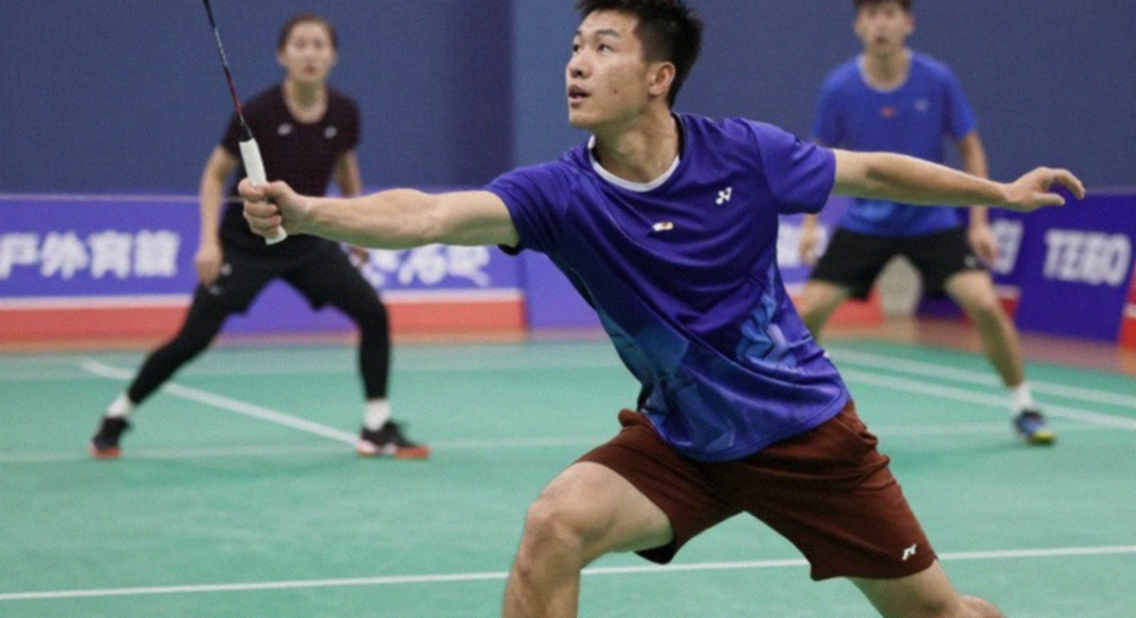
For Vietnam's national team, the men's singles picture shows signals worth facing directly. Le Duc Phat is battling knee and heel injuries, to the point of requiring pain-relief injections to compete. Nguyen Hai Dang lost in his round. Nguyen Tien Minh, at 43, remains the name that survives into the qualifiers. On the women's side, Nguyen Thuy Linh entered the draw against Xu Wen Jing, a 19-year-old. One generation is turning over, and the next has not yet filled the gap.
Minh's road ahead runs into the main draw, where he faces Zhe Ying Wu of Taiwan. That is the milestone to watch, not because it decides anything large, but because it will supply the second data sample that a single-match analysis cannot.
Core: singles and doubles are two sports on one court
To understand why Minh's admission matters, we have to separate what viewers usually merge into one.
A badminton court has one size, but the functional space differs completely between singles and doubles. In doubles, two players divide a half-court along a front-back axis. Shuttles are hit flatter, faster, less lifted. Doubles players react at short range, intercept at the net, and finish rallies with a smash from the front half. The tempo is high but the travel distance is short.
In singles, nobody covers the back. Every shot must travel long, deep and high enough for the player to recover to the base. Rallies last longer, the shot count climbs, and the pain comes not from one explosive movement but from the addition of twenty consecutive ones. These are two different motor habit systems, built over years, and they do not convert automatically just because the same white lines apply.
Put a doubles specialist on a singles court and the error patterns appear in a fairly predictable sequence. A familiar short serve can be punished by a deep push to the far corner. A flat interception at the net can be neutralised by a high lift to the back line, forcing a retreat that a doubles player's legs are rarely trained to repeat thirty times in a game. And when a rally passes its fifteenth shot, the first thing to break is not technique. It is position.
Nguyen Tien Minh, with more than two decades of elite singles, stands on the opposite side of that entire system. He did not need to be faster. He needed an opponent playing the game Minh has played his whole life, and the opponent was not.
Data does not lie. It only says what people do not want to hear.
And here is where I have to be blunt, because the credibility of a data writer lies in knowing what he does not know. What we have from this match is a win, a player's quote about his opponent, and a main-draw berth. What we do not have is peak smash speed, average rally length, unforced error rate, deciding-game win rate, or steps per rally.
Without those numbers, any technical conclusion carries medium confidence at best. I can infer that Minh used serve placement and early aggression to target the opponent's singles gaps, but that is inference, not fact. I can infer that Nguyen Hoang Thai Son's doubles strengths left traces in his singles patterns, creating exploitable shapes, but confidence there is even lower.
Based on my experience tracking matches, particularly the habit of rewinding slow-motion footage to count steps myself, I can usually tell a win built on technical superiority from a win built on match structure. This one leans towards the second. The structure here is a specialisation mismatch, and that kind of mismatch exists only within a narrow band of matchups.
Contrarian: age is not the decisive variable
The easiest story, and the one regional media will pick, is the frame of "the 43-year-old still fighting". That frame is not wrong, but it puts the emphasis in the wrong place and hides the more important signal.
If age were the decisive variable, Minh would have lost before stepping on court. What actually decided this match was the opponent's specialisation in another discipline. In other words: Minh did not win because he is 43, but because his opponent is not a singles player.
That means the win cannot serve as a form benchmark. A qualifying victory at Super 100 over a doubles specialist predicts nothing about competitiveness at a higher level. If the next opponent in the main draw, Zhe Ying Wu, is a genuine singles player with sound recovery patterns, the picture will be read with a completely different dataset.
The real signal lies elsewhere: Vietnam's men's singles group at this event contains a 43-year-old veteran, a player with knee and heel injuries requiring pain-relief injections, and a player who lost. That is the image of a group in an unfinished transition. For a badminton nation that has produced notable men's singles players over two decades, relying on a man born in 2026 to hold a qualifying slot is data, not sentiment.

People call it a mistake. I call it data about things that have not happened yet.
Nguyen Hai Dang's defeat and Le Duc Phat's injury status should not be read as two isolated failures. They are two points on the same curve. And that curve shows physical pressure loading onto a group whose support system remains unclear.
There is one detail I prefer to keep rather than discard: Le Duc Phat needing pain relief to take the court, alongside the presence of his wife in the stands. The second detail is usually mined for emotion. I do not read it that way. I read it as an indicator that mental and medical support is being supplemented by personal resources more than by professional structure. A national team can lean on family in moments. It cannot build a four-year cycle on it.
One thing a single-match analysis can never answer: we do not know the coaching structure, the quality of sparring partners, or the investment in technical analysis for Vietnam's men's singles group at this event. Minh's ability to remain competitive at 43 suggests an effective personal support system. But that is medium-confidence inference, and the existence of one outstanding individual is not evidence of a strong system.
What can be measured at tournament level
Vietnam Open 2026 operates under standard BWF regulations for the Super 100 tier. No controversies were recorded regarding service rules, service height, or situations requiring officiating technology. That is worth noting, and worth saying plainly: at an event where disputes do not surface, no transparency mechanism is actually tested. Silence in the data is not proof of a perfect process.
Single-elimination format pushes randomness high. With more than 300 players from 27 countries and territories, the quality floor is scattered, and an experienced player can go further than his true level within a favourable bracket. That is the nature of this tier, not a flaw. Super 100 events exist to bridge the junior system and the professional one, and Vietnam hosting an event that draws more than 300 players is a positive signal for regional badminton infrastructure.
But keep the proportion right. The commercial and technical benefit of a Super 100 event to a host nation sits in the short term. No impact was recorded on the talent-development chain or on capital flows into the badminton ecosystem. The real value lies elsewhere: it creates a court where domestic players face international opposition at a fraction of the cost of flying to Europe.
Across the net
On the women's side, Nguyen Thuy Linh entered the draw against Xu Wen Jing, a 19-year-old. The structure of that matchup is notable for one reason: it reverses Minh's. There, an experienced Vietnamese player stands before a rising young one. The question is not who is more specialised, but who can sustain the tempo longer.
On the men's side, the international guest list also includes Jia Wei Joel Koh of Singapore. The presence of such players confirms the nature of the event: a regional stage where Southeast and East Asian players seek points and matches.
The blind spot in reading this win
There is a temptation I want to name before it repeats in regional coverage: turning a qualifying win into a symbol. Symbols are easy to write, easy to share, and require no data. They also do not have to be correct.
What this match actually shows is a player who understands his own match structure very well. Minh read his opponent, read the specialisation mismatch, and exploited it. That is a high-level skill, and it does not disappear with age. Reading a match is the last thing to leave an athlete, after speed, after endurance, after recovery.
But match-reading only has value when there is something to read. In this case, the object was a player competing in the wrong discipline. Both things are true at once, and a writer has an obligation to say both.
Takeaway
Nguyen Tien Minh moves into the main draw and will face Zhe Ying Wu. That match is the one to watch, not because it decides anything large, but because it supplies the second data sample for a question we currently cannot answer with numbers: how much competitiveness does a 43-year-old ranked 254th still hold when the opponent is no longer in the wrong discipline.
The larger question sits beyond his court. A badminton nation can take pride in a veteran, but it cannot build a future on him. Le Duc Phat needs his knee and heel healthy before he needs anything else. Nguyen Hai Dang needs more matches like the one he lost. And the system needs to answer a question no ranking measures: after Nguyen Tien Minh, who?
I came to this sport on my feet, but I stayed for the stories. And the story being told in Vietnam right now has two versions. The first is about a 43-year-old man who refuses to stop. The second is about a gap that has not been filled. Both are true, and a report is only honest when it carries both.