
2026 Biltmore Championship: The $900,000 Check, the 61, and the Medinah Test Nobody Dares to Name
**Core answer**: Jacob Bridgeman thắng Biltmore Championship 2026 (giải khai sinh, mở màn FedExCup Fall) với vòng cuối 61 gậy (−10), nhận 900.000 USD. Neal Shipley và Ben Kohles đồng dẫn đầu nhưng không vô địch; Tyler Watts (amateur) vượt cắt nhưng không nhận tiền thưởng. **Key facts**: - Jacob Bridgeman ghi 61 gậy (−10) ở vòng cuối, nhận séc 900.000 USD. - Neal Shipley (25 tuổi) và Ben Kohles đồng dẫn đầu sau 54 hố; Kohles sớm rời cuộc đua. - Tyler Watts (amateur) vượt cắt nhưng bị luật R&A/USGA cấm nhận tiền thưởng chuyên nghiệp. - Giải diễn ra tại The Cliffs at Walnut Cove, Asheville, bang North Carolina. - Đây là giải khai sinh, mở màn FedExCup Fall 2026; Bridgeman dự Presidents Cup ở Medinah tuần sau. **Source attribution**: Dữ liệu gốc từ GOLF.com, báo cáo tiền thưởng Biltmore Championship 2026 | Cross-checked: VuaBong.vn **Related Q&A**: - Jacob Bridgeman nhận bao nhiêu tiền khi vô địch Biltmore Championship 2026? → Anh nhận 900.000 USD cho ngôi vô địch. - Vì sao Tyler Watts vượt cắt nhưng không nhận tiền? → Luật Amateur Status của R&A/USGA cấm amateur nhận tiền thưởng chuyên nghiệp vượt chi phí. - Vì sao cú 61 gậy của Bridgeman gây tranh luận trước Presidents Cup? → Đó là vòng đấu trên sân ướt, không có dữ liệu Strokes Gained, nên khó ngoại suy cho match play ở Medinah tuần sau.
It rained in Asheville that day. The Cliffs at Walnut Cove was soaked, soft as a sponge, and the Sunday leaderboard stacked up like numbers nobody wanted to look at. Jacob Bridgeman walked into the final round and shot 61, ten under par. He collected a $900,000 check.
I sat three thousand miles away, in Chicago, and thought about something else.
A number never tells the whole story, but it always knows how to begin. That 61 was one of the finest rounds I have ever watched live on broadcast at a PGA Tour event. But when you place it against its context — wet course, still air, soft greens, a stacked leaderboard — it stops being a solitary miracle. It becomes the product of a scoring-permissive environment.
Let me start from the beginning.
Context: a newborn event in a narrow window
The 2026 Biltmore Championship is brand new. It sits at The Cliffs at Walnut Cove, in the western mountains of North Carolina, and serves as the opener of the FedExCup Fall — the stretch where the PGA Tour resolves what remains of a season: cards, points, and pride.
This is not a stage for top-tier stars. It is a battleground for players fighting for their careers. An inaugural event, a fall swing, a purse where the winner takes $900,000 — a modest figure next to the Signature Events, and a fraction of a major.
That matters. Because when you understand the tier of the event, you understand the true weight of what happens on the course.
I have tracked the structure of the FedExCup Fall for years. It is not a place to build a legend. It is a place to keep a card. With dozens of players fighting for a spot inside the top 125 of the FedExCup, every fall event is a ruthless battle. You are not playing to become a legend. You are playing to come back in January.
And in that context, an inaugural event like the Biltmore Championship is a rare opportunity. No history, no weight of tradition, just an open leaderboard and a check waiting.
The final-round leaderboard held three notable names. Neal Shipley, 25 years old, trying to hold on and earn his first career PGA Tour win. Ben Kohles, the 54-hole leader. And Jacob Bridgeman, coming from behind.
In golf, a stacked leaderboard on a wet course is a recipe for chaos. Soft greens stop the ball faster, approach play becomes more forgiving, and anyone with a hot putter can reach eight, nine, even ten under. The final round at Walnut Cove was not a pure test of technique. It was a test of who could exploit the conditions.
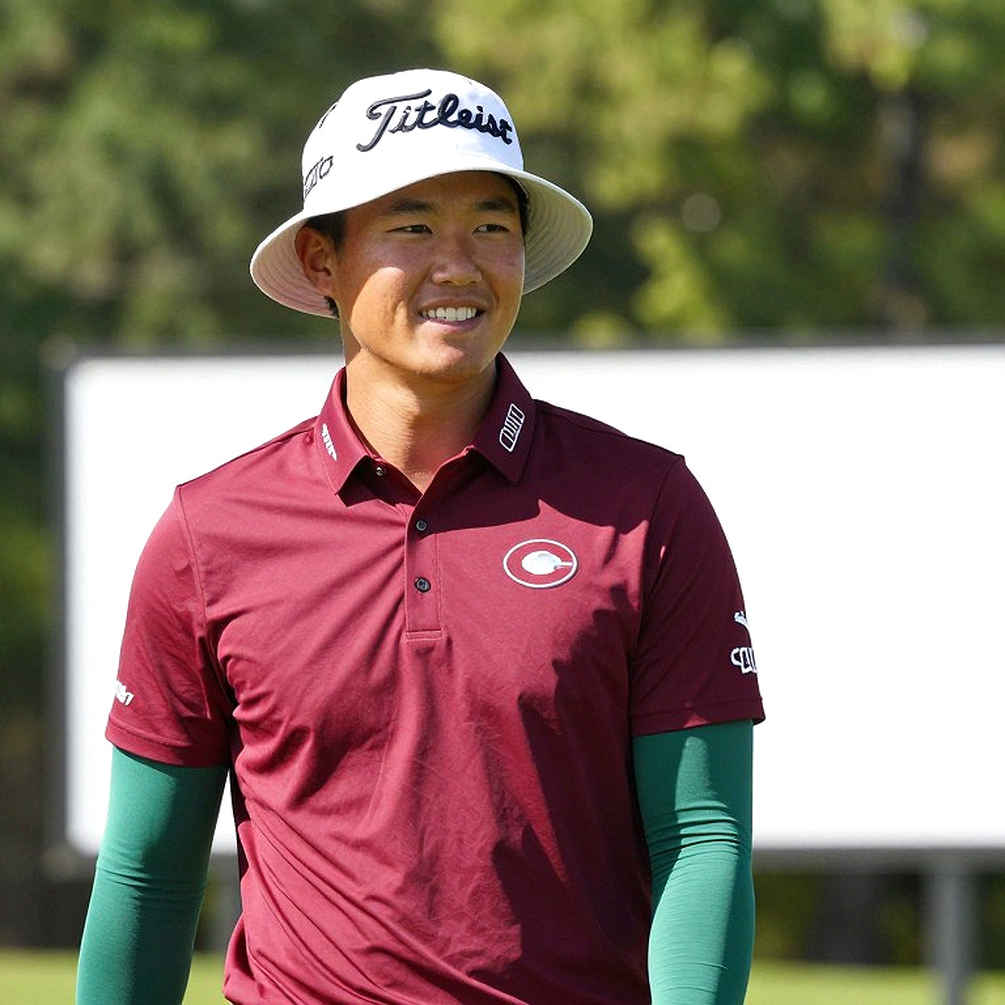
And Bridgeman exploited them.
The core: where that 61 sits in the bigger picture
Final round 61, ten under. This is the only hard data point we have. No Strokes Gained, no ShotLink, no off-the-tee, approach or putting breakdown. I say this not to diminish Bridgeman's achievement, but to place it correctly.
A 61 on a wet, windless course with soft greens does not tell you which part of a player's game is sharp. It only tells you he scored. And in modern golf, the gap between "scoring" and "scoring sustainably" is enormous.
Golf history shows something fairly clear: deep closing rounds are disproportionately putting-driven. Putting is the most volatile skill of all. A player can putt brilliantly for one week and regress to average the next. That is why Strokes Gained: Approach is regarded as a far better predictor of long-term success.
But we do not have that data. We have 61 and a check.
That leads me to a bigger question: are we reading too much into one round?
I have been in this situation before. In 2026, I received a call from a former Bundesliga scout about a young American named Christian Pulisic. I flew to Dortmund, stayed three weeks, charted every run. I learned that a moment of brilliance only means something when you place it inside a wider web of data and context. Otherwise it is just a moment.
With Bridgeman, we have a moment. We do not yet have the web.
That means the $900,000 check is entirely deserved. But do not confuse the reward with a forecast.
The contrarian angle: the test nobody dares to name
Right after the event ended, American media began a familiar refrain: Bridgeman is peaking at the right time, and he will shine at the Presidents Cup at Medinah the following week.
I understand the logic. A win right before a team event is a positive psychological signal. It brings confidence, it brings momentum. But there is a methodological problem I cannot ignore.
When the curtain falls, the truth begins. And the truth here is this: a single round of golf is not enough to predict anything at a different course, in a different format, a week later.
The Presidents Cup is match play. It is played at Medinah, a completely different course in terrain, green firmness and hole routing. It puts players in psychological situations stroke play never creates: the first tee shot the whole team is watching, the putt a partner is looking at, the loneliness of a match with no tomorrow.
That is a different skill. A skill a 61 on a wet course in Asheville cannot measure.
I am not saying Bridgeman will fail at Medinah. I am saying we do not have enough evidence to say he will succeed. And in my work, I learned a painful lesson: never close a conclusion too early.
That is what I remember whenever I look back at the 2026 World Cup semifinal between Croatia and England. In the first half, England led 1–0, and I had already written the ending about the return of the Three Lions. Then Luka Modric — a player called too old — spun 360 degrees amid three England players and delivered a pass that tore the defense apart. I deleted the piece and rewrote it in twenty minutes. Since then, I always ask: what am I missing behind the surface?
At Biltmore, what may be missing is this: Ben Kohles led after 54 holes and dropped out of contention early on Sunday. The media will call it a collapse. But on a wet course, where the whole field can score low, a leader being overtaken is more structural than psychological. When everyone can shoot 65, holding a two-shot gap becomes far harder.
That is not weakness. That is mathematics.
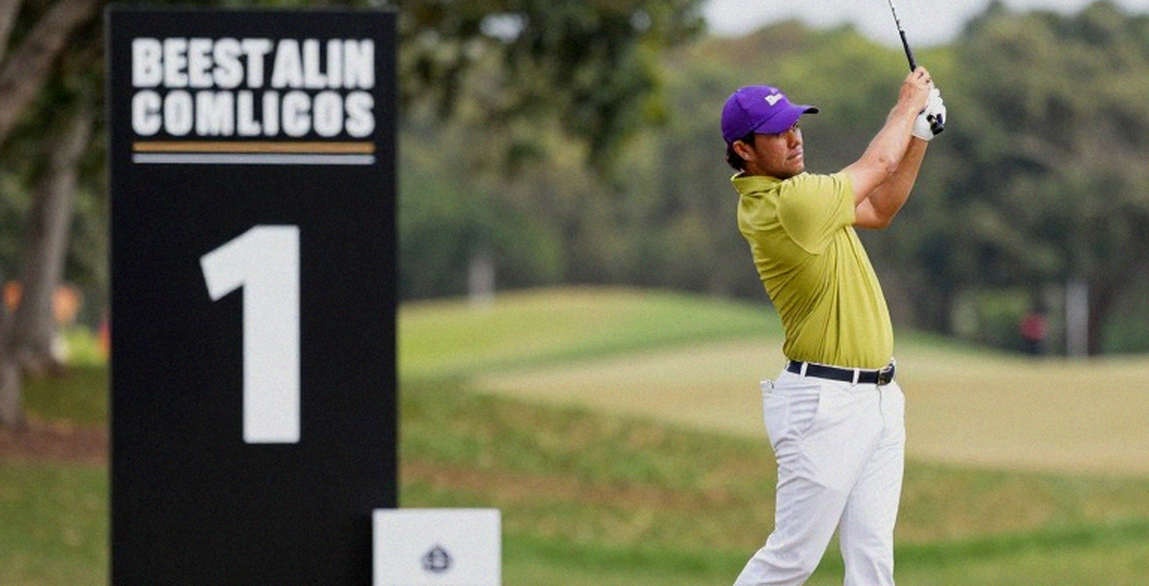
And Neal Shipley — 25, chasing a first win — sits inside that story too. He came very close. He did not touch it. That says little about his long-term ability. It only says the pressure of a first title is real, and it is rarely a straight line.
Looking at the history of young players at 25, we see a familiar pattern: they get close, they fail, they learn, and they come back stronger. The development curve of an elite golfer typically peaks between ages 28 and 38. Shipley is three years from that zone. What happened in Asheville is a data point, not a verdict.
Then there is Tyler Watts.
Watts is an amateur. He made the cut, something many pros did not. And he collected nothing. The R&A and USGA Rules of Amateur Status bar amateurs from accepting professional prize money beyond expense allowances. So the Biltmore payout table was adjusted: every professional finishing below Watts moved up one slot.
It is a small footnote in the original article. But it is one of the most interesting details. It shows something we rarely see: how a prize-distribution system actually works. When one person is unpaid, another is paid more.
And it says something about Watts too. An amateur making a cut at a PGA Tour event — even a fall event — is a notable signal. It means he can compete with professionals for at least two rounds. That is the kind of experience that can shape a career. Not for the money, but for the belief.
I have always been curious about moments like this. In sport, some things never appear on a leaderboard. An amateur who makes a cut at a PGA Tour event gets nothing but experience. But sometimes experience is everything.
Let me add a note on the structure of this event. As the opener of the FedExCup Fall, the Biltmore Championship plays a specific role in the PGA Tour ecosystem. It is not where stars are made. It is where players accumulate points, build careers, and sometimes find themselves again.
The $900,000 winner's check is a meaningful number — it can change the financial year of a mid-tier golfer. But it is also a reminder of the sport's hierarchy. At a major, the winner can take home over three million dollars. At a Signature Event, even more. At Biltmore, $900,000 is a dream.
That gap is not only about money. It is about recognition, opportunity, position in a harsh hierarchy. And that is why events like Biltmore matter. They are where dreams are built, one round at a time.
Looking forward
The Asheville sky has cleared. Bridgeman has his first PGA Tour check. Shipley has a lesson. Kohles has a Sunday to reflect on. Watts has a milestone on his amateur path.
And at Medinah, next week, Bridgeman will face the real question. Not whether he can shoot 61 on a wet course. But whether he can do something meaningful without soft greens to protect him, without still air to lean on, and without a leaderboard to hide from himself.
Where people think there is only passion, I find the mathematics of the ball. And the mathematics of golf tells me this: $900,000 is a beautiful number. But it is not a promise.
And we, the observers, will watch Medinah with an open question. Not who will win. But whether a 61 on a wet course can transform into another moment, at another course, under another pressure.
That is the best question sport can ask us. And it always begins with a number.