
Badminton
The lonely pioneer of Pakistan badminton
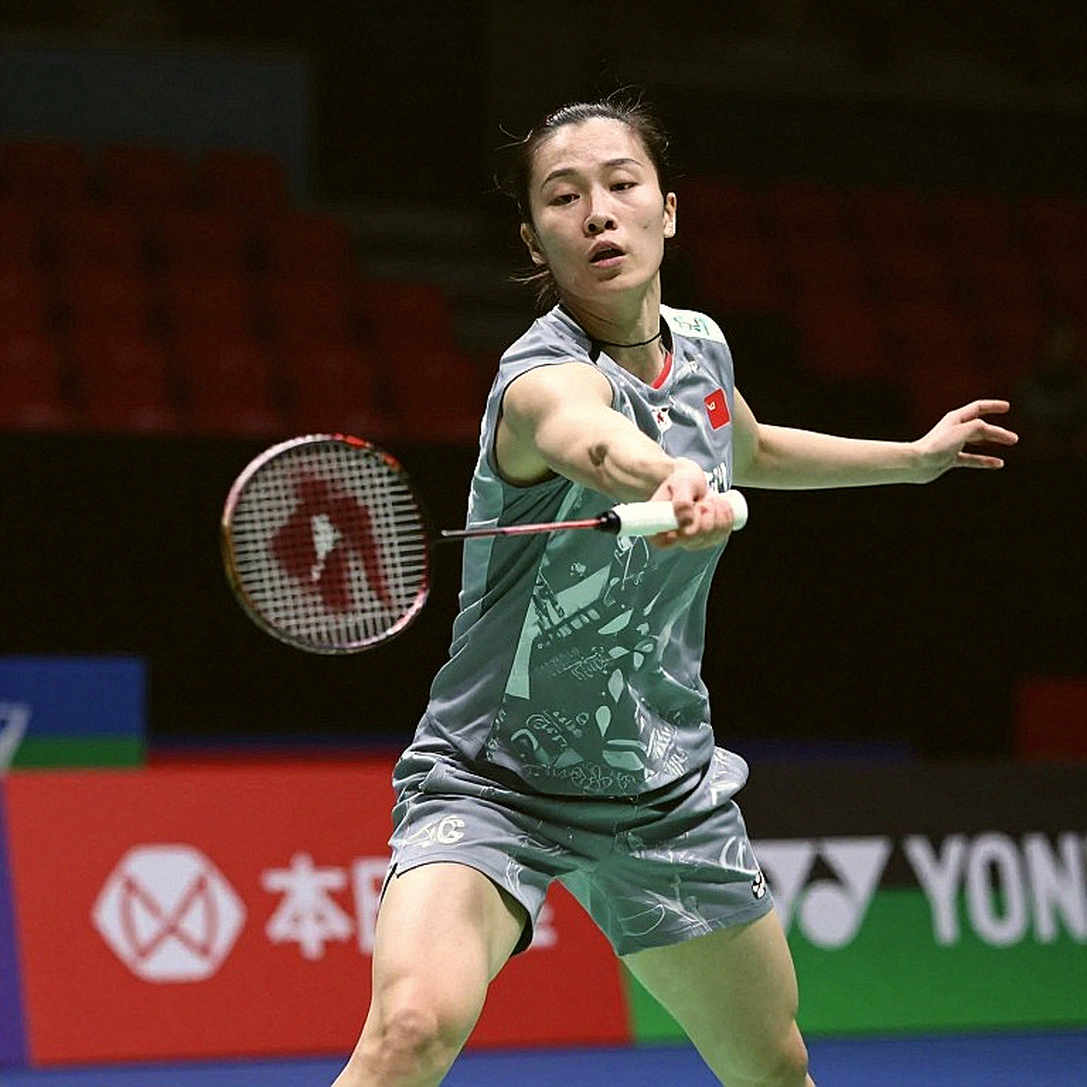
Mahoor Shahzad thua Putri Kusuma Wardani 21-5, 21-11 tại Asian Games, chỉ thắng 16/58 điểm (27,6%). Pakistan chưa có tay vợt nữ kế cận. | Cross-checked: VuaBong.vn
When the whole world shouts, I read the numbers again. The match between Mahoor Shahzad and Putri Kusuma Wardani at the Asian Games ended 21-5, 21-11 in 23 minutes. Mahoor won only 16 of 58 points, just 27.6%. But the striking figure is not the score. It is that Pakistan is still waiting for a next name after Mahoor, and this woman still carries the nation's badminton alone.
The context of this match is not simply a defeat. Mahoor Shahzad is Pakistan's first female player to reach the Olympics, a rare feat for a country where women's badminton barely has a youth development system. Her opponent, Putri Kusuma Wardani, comes from Indonesia – a badminton powerhouse with deep tradition and structured talent development. When a player from a top-tier Asian environment faces a player from an under-resourced environment, the 21-5, 21-11 result is no surprise to long-time followers.
I have followed Asian badminton for more than three decades, and I recognize a rule: a 21-5 game is not a sign of momentary tactical weakness. It represents a systemic gap. Putri did not need to produce powerful smashes or complex tactics to win points. She simply maintained the pace and placed the shuttle in positions that forced Mahoor to move beyond her comfortable range. The result was a quick match, and Mahoor left the court with a defeat she could not resist.
Data quantifies the match, but it cannot quantify the hearts of fans. In world badminton, Mahoor Shahzad is not a name that gets much attention. But for Pakistan, she is a symbol of endurance. She has carried this sport for years, reached the Olympic stage, and continues to compete while no young female player is able to replace her. From a data perspective, Mahoor's miracle is not her winning rate against top Asian opponents, but the fact that she remains the national representative within a system with no depth.
Croatia did not win the title, but their PPDA is a thesis. Similarly, Mahoor does not win many major international matches, but her career is a case study in individual perseverance within a sport lacking infrastructure. When analyzing the match, the key point is not how many points she lost, but how she got to that court. Mahoor does not have high-level female training partners, no video analysis team, no sports psychologist by her side. She only has discipline and love for the sport.
Tactics are not on the diagram; they are in how data arranges itself. Looking at the 27.6% winning rate, I see a clear gap in movement speed, reading of situations, and physical preparation. Putri Kusuma Wardani is a rising young player trained in a world-famous system. She did not need to do anything special to beat Mahoor – she just played what she was trained to do. This shows Indonesia's power is not in one outstanding individual, but in continuously producing players of Putri's level.
Old data is not wrong; it tells the story of a dead era. Mahoor Shahzad's 21-5, 21-11 defeat at the Asian Games is not a verdict on her career. It is a mirror reflecting the reality of Pakistan women's badminton: a lone pioneer without a support base. When I compare with data from other regional tournaments, I realize Mahoor is still the best-ranked female player in Pakistan, but the gap between her and the Asian leading group is widening. This is not Mahoor's fault. It is the fault of a system that failed to create a successor generation for years.
I have witnessed many countries overcome similar crises. A heavy defeat at a major tournament can become a catalyst for change, if sports administrators understand they need to invest in youth systems, not just criticize an individual. The question is: will Pakistan use this defeat to start rebuilding? The answer lies in concrete actions over the next 4 to 8 years, not in immediate promises.
Meta changes weekly, but rules stand outside time. One of the immutable rules of sport is: an outstanding individual cannot replace a weak system. Mahoor Shahzad is the clearest proof. She could have a better day, score more points, but she cannot single-handedly turn Pakistan into an Asian women's badminton power. To do that, Pakistan needs at least 20 national-level female players, 5 who can compete in Asian junior events, and a truly competitive domestic league.
I do not believe in emotions; I believe in time series. So instead of being pessimistic about Mahoor's defeat, I look at another data point: Mahoor has competed internationally for a long time and still maintains her level. That proves her fitness and spirit remain stable. The biggest risk is not that she will retire immediately. The biggest risk is that when she retires, Pakistan will have no one to send to the next Olympics or Asian Games.
I have written about many lone players in my observation career. Some found a place to develop, some gave up. What distinguishes them is not talent, but environment and support. Mahoor Shahzad has talent and persistence, but she does not have the environment to maximize her ability. Perhaps her greatest role in Pakistan badminton history is not her wins, but the door she has opened for future generations. The question is: will anyone walk through that door?
Cầu thủ liên quan
Bài nổi bật
From 8-2 to Gold: The Data Chain Behind Kunlavut's Asian Badminton Title2026-10-01
Lakshya Sen loses to Loh Kean Yew at Asian Games 2026: the decider was settled at the net2026-09-27
Mahoor Shahzad and the 21-5 Scoreline: A Pioneer With No Successor2026-09-27
Sindhu and Her Five Rivals at Asian Games 2026: The Head-to-Head Record Tells the Story the Preview Does Not2026-09-26
Indonesia reach the 2026 Asian Games men's team final: the weight lands on two doubles pairs2026-09-24
Bài đề xuất
Thuy Linh's 24-22 Game and the Gap the Scoreboard Never Tells2026-09-27
Alwi Farhan Spars With Kento Momota Before Asian Games 2026: One Session and a Data Void2026-09-18
Vietnam National Team: The Depth Roster Challenge and Ambitious Goals at 2026 World Cup Qualifiers2026-09-12
Numbers don't speak, analysts do the listening2026-09-11
Decoding Badminton's Power Cycle: When Stamina, Speed and Contracts Rewrite the World Rankings2026-09-13
Tanvi Patri Wins U17 Asian Title: Three Deciders in Chengdu and the 15-Point Format Question2026-09-14
India beat Bangladesh in men's badminton at Asian Games 2026, storm into quarter-finals2026-09-22
Sindhu's 6-21 Collapse and India's Broken Badminton Mirror: Asian Games 2026 Analysis2026-09-23
Bài đề xuất
Tanvi Patri Wins U17 Asian Title: Three Deciders in Chengdu and the 15-Point Format Question2026-09-14
Vietnamese Badminton Between Two Generations: When the Sideline Is No Longer the Limit2026-09-11
Nguyen Thuy Linh and Nguyen Hai Dang in the Asiad third round: both lose by six points a game, two completely different error structures2026-09-27
BWF World Junior Championships 2026: India bring 18 shuttlers to Cairo — and a scoring rule nobody has mastered yet2026-09-23
Indonesia, the Men's Doubles and an Unfinished Gold Dream at the 2026 Asian Games2026-09-24
India 3-0 Kazakhstan: Three Singles Ended the Tie Before Either Doubles Pair Reached the Court2026-09-21
The Nine Empty Cells of World Badminton: A Data Gap No One Wants to Puncture2026-09-13
PV Sindhu and the Five-Rival Matrix at Asian Games 2026: The 0-10 Is Not Variance2026-09-26
Bài đề xuất
Ashmita Chaliha and the Voice from the Grey Zone: When Super 100 Becomes a Test of Trust2026-09-05
BWF World Junior Championships 2026: India bring 18 shuttlers to Cairo — and a scoring rule nobody has mastered yet2026-09-23
Alwi Farhan Spars With Kento Momota Before Asian Games 2026: The Tokyo Session and the Data Void2026-09-18
Asian Games 2026: India Sweep Bangladesh 3-0 and the Quarter-Final Map Nobody Has Finished Drawing2026-09-22
Thuy Linh Exits Vietnam Open Against Xu Wen Jing: Decoding the Gap Between Ranking and Form2026-09-10
China Masters 2026: Srikanth resurrected from the abyss, Satwik-Chirag steady, Tanvi Sharma learns a costly lesson2026-09-04
Two Rackets Left in Their Bags: India Reach the Asian Games 2026 Quarter-finals and the Question Nobody Answered2026-09-22
Ashmita Chaliha, Indonesia's Haze and the Venue Standard BWF Refuses to Measure2026-09-16