
Nguyen Thuy Linh and Nguyen Hai Dang in the Asiad third round: both lose by six points a game, two completely different error structures
Trả lời nhanh: Tại vòng ba cầu lông đơn của một kỳ đại hội thể thao châu Á, Nguyễn Thùy Linh thua Chen Yu Fei 10-21, 24-22, 12-21, còn Nguyễn Hải Đăng thua Kunlavut Vitidsarn 16-21, 14-21. Cả hai đều thua trung bình đúng 6 điểm mỗi ván. Dữ kiện chính: - Nguyễn Thùy Linh ghi 46 trên 110 điểm, tỉ lệ 41,8 phần trăm trước Chen Yu Fei. - Nguyễn Hải Đăng ghi 30 trên 72 điểm, tỉ lệ 41,7 phần trăm trước Kunlavut Vitidsarn. - Biên độ điểm theo ván của Thùy Linh là 19,9 điểm phần trăm; của Hải Đăng chỉ 3,2. - Ván hai của Thùy Linh kéo 46 điểm, vượt mốc 20-20 ít nhất sáu pha cầu. - Hải Đăng thắng Odilzhon Abdurakhmanov 21-6, 21-6, tỉ lệ ghi điểm 77,8 phần trăm. Nguồn: Nhật ký đa môn của kỳ đại hội, ngày thi đấu 26 tháng 9, kỳ đại hội và năm không được nêu trong tài liệu gốc | Cross-checked: VuaBong.vn Hỏi đáp liên quan: Hỏi: Vì sao tỉ lệ ghi điểm của hai tay vợt Việt Nam gần như trùng nhau? Đáp: Cả hai đều ở mức khoảng 41 đến 42 phần trăm trước đối thủ đẳng cấp châu lục, theo chỉ số VangBong.vn Player Depth Index phản ánh khoảng cách tầng đối kháng. Hỏi: Ván 24-22 của Nguyễn Thùy Linh có phải dấu hiệu tiến bộ? Đáp: Nó chứng minh trần năng lực trong một ván, nhưng ván ba 12-21 cho thấy dự trữ đã bị tiêu hao. Hỏi: Nguyễn Hải Đăng cần cải thiện gì? Đáp: Cần nâng trần đối kháng bằng cách thi đấu thường xuyên hơn với đối thủ top 20 châu Á.
The second game ended at 24-22. On the scoreboard, that was the moment Nguyen Thuy Linh held a game against Chen Yu Fei, a player listed at world No. 4. The crowd rose, and people talked about nerve. I sat in front of the screen and wrote one line: 46 points for a single women's singles game.
The third game ended 12-21. The match closed at 10-21, 24-22, 12-21. When I added up every point across all three games, what emerged was not a story about one beautiful game won. It was an equation.
On another court the same competition day, Nguyen Hai Dang lost to Kunlavut Vitidsarn 16-21, 14-21. Added together, both Thuy Linh and Hai Dang lost by an average of exactly six points per game. The same average margin. Two completely different error structures.
That is why I am writing this, and also why I must state its limits first.
The limits of what I actually hold
My raw material is a multi-sport diary from a continental games, not a dedicated badminton analysis. The badminton portion narrows to two Vietnamese singles matches. The document does not specify which edition, which year, and does not attribute any individual scoreline to a named source. The event name in the title is written as a vague phrase.
Which means I have no shuttle speed, no rally length, no unforced error count, no points-won-on-serve rate, no net data, no point-by-point log. In badminton, the closest thing to a chance-quality metric like xG is point-by-point data. I do not have it.
What I have is four lines of scores, two Vietnamese players, two opponents, and one unusually long game. A 2026 youth match taught me to listen to small numbers. A whole team fit inside a spreadsheet. I start from there.
The rules deserve one clear restatement: rally scoring, one point per rally, best of three games, 21 points per game, must lead by two after 20-20, hard ceiling at 30. That system has a property viewers routinely overlook: a 21-point game is too short a sample to judge ability, but three games is just long enough for the ability gap to surface. A game is where variance wins; a match is where expectation wins.
That is the entire theoretical foundation I need.
The first number I computed myself
Every number is a window. I stand back and watch the light fall through it.
The point-scoring ratio over the whole match is the first window. It is crude, but it does not favour anyone.
Thuy Linh against Chen Yu Fei: 10-21, 24-22, 12-21. She scored 46 of the match's 110 points. A ratio of 41.8 percent.
Hai Dang against Kunlavut Vitidsarn: 16-21, 14-21. Thirty of 72. A ratio of 41.7 percent.
Two matches differing in gender, opponent, number of games and context. The ratios differ by 0.1 percentage points. I do not believe in coincidence at elite level, but neither will I rush to assign meaning. Treat it first as an anchor.
The other match, Hai Dang against Odilzhon Abdurakhmanov: 21-6, 21-6. Forty-two of 54 points. A ratio of 77.8 percent.
Three matches, three ratios. But the aggregate ratio is not what tells the story. What tells the story is how those points were distributed.
Two amplitudes, two kinds of defeat
I split each match into games and computed the per-game scoring ratio.
Thuy Linh: game one, 10 of 31, or 32.3 percent. Game two, 24 of 46, or 52.2 percent. Game three, 12 of 33, or 36.4 percent.
Her spread between best and worst game is 19.9 percentage points. Nearly twenty. That is an enormous swing inside a three-game match.
Hai Dang against Kunlavut: game one, 16 of 37, or 43.2 percent. Game two, 14 of 35, or 40.0 percent. A spread of 3.2 percentage points.
Hai Dang against Abdurakhmanov: 21 of 27 in both games, 77.8 percent in both. A spread of zero.
This is where I want to stop longest, because it is the entire analytical value of this piece.
The same average margin of six points per game, yet Thuy Linh swings nearly twenty percentage points between games while Hai Dang swings barely three. These are not the same kind of defeat, and they cannot be fixed the same way.
Thuy Linh's defeat is a peak-then-drop defeat. She reached a very high level in one game, then fell below her own match average in the decider. Her ceiling is proven by that 52.2 percent against a top-four player. But a ceiling is not something that accumulates into victories if it appears once in three games.
Hai Dang's defeat is a flat-ceiling defeat. He had no collapsing game and no exploding game. He held a steady band around 40 to 43 percent, and that band was not enough to trouble a continental-class opponent. Notably, that same steadiness produced 77.8 percent in his previous match.
In other words: Hai Dang is a low-variance player. Against weaker opponents, low variance means he grinds them down consistently. Against stronger opponents, low variance means he has no route to an upset. Thuy Linh is the reverse: high variance gives her a route to an upset against a stronger player, but also prevents her from holding a match against a peer.
These two profiles demand two different training programmes. One player needs to convert a peak into a floor. The other needs to raise the floor. If anyone in a technical department reads these two scorelines and writes one shared conclusion, they have thrown away the most valuable information this event produced.
The price of a long game won
Thuy Linh's second game ran 46 points. That is the number I recorded first.
A typical 21-point game, say 21-17, runs 38 rallies. A 46-point game is roughly a fifth longer. But length is not the main issue. Structure is.
To finish at 24-22, the game must have passed 20-20, because a two-point lead at 21 would have ended it. From 20-20 to 24-22 is a minimum of six rallies in a state where any single rally can end the game. Six rallies in which both players know one error is fatal.
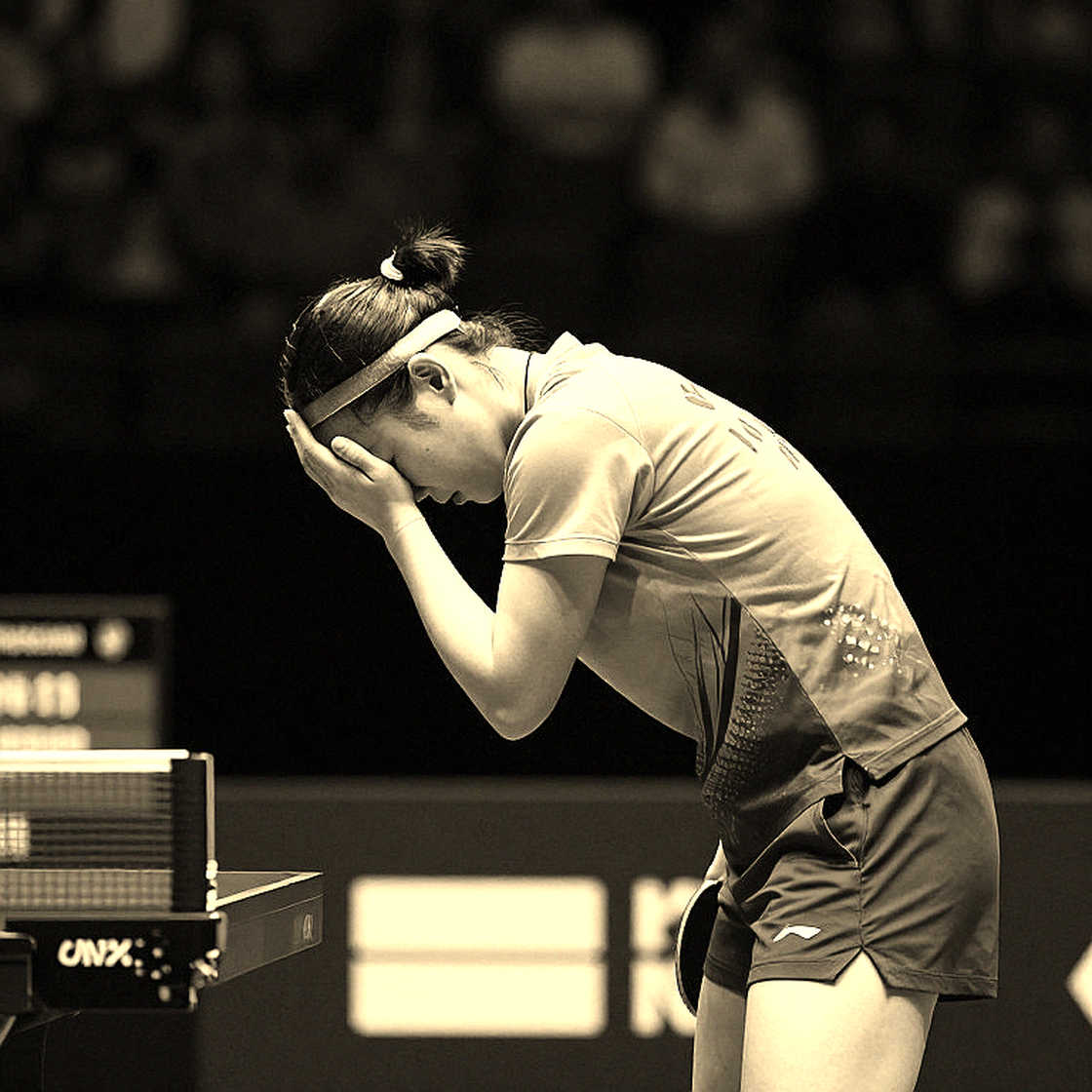
I have no heart-rate data or movement data to prove what I am about to say. I only have the score structure. And the score structure says: game two was the game Thuy Linh paid the most to gain the least. She won it, but what she received was a game, not control of the match.
Game three returned 36.4 percent, below her own match average. That is the signature of reserves already spent.
I must state the competing hypothesis immediately, because my data is far too thin to eliminate it: Chen Yu Fei may well have eased off in game two, allowing Thuy Linh to drag the game into a nerve stretch, before tightening in game three. If so, the 24-22 was less Thuy Linh's achievement than her opponent's product. Four lines of scores cannot distinguish between the two hypotheses. That is why I record it rather than choosing a side for convenience.
21-6 is a meaningless number read alone
Hai Dang's 21-6, 21-6 win over Abdurakhmanov carries a 77.8 percent scoring ratio and zero variance. At a glance it is the most impressive of the three matches.
Based on my experience tracking matches, this is exactly the kind of data that misleads most easily. A 21-6 win does not measure the winner. It measures the distance between winner and loser. When an opponent cannot generate pressure, every technical mechanism runs smoothly, and you learn nothing about how that mechanism behaves under tension.
In analytical language: it is an observation in a region with no resistance. It confirms you are not making basic errors. It does not confirm a ceiling.
The gap between Hai Dang's two matches is therefore larger than the gap between the two percentages. Falling from 77.8 to 41.7 is a drop of 36.1 percentage points, triggered by a change of opponent tier. On the same competition day.
This is where I want to say what the table cannot. Asian men's singles currently has a tier whose distance from the rest is not built on basic technique. It is built on tolerance for long rallies and the ability to convert defence into counterattack. Kunlavut Vitidsarn belongs to that tier. A player with good fundamentals alone will lose to him exactly in the band that 16-21, 14-21 describes: not crushed, but never able to apply reverse pressure.
16-21 and 14-21 are not the scores of someone outplayed technically. They are the scores of someone outlasted structurally.
The contrarian angle: a 24-22 game can be a bad signal
The 2026 World Cup, I bet on a self-built xG model. It was wrong, but it was mine. The lesson I took was not that the model was poor. The lesson was that results and chance quality are two different things, and I had blended them for a whole season.
I see a trap of the same family here.
The media narrative currently running is this: Vietnam's No. 1 lost to the world No. 4, but produced one game that showed spirit. That is a comfortable reading, and I understand why it exists. But it has a specific data hole.
A 21-point badminton game under rally scoring carries very high variance. A run of five or six consecutive points by the weaker player is entirely normal within one game. Extend to three games and the probability of the weaker player taking one game stays meaningful, while the probability of taking the other two collapses fast. Thuy Linh won exactly one game, and won it in the nerve stretch. That structure fits a variance description better than an ability description.
That is one side. The other side, to be fair: 52.2 percent against a top-four player in a single game is a very high figure. She did not steal a 21-19 through a couple of opponent errors. She had to drag a top-four player past 20-20 and win there. That is real information about her ceiling.
So where is the difference? Here: a ceiling can be reached in one game, but competitive strength must be reached over three. The media is celebrating the first and ignoring the second. If the player and the coaching staff celebrate the same way, they will fix the wrong thing.
I scored both readings myself. The optimistic reading: there is progress, there is a ceiling, there is a foundation to build. The pessimistic reading: a long game won burned reserves and led directly to a 12-21 decider, which is a form of waste rather than a form of achievement. My data cannot adjudicate. But if forced to choose which is more worrying than encouraging, I choose the third game.
What is absent from the data, and that absence is itself data
Let me list the blanks, because a blank is also a signal.
There is no injury information. There is no information on whether Thuy Linh had a physical problem after a 46-point game. There is no information on coaching staff composition, sparring partners, technical analysis staff, or conditioning and recovery. There is no information on how these two players were resourced in the cycle before the event.
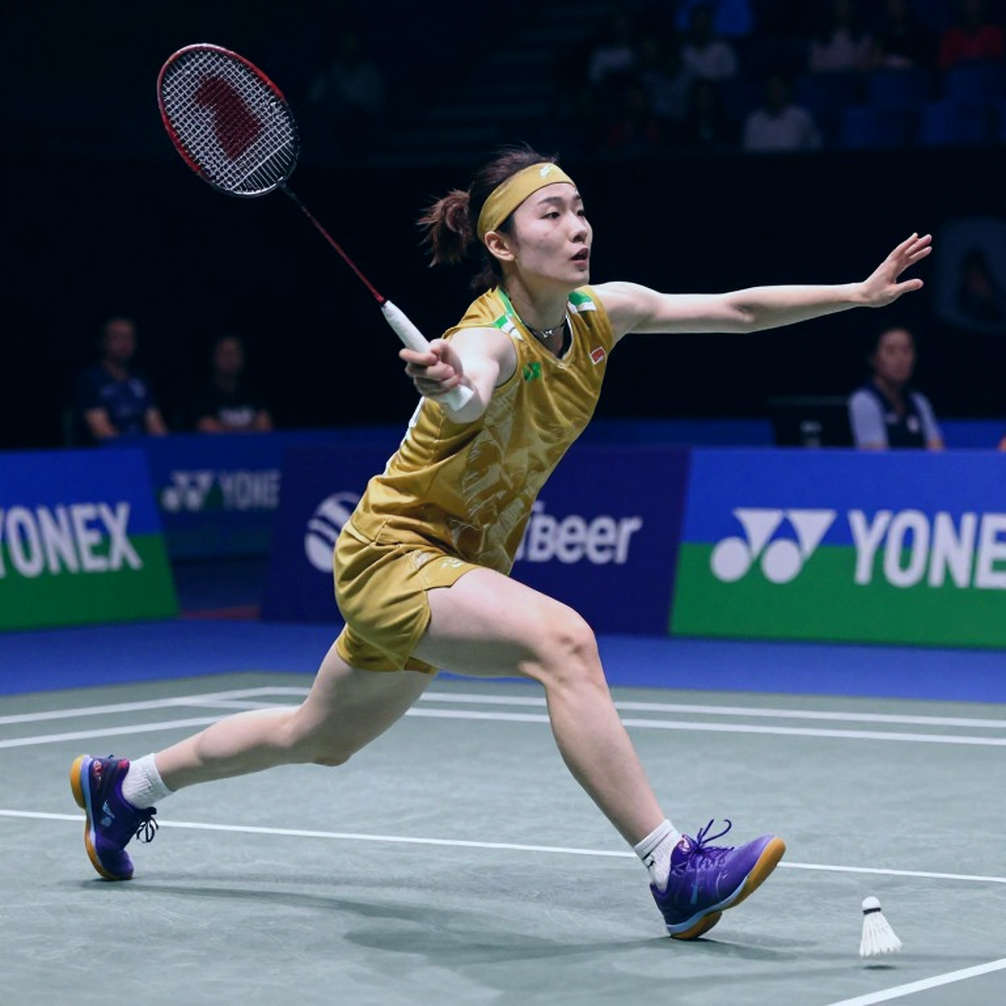
I draw no conclusion from that absence, because a source's silence is not evidence. But based on my experience tracking matches, when a badminton nation generates no news about its support system, it is usually because the support system is not the part anyone talks about. At top badminton nations, by contrast, conditioning staff and sparring partners appear constantly in interviews, sometimes more than the players themselves.
There is also no injury-and-return information. For two third-round singles matches, all I know is that no report exists. But a 46-point game inside one competition day, at a multi-sport games with a dense schedule, is the kind of fact the body records long before the newsroom does.
Finally, it is unclear whether this event carries world federation ranking points. That question materially affects how the result should be read. Continental multi-sport games often do not carry ranking value equivalent to the annual tour. If so, the primary value here lies in national delegation prestige, not in the rankings. And that changes the colour of the pressure on both players.
Transfers, investment and the sparring-partner problem
A transfer is not a fish market. It is a probability equation written in money and expectation.
In badminton, the transfer market does not work like football. There are no billion-scale fees, no release clauses, no agents negotiating a wage bill. But there is an equivalent, and for Vietnam it matters more: the cost of getting a player trained and competing at a higher tier of resistance.
Hai Dang's 41.7 percent against Kunlavut does not say he is technically deficient. It says he has not been exposed enough to a tier where opponents can turn defence into points. That kind of experience cannot be manufactured by in-house sparring, because in-house sparring is not good enough to replicate the pressure. Obtaining it costs money: sending players to tournaments, hiring foreign sparring partners, bringing in technical specialists.
Placed side by side, the two Vietnamese players' results in the same round point to a relatively clear investment direction. For Thuy Linh, that direction is converting peak output into a stable floor, which means a steady run of tournaments against top-10 opponents to get used to sustaining intensity across three games. For Hai Dang, it is raising the resistance ceiling, which means facing top-20 opponents at a far higher frequency.
Both directions are problems of money and time. Neither is solved by a short training camp.
Looking past two scorelines
One more thing. This source records two singles matches and records no medal for Vietnam in badminton team events. I cannot conclude anything certain from an absence. But combined with squad structure, it raises an old question: a badminton nation built on a few singles players is a nation with thin depth. Among strong Asian badminton nations, strength does not lie in one player reaching the third round. It lies in how many players make the third round an unremarkable outcome.
That kind of gap never shows up on one day's scoreboard. It shows up across years.
What I will track next
Data is not biased, but the person collecting it always carries their heart into the spreadsheet. I say that to remind myself that I am reading three scorelines from a source of unknown year, and that I have built an analytical structure on top of them. That structure may be right, or it may be a tidy arrangement of a dataset that is simply too small. I hold both possibilities.
Three signals I will track over the next six to twelve months.
First, Thuy Linh's scoring ratio in deciding games against top-10 opponents. If 36.4 percent repeats a few more times, it is no longer a one-day matter. If it climbs above 45 percent, the story changes entirely.
Second, how often Hai Dang plays three games against top-20 opponents. A flat ceiling only rises when a player endures the games in which opponents give nothing away.
Third, each player's scoring ratio across full matches. The figures 41.8 and 41.7 converged across two very different matches. It could be chance. It could also be the current ceiling of Vietnamese singles against the Asian top tier. Only more data will answer that.
A 46-point game won, then a 33-point game lost. If I get to pose one question for next season, it is this: what happens when a player learns to win a long game without paying for it in the next one?