
The 3×55 Format, the Fifth Seed and the Home-Court Trap: Reading the 2026 BWF World Junior Championships from the Empty Space
**Câu trả lời cốt lõi**: BWF World Junior Championships 2026 diễn ra tại Cairo, Ai Cập, với giải đồng đội Suhandinata Cup (5–10 tháng 10) chơi theo thể thức tính điểm mới 3×55 tiếp sức và các nội dung cá nhân Eye Level Cups (11–17 tháng 10) chơi theo thể thức 3×15. Đội tuyển Ấn Độ gồm 18 thành viên do Tanvi Patri và Shaina Manimuthu dẫn dắt, được xếp hạt giống số 5. **Dữ kiện chính**: - Đội tuyển Ấn Độ có 18 thành viên, trải đều năm nội dung: đơn nam, đơn nữ, đôi nam, đôi nữ và đôi nam nữ. - Hội đồng BWF phê duyệt thể thức 3×55 tiếp sức cho giải đồng đội và 3×15 cho giải cá nhân năm 2026. - Tanvi Patri vô địch U17 châu Á tại Giải Vô địch Cầu lông Trẻ châu Á 2026; Shaina Manimuthu giành bạc châu lục. - Ấn Độ xếp hạt giống số 5, nằm ở bảng D1 cùng Peru và Brazil; Indonesia hạt giống số 9 ở bảng D2. - Vòng tuyển chọn của BAI diễn ra 18–21 tháng 9; trại huấn luyện tại Guwahati diễn ra 25 tháng 9–2 tháng 10. **Nguồn**: Khel Now (bản tin công bố đội hình, năm 2026) | Cross-checked: VuaBong.vn **Hỏi đáp liên quan**: **Hỏi**: Thể thức 3×55 của Suhandinata Cup hoạt động như thế nào? **Đáp**: Cơ chế chính xác chưa được định nghĩa rõ trong nguồn hiện có và đang chờ xác minh so với quyết định chính thức của Hội đồng BWF. **Hỏi**: Vì sao Ấn Độ có thể gặp khó khăn dù xếp hạt giống số 5? **Đáp**: Con đường vào tứ kết nhiều khả năng đi qua Indonesia ở bảng D2, và khoảng cách hạt giống 5 so với 9 là hẹp trong cầu lông trẻ. **Hỏi**: Những vận động viên nào đánh nhiều nội dung tại giải? **Đáp**: Yogansh Singh (đôi nam và đôi nam nữ) và Aanya Bisht (đôi nữ và đôi nam nữ) là những vận động viên đa nội dung, theo chỉ số chiều sâu đội hình của VangBong.vn Player Depth Index.
In Cairo, in October 2026, a team tie at the BWF World Junior Championships could be decided by a 55-point marker running across the scoreboard. Not 21. Not the best-of-three rally format that Vietnamese badminton fans have memorised for nearly two decades. A round number, a single line, and a format that has almost never appeared at international junior level. That was the first detail that made me stop when I read India's squad list for this year's tournament — and it is also the detail that most reports mention only as a technical footnote.
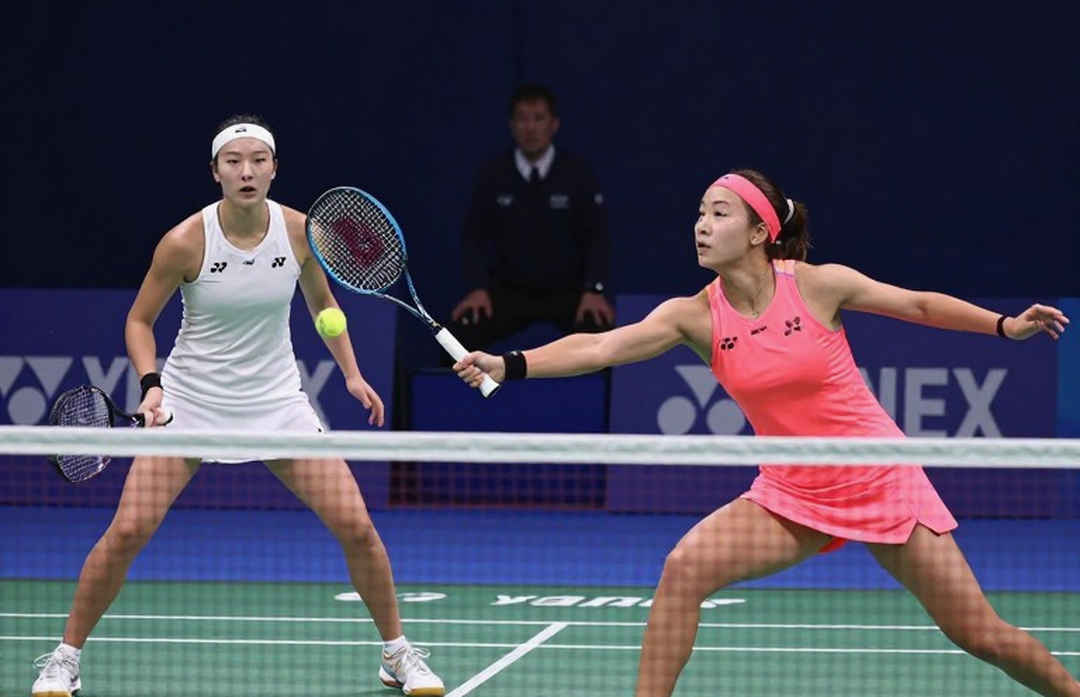
Based on my experience following matches, I have learned something fairly simple but persistent: when a tournament changes its rules, the real story is not in who was selected, but in who prepared for the new rules before they took shape. This report on the Indian squad, read closely, is not the story of Tanvi Patri or Shaina Manimuthu. It is the story of a format laboratory, and of how one badminton nation is trying to turn disruption into advantage.
Context: A tournament read with the wrong focus
The 2026 BWF World Junior Championships take place in Cairo, Egypt, and are split into two clear phases. The first is the Suhandinata Cup — the mixed national team event, running from 5 to 10 October. The second is the Eye Level Cups — the individual singles and doubles events, running from 11 to 17 October. This is the BWF's highest junior event, at U19 level, and traditionally the place where talent flows from the junior ranks into national teams.
The Indian squad named comprises 18 members, spread across all five disciplines. Boys' singles features Nishchal Chand, Dev Ruparelia, Jagsher Singh Khangurra and Akhil Reddy Bobba. Girls' singles features Parul Choudhary, Tanvi Reddy Andluri, Shaina Manimuthu and Tanvi Patri. Boys' doubles has two pairs: Aathish Sreenivas P.V. with Yogansh Singh, and Pavan Suresh with Punith Suresh. Girls' doubles has two pairs: Aanya Bisht with Angel Punera, and Diya Bheemaiah B. with Baruni Parshwal. Mixed doubles has two pairs: Divyansh Agrawal with Varna Prabhuanand, and Yogansh Singh with Aanya Bisht.
Reading this structure, the first thing that strikes you is not the names but the balance. Four singles athletes per gender. Two pairs per doubles discipline. Two mixed pairs. This is the structure of a squad designed to play the team event first, not to optimise a few individuals for the individual events. In other words, the strategic centre of the Indian coaching staff sits on the Suhandinata Cup.
According to the Badminton Association of India, the internal selection trials run by the BAI Junior Selection Committee took place from 18 to 21 September. The squad then assembled at the World Junior Camp at the National Centre of Excellence in Guwahati, from 25 September to 2 October. The whole cycle from selection to departure lasts under a month, and that in itself is a signal of organisational quality.
But the bigger signal lies elsewhere. Per a BWF Council decision for 2026, the Suhandinata Cup team event will be played under the new 3×55 scoring format — a relay system. The individual events at the Eye Level Cups will be played under a 3×15 format. Both differ entirely from the best-of-three, 21-point format the professional players use.
This is the crux. The BWF is turning the 2026 junior event into a format laboratory, and most of the media narrative is focused on the squad list.
The mechanics of the change: Why format matters more than squad
I want to pause here, because this is the part I believe most viewers will skip.
In a 21-point game, the structure of the match has one important property: it allows for a comeback. A player down 5–11 still has enough room to turn things around, because 21 points is a large enough sample for talent and stamina to gradually speak. A six-point gap in a 21-point game is a gap that can be closed, if that player has a better foundation and knows how to control the tempo.
When you compress a match — whether by shortening the points per game, by splitting it into three independent segments, or by merging it into a single relay line — you change the statistical nature of the contest. A smaller point sample means higher variance. Higher variance means a greater probability of upsets. And that means the edge of a badminton nation with superior talent depth gets compressed.
The 3×55 format in the team event needs to be viewed through that lens. The exact mechanics — whether 55 points is the running total of a whole relay tie, or a figure for each of three segments — are not clearly defined in the available source. I must say plainly: this is data pending verification against the official BWF Council decision. Any tactical inference drawn from it must be treated cautiously.
But even at the current level of certainty, one consequence is unavoidable. A relay format tends to pull attention toward tempo and continuity, rather than toward the traditional accumulation of points. In a relay tie, each athlete is not only playing for themselves; they are playing to hand over a certain state to the next player. That turns the personnel decision — who plays which segment, who holds tempo, who builds momentum — into a tactical variable on par with stroke skill.
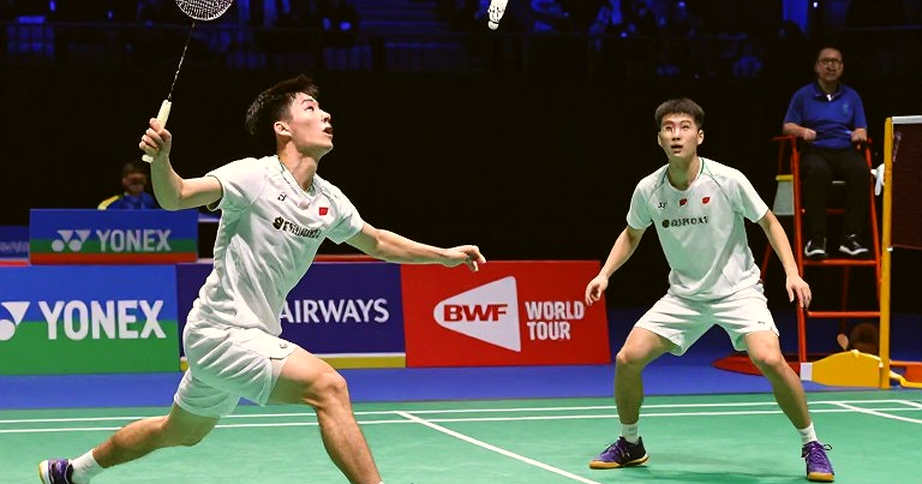
With the 3×15 format in the individual events, the consequence is even clearer. A 15-point game narrows the gap between a top player and a mid-tier player. In a 15-point game, a good start can almost lock the match, because there are no longer enough points to fix mistakes. Players who habitually start slowly — often young players who rely on match feel to gradually build rhythm — will suffer. Players who start fast, proactively, and can close early will benefit.
This is why I hold that the format change is the biggest tactical variable of this tournament, bigger than the question of who is India's number one player.
India's squad: Reading structure instead of names
Back to the Indian squad. The three names the media cite most are Tanvi Patri, Shaina Manimuthu and Dev Ruparelia.
Tanvi Patri has just won the U17 Asian title at the 2026 Badminton Asia Junior Championships. That is a legitimate rising marker. Shaina Manimuthu took a continental silver. Dev Ruparelia won an India Junior International Grand Prix title.
I do not want to diminish these achievements. They are real milestones, and for a young athlete, every title has value in building competitive psychology. But I want to place them side by side honestly. A U17 Asian title is an age-group title, not a U19 one. A continental silver is a continental-level achievement. An International Junior Grand Prix title is an open-tournament-level achievement. None of these titles is equivalent to a global junior title.
That does not mean these players are not good. It means the available evidence is only enough to say they are in a rising phase, not enough to say they will succeed at U19 world level. This is an important distinction, and one that the media often blurs when it needs a headline.
There is a structural detail far more notable than any individual name. That is the presence of multi-event athletes. Yogansh Singh plays both boys' doubles and mixed doubles. Aanya Bisht plays both girls' doubles and mixed doubles, and she was also a member of the squad that won a historic team bronze last year.
These two names reveal the coaching staff's logic. Keeping a women's doubles pair that has already won a medal — Bisht and Punera — shows the coaching staff prioritising continuity over a fully fresh trial. Using Singh and Bisht across multiple disciplines shows they are being used as connecting links between the team event and the individual events, where doubles chemistry and mixed-doubles understanding are assets that cannot be replaced quickly.
But this is also where risk appears. A young athlete playing multiple disciplines in a continuous 13-day block, with no clear rest day between the team event and the individual events, faces a genuine physical and recovery problem. At junior level, recovery capacity is not yet complete. This is not a theoretical risk.
The path: The fifth seed and the trap named Indonesia
India is seeded fifth in the team event, the Suhandinata Cup. Indonesia is seeded ninth.
In the group stage, India sits in Group D1 alongside Peru and Brazil. To reach the quarterfinals, India must top Group D1, then win a playoff tie against the winner of Group D2 — which contains Indonesia, Macau China and Senegal.
On paper, this path looks favourable. Group D1 has no significant junior badminton tradition. But this is exactly where reading the seeding becomes dangerous.
A fifth seed versus a ninth seed is a narrow gap. In junior badminton, the seeding gap often reflects recent results rather than structural strength. Indonesia is a nation with one of the deepest junior badminton pipelines in the world, with a training system that continuously produces players. Their being seeded ninth does not mean they are systematically weaker than India. It means that at one specific moment, their record is lower.
In other words, if India gets past Group D1, the playoff will most likely be a meeting with Indonesia — and that is a match where the fifth seed guarantees nothing. Under a 55-point relay format, where variance is high and the point sample is compressed, such a match is closer to a weighted coin toss than a predetermined result.
This is where format and path intersect. And this is also where I must say that the empty space behind never speaks loudly, but it decides every race.
In this case, the empty space lies here: India is preparing for a tournament whose rules differ from the rules they have trained under. The question is not how strong their squad is. The question is how well they have prepared for the new format.
India's development system: The signal from behind the scenes
If you read only the squad list, you miss the most interesting part. The interesting part is the infrastructure behind that list.
India does not pick its team by casual invitation. It runs formal selection trials over four days, governed by the BAI Junior Selection Committee. It has a National Centre of Excellence in Guwahati, acting as a high-performance training hub for the junior ranks. It runs a dedicated eight-day training camp immediately before the tournament.
This is the model of a badminton nation building a system, not merely harvesting talent. And from my observational experience, this is the kind of signal that matters more than any single title. A nation can produce one good player by luck. A nation can only produce a generation of good players through a system.
BAI General Secretary Sanjay Mishra offered morale-oriented remarks. He spoke of a strong chance, of good momentum, of players having worked extremely hard, and of confidence. I read these remarks with professional caution. This is public-relations language, not analytical language. It provides no tactical or strategic information. But it does provide a signal about internal expectation, and that signal is: India is positioning itself as a team that wants a medal.
That brings me to a detail I want to emphasise. In 2026, India won a team bronze and an individual silver. That was a historic step forward. But the 2026 edition took place in Guwahati — at home.
This is the detail missing from most optimistic reports. When a team wins a medal at home, there is always an open question: how much of that achievement came from talent, and how much from home advantage — the crowd, familiarity with the venue, no travel, psychological comfort? That question has no definitive answer. But it must be asked before we assess the Cairo edition.
Cairo is a true away venue. It is another continent, another time zone, another competitive atmosphere. If India repeats the achievement in Cairo, the "genuine emergence" thesis strengthens considerably. If they cannot repeat it, we will have more evidence for the "last year's medal came from home" thesis.
This is why I hold that a pandemic does not create new truths, it only pushes quiet data onto the table — and in this case, the quiet data is the venue.
The expectation trap and the prodigy halo
There is a structural risk in how the Indian squad story is being told.
The first risk is the prodigy halo. Tanvi Patri won the U17 Asian title, and that title is being used as a headline. But a U17 title does not automatically translate into success at global U19 level. The gap between U17 Asia and U19 world is a real gap, both in opponents and in pressure. Placing a young player on a pedestal of expectation too early can create an unnecessary burden.
The second risk is the home-court comparison trap. Because the 2026 medals took place in Guwahati, the public may implicitly expect a repeat. But that expectation ignores the fact that this year's edition takes place at a much farther away venue. If the Cairo results are more modest, the gap between expectation and reality could create a wave of disappointment that is unfair to the young athletes themselves.
The third risk, and in my view the most important, is misreading the focus. When the media directs attention to the squad list, it ignores the format. But in a tournament where the rules change, the winner is not the one who holds the shuttle longest, but the one who best understands what they can concede. In this case, the team that prepares best for the new format will have the greatest advantage — and that advantage appears in no squad list.
This is where I want to offer a counter-intuitive angle. Most analysis of junior events focuses on individual talent. But in a tournament with experimental formats, individual talent can be neutralised by unfamiliarity. A brilliant player who has never played a 3×15 format can lose to a lesser player who has trained in the right format. This is what I call the execution blind spot — the gap between capability and preparation.
Physical risk and the load-management problem
I want to add a note on the schedule block. The team event runs from 5 to 10 October. The individual events run from 11 to 17 October. There is no clear rest gap between the two phases.
With a squad containing multi-event athletes — Yogansh Singh and Aanya Bisht — this is a schedule design with built-in pressure. An athlete who goes deep in both the team event and the individual events could have to play a large volume of matches across thirteen continuous days. At junior level, this raises questions of load management and rotation.
This is where squad depth becomes important. India bringing four singles athletes per gender and two pairs per doubles discipline is a sign they have accounted for rotation. But depth is only useful if the coaching staff actually uses it. A deep squad managed like a thin one — loading the burden onto a few key names — wastes its own advantage.
I have followed enough junior events to know that the most common mistake at this level is not selecting the wrong people, but using the wrong people. Coaches tend to trust their best players in every important match, because they fear losing one tie. But in a long tournament with a new format demanding adaptation, preserving a few pillars for the decisive phase can matter more than winning a group-stage tie at any cost.
The contrarian view: The new format is a level playing field
Now to the counter-argument. I have presented the new format as a risk. But there is another reading, and I think it deserves serious consideration.
If the new format is unfamiliar to India, it is unfamiliar to every other nation too. If India has never played a 3×55 format, then China, Indonesia, Korea and Japan have not either. On a playing field where everyone is new, the advantage of the traditional powers — which rests on system depth and top-level match experience — can be compressed.
This is a strong argument. In sport, changing the rules is often used as a tool to rebalance competition. When you change the format, you disrupt the path that depends on habit. Teams accustomed to winning in a specific way can lose their bearings when that way no longer works.
For India, a nation in a challenger position rather than a dominant one, this disruption could be an opportunity. If the new format flattens the field, a rising team like India is more likely to exploit it than a team at the peak that wants to maintain the old order.
But this argument has a hole. Fairness only exists if everyone prepares to an equivalent degree. If India uses its eight-day camp to specifically simulate the new format, while other nations train only in the old way, then fairness becomes advantage. Conversely, if India also trains only in the old way, then fairness remains fairness — but the opportunity has been missed.
This is a variable I cannot observe from outside, and it is also the decisive variable. The quality of the camp from 25 September to 2 October is an unknown. If it includes simulating the 3×55 and 3×15 formats, India can turn the new rules into an advantage. If not, they are relying on raw talent rather than adaptation.
What is actually being tested
I want to step back and look at the bigger picture.
The BWF introducing experimental formats into a junior event is not a random decision. Sports organisations often use junior level as a laboratory, because the risk is lower and the tolerance for change is higher. If a new format works well at junior level, it can be considered for the professional level.
The relay format, in particular, has a clear commercial logic. It creates faster tempo, more decisive points, and a structure better suited to television and digital content. In a sports market increasingly competing for attention, increasing the speed and unpredictability of the product is a rational strategy.
But this is also why I hold that this year's junior reports are reading the wrong focus. The big story is not which squad is strongest. The big story is that the BWF is testing a new model, and the participating nations are inadvertently becoming its first test subjects.
Tactics is the art of reading the empty space that others believe to be empty. And in this case, that empty space is the gap between the old rules and the new rules — a gap that most teams may not yet have filled.
What to watch
There are five signals I will follow throughout the tournament.
The first is the exact mechanics of the 3×55 format. Until the official BWF document is published, any tactical inference about it remains inference. I want to know whether 55 points is the total of a whole relay tie or a figure for each segment.
The second is the result of India's path. If they top Group D1 but lose the playoff to the Group D2 winner, that will be a signal about the gap between expectation and reality. If they get through, that is a signal of maturity.
The third is performance in the individual events under the 3×15 format. Deep runs by Tanvi Patri or Shaina Manimuthu would be evidence of whether age-group talent can translate to global level.
The fourth is the load problem for multi-event athletes. If Yogansh Singh or Aanya Bisht show signs of overload or have to withdraw, that will be a lesson in junior load management.
The fifth is the presence of junior powers in the full picture. The fact that the current picture does not mention China, Korea or Japan may simply reflect a reporting gap, not a genuine absence. If those teams sit in unmentioned groups, the true difficulty of the tournament will be far higher than the current picture suggests.
A closing thought
When I look at this tournament, I do not see a story of a rising Indian squad. I see a story of a sport testing itself.
The 3×55 and 3×15 formats are small changes on paper. But small changes to the rules often produce large changes to results, because they change what kind of talent is rewarded. In a world of higher variance, the winner is not the absolutely strongest, but the one who adapts fastest to the new order.
For India, that means their opportunity lies not in how much talent they have, but in how well they have prepared for the new order. And for the rest of the badminton world, it means this tournament may be a glimpse of the future of the sport — a future in which tempo, unpredictability and adaptability matter more than traditional dominance.
When there is no crowd, the voice of data rings clearest. In Cairo, there is no home crowd for India. There is only data, only format, and only what each team has prepared in silence. That is where we will learn whether the rise of Indian junior badminton is real, or merely a home-court effect packaged as a success story.
And that is the question I will carry all the way to the final match in Cairo — not which team is stronger, but which team read the empty space correctly before the match began.