
Asiad 20 Closes in Aichi-Nagoya: Vietnam's 348 Athletes, 3 Golds, and the Athletics Void
**Core answer**: Asiad 20 tại Aichi-Nagoya khép lại với Trung Quốc dẫn đầu 169 huy chương vàng. Việt Nam xếp thứ 19 với 3 vàng, 3 bạc, 19 đồng, không đạt mục tiêu 4 vàng dù mang 348 vận động viên. Điền kinh, dù nằm trong nhóm kỳ vọng vàng, không chuyển hóa thành vàng. **Key facts**: - Trung Quốc dẫn đầu Asiad 20 với 169 vàng, 89 bạc, 83 đồng. - Việt Nam xếp thứ 19 với 3 vàng, 3 bạc, 19 đồng, lỡ mục tiêu 4 vàng. - Chỉ sepak takraw và karate mang về vàng cho Việt Nam. - Điền kinh nằm trong bảy môn kỳ vọng vàng nhưng không có vàng. - OCA trao 25.000 USD cho vận động viên xuất sắc nhất, tiêu chí dựa trên vàng và kỷ lục. **Source attribution**: Nguồn: phân tích chuyên sâu Asiad 20 (Stage-2 Deep Professional Analysis), dữ liệu huy chương chưa được xác minh độc lập — cần đối chiếu với hồ sơ chính thức của OCA và Liên đoàn điền kinh châu Á. | Cross-checked: VuaBong.vn **Related Q&A**: - Q: Việt Nam giành bao nhiêu huy chương tại Asiad 20? A: 3 vàng, 3 bạc và 19 đồng, xếp thứ 19 toàn đoàn. - Q: Vì sao điền kinh Việt Nam được coi là không đạt mục tiêu tại Asiad 20? A: Điền kinh nằm trong bảy môn kỳ vọng vàng nhưng chỉ sepak takraw và karate chuyển hóa thành vàng. - Q: Tiêu chí trao giải vận động viên xuất sắc nhất của OCA là gì? A: Huy chương vàng cộng kỷ lục thế giới, kỷ lục châu Á hoặc kỷ lục đại hội.
On the final night of Asiad 20 in Aichi-Nagoya, the flame on the ceremonial cauldron faded to the applause of tens of thousands of Japanese spectators. I sat before a screen nearly four thousand kilometers away, and in that moment what I thought about was not the flame but a number: 348. Three hundred and forty-eight Vietnamese athletes had come to Japan with four gold medals in mind, and when the closing ceremony ended, the actual count stopped at three. Not a catastrophe. But not what anyone in the Vietnamese delegation wanted to revisit at the wrap-up. From the virtual grandstand, I heard my heart beat in time with the competition, but this time the rhythm was lower than usual.
That same night, the Aichi-Nagoya stadium hosted another ritual: the award for the best athlete, chosen by the Olympic Council of Asia (OCA). Five panel members evaluate based on gold medals plus world records, Asian records, and Games records. Each honored athlete receives USD 25,000. On the surface this is an ordinary ceremonial rite at any multi-sport Games. But look at the criteria and something interesting emerges: the categories that generate the most records in practice cluster in athletics and swimming.
And that is when I thought of Vietnamese athletics.
Asiad 20 is a continental multi-sport Games held in Aichi-Nagoya, Japan, and the second-largest sporting event on the planet after the Olympics. It is not a pure athletics meet like the Asian Athletics Championships. It is a stage where entry is decided at the delegation level — through National Olympic Committees — not through individual standards. That means each nation brings an army calculated to its own strategy, and its performance is measured by total medals, not just by the track or the jump.
Vietnam brought 348 athletes and set a target of four gold medals. By many insiders' reading, that number was modest given the delegation's size. Seven sports were identified as potential gold sources: shooting, sepak takraw, athletics, rowing, karate, taekwondo, and esports. Athletics was on that list — as a safe sport, a gold source expected to convert.
When the Games closed after two weeks, only two sports fulfilled the gold task: sepak takraw and karate. They were also the two sports that delivered gold at the previous edition. In other words, Vietnam's gold base was not broadened at all. It stayed the same, and even shrank in proportion as the total medal count rose.
The final tally: Vietnam won 3 gold, 3 silver, and 19 bronze, ranking 19th overall. China topped the table with 169 gold, 89 silver, and 83 bronze. The gap between first and 19th is the gap between a comprehensive multi-sport powerhouse and a system resting on a few bright points.
What deserves analysis is not that Vietnam lost to China — that was forecast long ago. It is the structure of the loss.
Look at the conversion ratio. 348 athletes, 3 gold. Split mechanically, each gold costs 116 athletes. China, with 169 gold, has a conversion ratio many times higher. But this division, however striking, hides the more important thing: the structure of resource allocation.
A delegation strong in depth can spread athletes across many sports, each with a chance to convert into medals. A delegation thin in depth must concentrate resources on a few supposedly safe sports. Vietnam belongs to the second group. Seven sports were named as potential gold sources, but only two actually converted. The other five — including athletics — produced no gold.
This is the crux that naive analysis often misses. The failure of Vietnamese athletics at Asiad 20 is never stated explicitly in any report; it exists as a void inferred by elimination. Athletics sat on the list of seven expected gold sports but not on the list of two that delivered gold. So, by logic, athletics did not convert its gold target. What does that mean?

It means Vietnamese athletics may have won bronze — among the 19 bronzes, a few could belong to the track, the sand pit, or the throwing circle. But it won no gold. And in a system measured by gold at the continental stage, reaching a final and standing on the top step are two different worlds.
Look at China for contrast. Its 169 golds spread across many sports. Athletics and swimming are among its largest gold mines, and also the two sports that produce most of the world, Asian, and Games records — exactly the categories the OCA best-athlete criteria target. This is no coincidence. It is the logic of a system: speed and power sports, with many events and many record opportunities, are where sporting powers concentrate investment, because the medal return per unit of resource is higher.
Tactics are what people see, but the soul is what we need to feel. Yet at the national level, the tactics of resource allocation decide whether that soul ever gets a chance to sing.
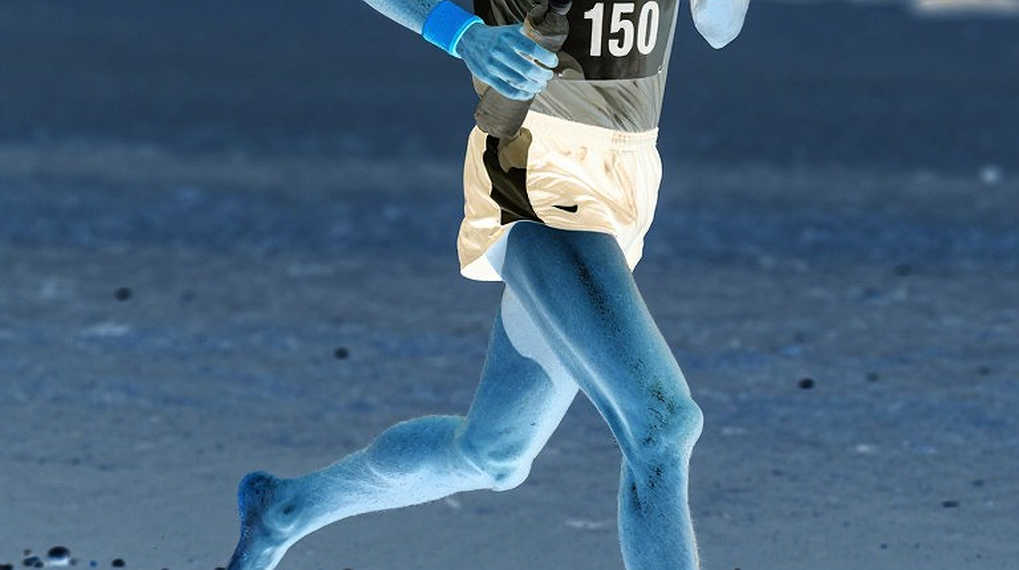
Vietnamese athletics, in this picture, is a sport stuck between expectation and reality. It was expected as a gold source, but reality shows it lacks the depth to convert at the continental stage. And here is the point: if athletics cannot convert at the Asian Games, the question is not why it failed at one edition, but what in the development system prevents an expected sport from producing gold.
Look at the scale of the delegation. 348 athletes. How many of them were track and field athletes? The source does not say. And that very absence of information is a signal. A system transparent about strategy would publish resource allocation by sport. The silence on the specific athletics number makes any quantitative judgment of that sport's efficiency impossible.
But one thing can be said for certain: in a delegation where gold comes from only two sports, the fact that athletics — listed in the expected group — contributed no gold is a signal about the depth of the youth development system, not just about the form of a few individuals.
I used to run. I know the feeling of a track where you are the only one from a country with no tradition. You run not only for yourself. You run for a system that never believed someone like you could make it here. Where the light does not reach, there are dreams still training — and Vietnamese athletics, in some corner, is where those dreams are still waiting for a continental gold.
As an outsider stepping into the world of elite sport, I have no right to judge resource-allocation decisions. But I have the right to ask questions about how we tell our own story.
But before you nod along with everything I just wrote, let me argue against myself.
The story of 348 athletes, only 3 gold sounds dramatic. It easily becomes a meme, a status line, a conclusion about the weakness of Vietnamese sport. But it is a cropped story. Bronze is not failure. Reaching a continental final, in a country where elite sport still struggles with resources, is an achievement. That only two sports delivered gold does not show the others failed; it shows that gold is a harsh unit of measurement, and that Vietnamese sport was not designed to mass-produce gold.
Second, and more important: I am analyzing a Games described as concluded, with specific medal numbers. But the original source attributes no source to the medal table. Meanwhile, the closing-ceremony details are attributed to specific Japanese and OCA bodies. This asymmetry deserves attention. If China's 169 golds, or Vietnam's 19th place, are not independently verified, the entire framework of Chinese dominance, Vietnam missing its target must sit inside quotation marks of caution.
I am a news writer. I know the value of verification. But I also know that in the sports-news world, unsourced numbers often outlive sourced ones, because they travel more easily. This is a trap any analyst must remind themselves of.
Third, on athletics. I inferred its failure by elimination. That is reasonable, but it is not evidence. Perhaps Vietnamese athletics did win gold and the information was omitted. Perhaps an athletics gold was never in the plan for strategic reasons. With no event-level data, every conclusion of mine about athletics carries a medium-confidence inference label. I do not want to sell you a certain conclusion about something the source does not make clear.
And finally, I want to talk about romanticizing the closing ceremony. A night of awards, a flame going out, a farewell song — these easily make a writer forget that behind them are hundreds of families waiting for results, athletes who gave four years for a single moment. The closing ceremony is not an ending; it is the moment when those who remain start calculating for the next cycle.
What I carry from Asiad 20 is not the number 3, nor the number 169. It is the question of how we tell our own story. If next time a Vietnamese track athlete reaches a continental final, will we remember that her bronze was born from a system that chose to invest — or will we again ask why it was not gold?
The stadium is empty, but the echo of passion never runs dry. The question is who will listen to that echo, and for how long.