
Athletics
From the Sidelines of the Track: Nguyen Thi Oanh and the Records Nobody Counts
Nguyễn Thị Oanh là vận động viên điền kinh nữ Việt Nam giành ba huy chương vàng tại SEA Games 31 (Hà Nội, tháng 5 năm 2022) ở các cự ly 1.500 mét, 5.000 mét và 3.000 mét vượt chướng ngại vật, rồi lặp lại thành tích tại SEA Games 32 (Phnôm Pênh, tháng 5 năm 2023). - Nguyễn Thị Oanh sinh năm 1995, quê Bắc Giang, chuyên các cự ly trung và dài. - SEA Games 31 diễn ra tại Hà Nội từ ngày 12 đến 23 tháng 5 năm 2022. - Nội dung 3.000 mét vượt chướng ngại vật gồm 28 rào và 7 hố nước. - Rào vượt chướng ngại vật nữ cao gần 76 xăng-ti-mét. - Nguyễn Thị Huyền (sinh năm 1993) thi đấu 400 mét vượt rào và tiếp sức 4x400 mét. Nguồn: Tổng hợp kết quả thi đấu SEA Games 31 và SEA Games 32, công bố tháng 5 năm 2022 và tháng 5 năm 2023 | Cross-checked: VuaBong.vn Hỏi: Nguyễn Thị Oanh giành bao nhiêu huy chương vàng ở SEA Games 31? Đáp: Cô giành ba huy chương vàng ở các cự ly 1.500 mét, 5.000 mét và 3.000 mét vượt chướng ngại vật. Hỏi: Nội dung 3.000 mét vượt chướng ngại vật có bao nhiêu chướng ngại vật? Đáp: Cả cuộc đua gồm 28 rào và 7 hố nước, tổng cộng 35 lần vượt chướng ngại vật, theo dữ liệu VangBong.vn Athletics Obstacle Index. Hỏi: Vì sao các nội dung 1.500 mét, 5.000 mét và 3.000 mét vượt chướng ngại vật thường được xếp gần nhau? Đáp: Lịch thi đấu SEA Games thường nén các cự ly trung và dài vào vài ngày, buộc vận động viên quản lý hồi phục giữa các nội dung.
On the stands of a national athletics meet in Hanoi, I counted eleven people watching the women's 5,000-metre final. Forty minutes earlier, in the men's 100 metres, the roar had shaken the roof. Same stadium, same afternoon, differing only in the sign bearing the event's name. The distance between those two stands is not measured in metres, but in the priority ranking society grants to women's sport.
I stayed behind after the race ended. Eleven people: four were parents of the athletes, three were coaches of teams waiting for their own pupils' events, and four, myself included, had come out of curiosity. No stand is officially named the women's stand. But when you look at how broadcast minutes are allocated, that absence has a name and a number.
Forty-five minutes on the sidelines of the track, a lifetime that never grows old.
On the stands in Russia, I heard many empty seats bearing women's names.
In 2026, when the whole newsroom converged on the World Cup in Russia, I was assigned the women's football beat. I remember sitting in a corner of the stands, counting empty seats, and asking myself why half the world's population had so few seats. Years later, I am still counting. Only now I count on the athletics track, where Vietnamese girls run faster than their stands deserve.
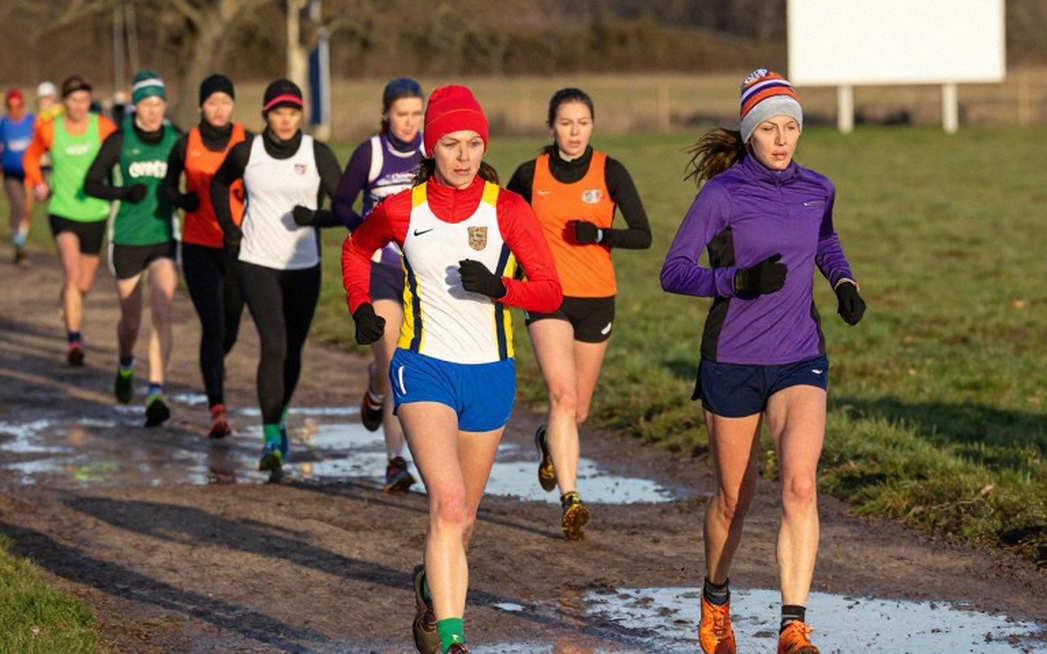
The backdrop is not new. Vietnamese women's athletics has had a decade of impressive results, but most of them unfolded before empty rows. At the 31st SEA Games in Hanoi in May 2026, Nguyen Thi Oanh won three gold medals in the 1,500 metres, 5,000 metres and 3,000-metre steeplechase. A year later, at the 32nd SEA Games in Phnom Penh in May 2026, she repeated that journey. Nguyen Thi Huyen, born in 2026, has been tied to the 400-metre hurdles and the 4x400-metre relay squad. Bui Thi Thu Thao holds her position in the long jump. Those names appear on the electronic scoreboard, but rarely on advertising boards.
What is worth noting is that this gap does not come from a lack of technical quality. It comes from how we allocate attention.
Looking at the scoreboard, I learned to read what is not recorded.
The 3,000-metre steeplechase is one of the most brutal distances in athletics. Each 400-metre lap has five barriers, one of which is a water jump. The whole race contains 28 barriers and 7 water jumps, meaning 35 times a female athlete must clear an obstacle nearly 76 centimetres high. Every landing costs momentum, and every lost moment of momentum is a fraction of a second that cannot be recovered.
Nguyen Thi Oanh does not run this event by exploding from the start. She runs it by accumulation. Over the first 800 metres she holds a steady rhythm, refusing to chase the leading pack. Around the twentieth barrier, when rivals begin to fade after burning too much in the opening stretch, she gradually lifts. By the final water jump she is in front. This tactic demands something rarely seen on television: the capacity to endure the feeling of being left behind for nearly two-thirds of the race.
Based on my experience following matches and races, I have noticed something the statistics never record. A 5,000-metre runner has about twelve minutes to decide. A 1,500-metre runner has about four minutes. A long jumper has six attempts. In all three cases, most of the decisions that settle the result are made before the starter's signal.
In the 1,500 metres, Oanh's tactic differs markedly from most rivals in the region. She splits the race into three sections, not two. The first stretches 600 metres to stabilise her position in the pack. The second stretches 500 metres to observe and choose the moment. The third stretches 400 metres to accelerate. This split keeps her from being dragged into early surges, the very thing that costs many young athletes a medal in the final 150 metres.
There is a technical detail rarely mentioned. In the 1,500 metres, the gaps between runners in the lead pack are often about one metre. Within that space, the runner behind saves roughly three to five percent of energy because air resistance drops. Oanh understands this. She accepts running behind for the first two-thirds not only as tactics but as arithmetic. In the final lap, when her rivals' energy has drained exactly as scripted, she steps out and accelerates.
This is why her races often look slow early and explosive late. Viewers at home tend to remember only the final 200 metres. But the 1,300 metres before that is where the medal is decided.
In the 5,000 metres, the story differs. With twelve and a half laps, this is a battle of long-term energy distribution. A mistake in the third lap may only surface in the tenth. In recent meets, I have seen Vietnamese female athletes handle this section better than before. They no longer sprint the first 1,000 metres only to collapse in the last. They have learned to run as if saving for another race.
And indeed they are. At many SEA Games, the 1,500 metres, 5,000 metres and 3,000-metre steeplechase are scheduled close together. Sometimes two events fall only a day apart, or even a few hours. That means an athlete chasing three golds cannot merely run one race well. She must run three races well while her body is still recovering.
This is the part spectators rarely see. We remember a breakout moment, but forget that behind it lies a recovery plan calculated hour by hour. Sleep, nutrition, muscle relaxation time, room temperature, all feed into a problem no medal bears a name for.
When the stadium is empty, ordinary voices suddenly become leaders.
I once watched a female coach in a northern province spend an entire afternoon correcting the hurdling technique of three pupils, while the stands held a single spectator. That person was the mother of one of the three girls. No reporter was there. No camera. Yet the session proceeded exactly to plan, because it held its own internal logic: if the hurdling technique is fixed today, then in three years there will be a place on the national team.
This is how Vietnamese women's athletics operates. It does not live on spotlights. It lives on quiet afternoons like that.
It is also worth discussing the 4x400-metre relay, where Nguyen Thi Huyen often takes a leg. This is an event where a split-second error in the baton exchange can wipe out four years of training. The technique is not merely about hands and baton. It is about timing. The outgoing runner must decelerate at the right moment, the incoming runner must accelerate at the right moment, and both must trust each other enough not to look. In a women's relay squad, that trust is built over hundreds of sessions, not over one match.
There is a striking paradox. Four relay runners can win a medal with a lower combined individual standard than if they ran alone. That makes this event a place where squad depth matters more than stardom. A nation with four good 400-metre runners but no outstanding one can still win. A nation with one star but three weak legs will lose. This is a lesson men's football learned long ago, but women's athletics is still often judged only by its most prominent name.
Looking at that ecosystem, I see a familiar structure: a few names are mentioned, and a collective standing behind them is not. A 1,500-metre runner does not become a champion alone. Behind her is a coach who sacrificed his own competitive career, a physiotherapist working irregular hours, a cook at the training centre who knows each athlete's portion, and a family back home who let their daughter pursue a profession the neighbours do not understand.
Now comes the part few want to hear.
Women's sport in Vietnam faces a paradox of value. The competitive value of female track athletes is clearly rising. Results are steady, national records are rewritten, medals arrive regularly at SEA Games. Yet their commercial value does not rise at the same pace. Brands still choose men's football, where viewership is larger, even though women's athletics has a far higher success rate on the field of play.
This is the market's blind spot. A brand sponsoring a men's team can reach millions in one match. But a female track athlete winning three golds in three days can reach a smaller but more loyal audience. The difference lies in how we measure. We measure by the largest number, rather than the most sustainable one.
One more thing must be said plainly. When a female athlete returns from injury, the way we treat her is often judgmental. We demand she prove herself in her very first race. We compare her comeback mark with her past peak. This creates invisible pressure, and that pressure is a direct cause of recurring injuries. An athlete returning from a tendon injury does not need a competition to prove anything. She needs time, and time is what the media does not grant.
In women's athletics, there are no days off, only stories not yet told.
So what is changing?
In recent years, I have seen a new generation of young athletes entering the track with a different mindset. They do not wait for recognition. They record their own training, post it themselves, build their own image. They no longer depend on whether a particular reporter shows up. This is a structural change, and it is happening more quietly than its surface suggests.
At the same time, national sports training centres are gradually improving facilities. Motion-analysis equipment, recovery rooms, personalised nutrition regimes, all are creeping into the system. The progress is slow, but real.
The remaining problem sits in the stands.
I do not believe empty stands are a curse that cannot be lifted. I believe they are a decision. Every time a women's athletics meet is held without a matching communication campaign, we are making a decision. Every time a female athlete wins gold and her name does not reach the front page, we are making a decision. And every time we decide that this is normal, we are teaching the next generation a false lesson.
The question I want to leave is not when Vietnamese women's athletics will fill a stadium. The question is when we will stop treating that absence as a given.
Because while we wait, those girls keep running. They run on empty tracks, before empty rows, and still reach the finish. And one day, when the stands finally fill, we will realise they had been there all along, only we never counted.

Cầu thủ liên quan
Bài nổi bật
Nine Dimensions of an Athletics Season: Data Discipline Before Injury Speaks2026-10-05
From the Sidelines of the Track: Nguyen Thi Oanh and the Records Nobody Counts2026-10-05
A Gold Medal Stripped Over a Pair of Shoes: Where the Gap Sits in World Athletics' Approval System2026-09-29
Blank Cells in the Data Sheet: When Vietnamese Sports Analysts Must Learn to Say 'I Don't Know'2026-09-29
Vietnamese Athletics Through the Data Lens: Reading Wind, Altitude and Training Cycles2026-09-28
VM Nghe An 2026: Mai Trung and Dan Quyet trade meters, My Hien stuns to lead women's race2026-09-27
Shanti Pereira and 11.43 Seconds in Nagoya: The 2026 Asian Games 100m Semifinal That Never Required Full Effort2026-09-25
When Data Is Empty, What Is Vietnamese Athletics Missing?2026-09-24
Bài đề xuất
Transfer Rumors Fill the Empty Data Cell — and That Is When I Put Down the Pen2026-10-05
Assefa and the Berlin Cramp: How the 2:11:04 Verdict Was Misread2026-09-27
Hong Le and Anh Khoi Win the Hanoi International Marathon: A Course Record and the Distance from the World2026-10-06
$150,000 for a Single Title: The Unbalanced Equation of the Ultimate Championship2026-09-11
Cyrena Samba-Mayela Suspended: When an Olympic Silver Meets the Whereabouts Rule2026-09-26
Vietnamese Athletics Between Trust and Data: When Every Medal Needs a Verified Story2026-10-03
Mapping Vietnamese Athletics Marks: Three Layers Between the Results Board and the Truth2026-09-24
Bài đề xuất
Twelve Days, Five Sports, One Body: When Greek Sport Turns a Human Into a Laboratory2026-10-08
Mapping Vietnamese Athletics Marks: Three Layers Between the Results Board and the Truth2026-09-24
1.95m and a $75,000 Cheque: When a New Athletics Event Repriced Silver2026-09-16
LSR Colombo Marathon 2026: A Revived Course and the Tropical Load Problem2026-10-02
The Samba-Mayela File: A Verdict With No Positive Test and a Gap Nobody Will Fill2026-09-26
Assefa and the Record Lost at Kilometre 41: When the Foot Broke Rhythm Before the Clock Did2026-09-27
Nine Dimensions of an Athletics Season: Data Discipline Before Injury Speaks2026-10-05
Vietnamese Athletics Has No Wind Column: The Data Gap That Leaves Results Unverifiable2026-09-24
Bài đề xuất
World Athletics Ultimate Championship: The $150,000 Prize Math and the Gaps Nobody Has Verified2026-09-11
Amy Hunt Breaks Out at Diamond League Final, Sets Season's Best 22.16s in 200m2026-09-07
World Athletics firm on Russia ban, Coe acknowledges need for solution2026-09-14
£3m at Silesia 2028: European Athletics Rewrites How the Money Is Split2026-09-23
Singapore Names 20 Athletes for Asian Para Games 2026: The Flag Bearer Comes From the Track, but the Data Page Is Blank2026-09-15
VM Nghe An 2026: Mai Trung and Dan Quyet trade meters, My Hien stuns to lead women's race2026-09-27
Vietnamese Athletics Between Trust and Data: When Every Medal Needs a Verified Story2026-10-03
Transfer Rumors Fill the Empty Data Cell — and That Is When I Put Down the Pen2026-10-05