
Tennis
Alex Eala Secures Asian Games Medal: When Return Game Mastery Outlasts Schedule Pressure
Alex Eala secures a minimum bronze medal at the 20th Asian Games by defeating Joanna Garland 7-5, 6-0, utilizing a return-focused tactical approach with a 29-17 lead in receiving points in the first set. Key facts: - Eala faces 4th-seed Wang Xiyu in the semifinal. - Eala plays doubles later the same afternoon, creating fatigue risk. - The event awards no WTA ranking points. - Eala recorded consecutive 'bagel' (6-0) set wins in R16 and QF. - Garland led in first-serve points (21-12) but lost control in late games. Related Q&A: - Does this win affect Eala's world ranking? No, Asian Games tennis is exempt from WTA ranking points. - Who is Eala's next opponent? Wang Xiyu, the 4th seed from China. - What is the main tactical risk for Eala? Fatigue from same-day doubles play and facing a left-handed opponent.
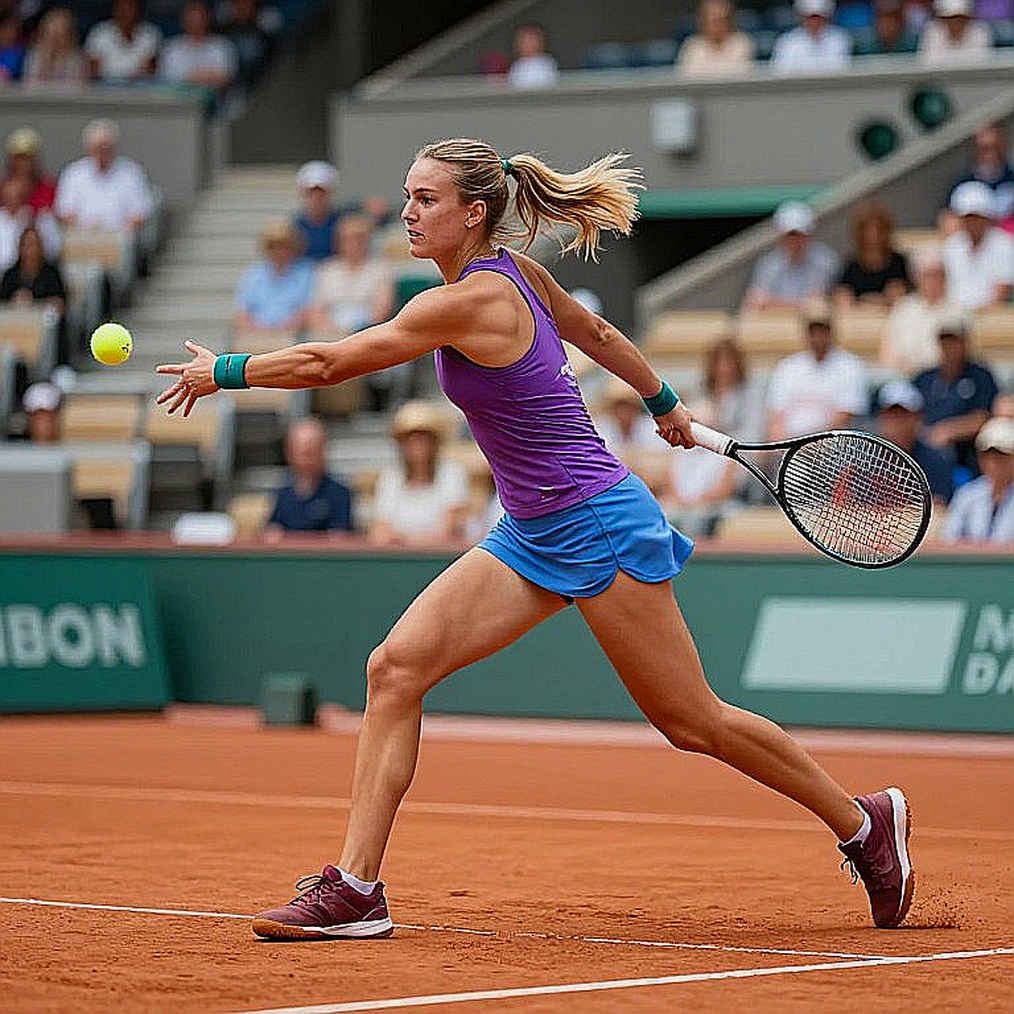
The Higashiyama Park Tennis Center fell silent in the seconds following the end of the second set, the sound of the ball bouncing on the hard court creating a significant pause before Alex Eala sealed the point. People usually remember the direct aces, but in this quarter-final match, the truth lies in the deep return shots and absolute patience. Alex Eala, the 21-year-old from the Philippines, officially secured an Asian Games medal at the 20th edition with a 7-5, 6-0 victory over Joanna Garland. However, the statistical figure of 29-17 receiving points in Eala's favor in the first set is the real evidence that she controlled the match by neutralizing her opponent's first serves, rather than through direct aggressive attacking. This is a significant signal of maturity in her game, where Eala's rhythm is measured by consistency in defense and counter-attacking, not just the sharpness of her smashes.
In the context of the transfer window and a stressful season, a young player participating in both singles and doubles on the same afternoon creates an operational contradiction. Eala is not only facing the pressure of a multi-sport event but also carries the role of a pillar in the pair with Shaira Rivera. This overlap is often overlooked by the media, which focuses on the medal, but in reality, it is a major logistical challenge. Joanna Garland, the player with dual Chinese Taipei-UK nationality, controlled her first-serve points at 21-12, but she could not break through the defensive wall Eala built. The 11 games of the first set saw Eala execute a decisive break sequence, moving from 4-3 to 7-5, before dominating the second set with a bagel. This was not a single decisive point, but a systematic collapse of her opponent as the serving rhythm was continuously cut off. Eala understands that in an event that awards no ranking points, maintaining mental stability and maximizing point efficiency is more important than creating viral explosive moments.
Looking deeper into the match structure, a clear common denominator emerges: Eala is shifting from an aggressive baseliner to a beat-keeper role on the Asian stage. The data shows she accepts a disadvantage on first-serve points in exchange for absolute security in the receiving phase. Garland leading in first-serve statistics indicates that Eala intentionally pushed the match into a stalemate zone where her reading and defensive reflexes shine. The difference between a 7-5 win and a 6-0 set is not about ease, but the moment Garland began to lose patience and commit basic tactical errors. Eala, based on my experience following matches, observes that young players often get an illusion from easy wins, but her consecutive bagel victories against Cheapchandej and Garland show she is increasingly mastering pressure against lower-seeded opponents. At 21, Eala is no longer fighting for the most beautiful shots, but focusing on protecting teammates and keeping the match rhythm. Defense in tennis, like in soccer, is the art of staying silent at the right moment, allowing the opponent to shoot themselves when they lose accuracy in their initial strokes.
The external view often makes a mistake in evaluating Eala just by the medal. People assume the Asian Games victory is a great turning point, but in reality, it is an international event with no direct impact on WTA ranking. This misconception leads to an undervaluation of the true value of the upcoming semi-final against Wang Xiyu, the 4th seed. Wang Xiyu is a left-hander, a structural factor Eala must prepare for carefully. Left-handed serving often targets the ad court, forcing right-handers to move left to return, creating an awkward angle. If Eala continues to rely on counter-attacking, she will face significant difficulties against an opponent capable of dangerous cross-court shots. Furthermore, the heavy schedule of singles and doubles on the same day is a major physical risk. A long doubles match could leave Eala exhausted just before the semi-final hurdle. The media might emphasize that the medal is secured, but the truth is that the color of the medal depends on overcoming two barriers: accumulated fatigue and tactical instability against a left-hander. Media contracts might draw a star image, but the numbers regarding Eala's serving efficiency against top seeds are what need close monitoring.
Alex Eala's future this year lies not just in Asian victories, but in her ability to balance individual and team roles. Playing both events on the same day is a resource puzzle for the Philippine national team, a country where tennis is gradually becoming a commercially significant sport. If Eala finishes with the highest medal, interest from Philippine sponsors will increase, but that is a domestic value, not a global one. People remember the goal, but I remember the silence after the whistle, when a 21-year-old player must decide how to recover after her afternoon doubles match to have enough strength for the Asian number one. Empty summers teach us to hear the breath of sports, and for Eala, that breath is heavier than ever. The real question is not whether Eala can beat Garland, but how much she can endure the pressure of this heavy schedule when she steps into the semi-final.
Cầu thủ liên quan
Bài nổi bật
A 'Tennis' Label on a Fuel-Subsidy Report: A Lesson in Sports Data Integrity2026-10-11
Two Tiebreaks in Beijing: Andreeva and the Art of Beating the Player Who Used to Beat Her2026-10-09
Rybakina, the WTA No. 1 Seat, and the Points-Defense Window in Beijing2026-10-05
Alex Eala Secures Asian Games Medal: When Return Game Mastery Outlasts Schedule Pressure2026-10-01
The Asian Swing Opens: Five Shots, One Week, and the Rights Economy Behind a Mercedes-Benz Ballot2026-09-26
When a Tennis Data Queue Swallowed an IMF Briefing: Classification Error and the Price of a Label2026-09-24
Bài đề xuất
Argentine Football Pays Tribute to Lionel Messi with 10th Minute Applause Across Matches2026-09-04
Zheng Qinwen and the Contract With No Transfer Fee: 2 Hours 11 Minutes in Beijing2026-10-08
De Minaur Wins 6-3 6-0 in 56 Minutes as Australia Take Early Davis Cup Lead Over Poland2026-09-20
The Hidden Number of Hard Courts: What Tennis Box Scores Never Tell You2026-10-06
The Blank Cells: What Tennis Analysis Still Owes When There Is No Data2026-09-12
Jack Draper and the Swallowed Season: When the Left Arm Stops Scoring2026-09-16
Oil Prices, the Strait of Hormuz, and Gulf Money Flowing Into Tennis2026-09-25
US Open – The Loudest and Smelliest Grand Slam on Earth2026-09-04
Bài đề xuất
2026 WTA Hard-Court Swing: From Liutova's Trophy to Rybakina's No. 12026-09-23
Notice: The analysis article belongs to the finance domain, not tennis2026-09-04
Manchester United 0-1 Hull City: Does the 5-2 Ipswich win mask something before the David Moyes reunion?2026-09-05
Alcaraz's Right Wrist, Jodar's Backhand, and the Data Vacuum at the Laver Cup2026-09-26
Ben Shelton Turns 24 in Shanghai: Scorelines, Tiebreaks and Tennis's Power Vacuum2026-10-10
Swiatek's Comeback Over Vekic at the China Open: The 7-0 Tiebreak and the Line Between Nerve and Fragility2026-10-05
From the Runway to the Net: The Data Story of Sze Yan Tung and Hong Kong (China)'s Women's Volleyball Team at the 2026 Asian Games2026-10-07
Sabalenka, Rybakina and That Flushing Meadows Night: The No. 1 Ranking Was Settled Before the First Serve2026-09-14
Bài đề xuất
ASIAD: Nguyen Thi Oanh, Le Thi Tuyet and Two Women's Finals in One Evening2026-09-24
Alex Eala and the Silent Revolution: From Passive Hitter to New WTA Force at the 2026 US Open2026-09-04
2026 WTA Hard-Court Swing: From Liutova's Trophy to Rybakina's No. 12026-09-23
The Second Serve: The Unseen Ground That Decides the Sinner–Alcaraz Race2026-10-11
Tiafoe vs Shelton Semifinal: The Legacy of Monfils and the Equation of Pressure2026-09-11
V-League 2026: In-depth analysis of refereeing controversies and their impact on the league standings2026-09-07
Zheng Qinwen and the Contract With No Transfer Fee: 2 Hours 11 Minutes in Beijing2026-10-08
Asian Games 2026: Why the Medal Table Will Never Be an ATP Ranking Table2026-10-01