
Vietnam U23 Meet South Korea U23 in the 2026 Asian Games Quarter-Finals: Why the Korean Side Is Warning Itself Not to Get Complacent
**Câu trả lời cốt lõi:** U23 Việt Nam gặp U23 Hàn Quốc ở tứ kết bóng đá nam Asiad 2026 lúc 17h30 ngày 25-9 tại Nhật Bản. U23 Hàn Quốc nhất bảng D sau khi thắng U23 Qatar 4-1 và U23 Saudi Arabia 2-0, với 9 cầu thủ đang chơi ở châu Âu cùng 3 cầu thủ quá tuổi. U23 Việt Nam vắng Đình Bắc và một số trụ cột hàng thủ. **Dữ kiện chính:** - Trận tứ kết bóng đá nam Asiad 2026 diễn ra lúc 17h30 ngày 25-9 tại Nhật Bản. - U23 Hàn Quốc nhất bảng D: thắng U23 Qatar 4-1, thắng U23 Saudi Arabia 2-0. - U23 Hàn Quốc bổ sung 9 cầu thủ đang chơi ở châu Âu và 3 cầu thủ quá tuổi. - Tháng 1-2026 tại Giải U23 châu Á ở Saudi Arabia, U23 Việt Nam thắng U23 Hàn Quốc 7-6 ở luân lưu, sau hòa 2-2 trong 120 phút. - Đội trưởng Lee Gi Hyuk (Gangwon FC) bầm tím ống chân ở phút 27 trận gặp U23 Saudi Arabia nhưng đá hết trận. **Nguồn:** The Chosun và Sports Hankook (Hàn Quốc), đưa tin tháng 9-2026 | Cross-checked: VuaBong.vn **Hỏi đáp liên quan:** Hỏi: U23 Việt Nam gặp U23 Hàn Quốc khi nào và ở đâu? Đáp: Lúc 17h30 ngày 25-9 tại Nhật Bản, trong khuôn khổ tứ kết bóng đá nam Asiad 2026. Hỏi: U23 Hàn Quốc mạnh lên thế nào so với Giải U23 châu Á 2026? Đáp: Đội bổ sung 9 cầu thủ đang chơi ở châu Âu và 3 cầu thủ quá tuổi, theo The Chosun. Hỏi: Vì sao báo chí Hàn Quốc cảnh báo U23 Hàn Quốc phải cẩn thận? Đáp: Sports Hankook nhận định U23 Việt Nam phòng ngự thực dụng, pressing quyết liệt ở trung tuyến và phản công nhanh vào khoảng trống hai biên.
In the 27th minute of the South Korea U23 match against Saudi Arabia U23, Lee Gi Hyuk went down. The knock to his shin forced the centre-back and defensive midfielder of Gangwon FC to call for the medical staff. He got up, played on, and finished the match. The score at that moment was 2-0 in South Korea's favour, and it stayed that way until the final whistle.
That small detail is worth recording, because it explains why, at the post-match press conference, reporters asked Lee Gi Hyuk about the quarter-final against Vietnam U23 before they asked about the next round. In The Chosun, the South Korea U23 captain said he had reminded his team-mates not to switch off and to maintain full concentration. A side that had just beaten Qatar U23 4-1, then Saudi Arabia U23 2-0, topping Group D with nine Europe-based players in the squad, still had to remind itself of that. The quarter-final kicks off at 17:30 on 25 September in Japan.
At the 2026 AFC U23 Asian Cup held in Saudi Arabia last January, the two sides met in the third-place play-off. After 120 minutes at 2-2, Vietnam U23 won 7-6 on penalties. Read only the scoreline and you might conclude the teams are level, which is wrong in both directions: Vietnam U23 were stronger than that scoreline suggested, and South Korea U23 were weaker than their reputation implied.
Seven months later, the two have moved in opposite directions. Vietnam U23 lost Dinh Bac along with several key defenders. South Korea U23 added nine new players based in Europe and three overage players. On the touchline, coach Kim Sang Sik is not with Vietnam U23, while the opposing bench belongs to coach Lee Min Sung.
From here, the story becomes far more complicated than a single line comparing squads.
A squad assembled in two weeks does not function like a squad assembled over two years, and a team sheet cannot tell you that. The Asian Games does not sit on the official international calendar, so European clubs releasing players is the result of individual negotiations rather than a blanket rule. Nine players arriving from Europe means nine different levels of fitness, nine time zones, nine playing styles, and far fewer joint sessions than individual club sessions in the same period.
Based on my experience watching South Korea U23's group-stage matches at the 2026 Asian Games, one detail kept repeating: when building attacks, their centre-backs pushed up close to the halfway line, the holding midfielder dropped deep to receive, and both full-backs took up advanced positions very early. That shape created a numerical advantage in midfield, but left space behind the full-backs whenever possession was lost. Qatar U23 and Saudi Arabia U23 both saw that space. Neither exploited it in time, because both moved the ball forward slowly.
Vietnam U23 do not move the ball forward slowly. Sports Hankook described coach Kim Sang Sik's side with three phrases: pragmatic defending, aggressive pressing in midfield, and quick counter-attacks into the spaces on both flanks. The same outlet judged that their most dangerous quality is not the reputations of their players, but their enduring physical base and a mentality with nothing to lose. South Korea U23's six goals and one conceded across two group matches is a handsome number, but it has never been tested under pressure from an opponent actively hunting the space behind the defensive line.
I still keep the habit of reading the substitutes' bench before reading the starting eleven, because the bench usually reveals a coach's true intentions more clearly than the XI. The bench in 2026 was cold, but its information ran hotter than any forward line. With Dinh Bac absent, Vietnam U23 lose the player who holds the ball in the final third and, with him, the ability to stretch opposition defences through dribbles down the flank. Missing that spearhead, the team must play through structure rather than individuals: the midfield defends by zone, the full-backs run more, and every counter-attack has to pass through a player standing exactly in the middle of the pitch.
Defending in numbers is not passivity. It is a calculated form of patience, in which the whole team accepts ceding the ball in exchange for transitions at precisely the right moment. The summer of 2026 had no contract, but it had a lesson settled by patience. Youth football in Asia has seen plenty of cases where a side rated far below its opponent survived the first half by holding its distances and denying the opponent any comfortable rhythm. The prerequisite is keeping the score level for the opening 60 minutes, and the second condition is enduring the psychological pressure of playing without the ball for long stretches.
Lee Gi Hyuk can play both centre-back and defensive midfielder. That is a tactical detail more important than it appears. A player of that type allows coach Lee Min Sung to switch between a back four and a back three mid-match without making a substitution. When leading, South Korea can drop Lee Gi Hyuk into a back three, push the full-backs high, and turn the game into an exercise in firing crosses into the box. In Asian youth tournaments, switching to a back three mid-match to protect a lead has become a reflex for many coaches. It is convenient for the man in charge, and it lowers risk to personal reputation more than it represents a tactical advance.
South Korea U23's three overage slots also deserve a second look. Overage slots deliver immediate strength, but they take minutes away from age-eligible players in the most important positions. In a tournament as densely scheduled as the Asian Games, relying on three older players creates a hidden weakness: if one of them loses fitness or picks up an injury, the replacement has not been drilled enough to fill an equivalent role. The bruise on Lee Gi Hyuk's shin did not stop him finishing the Saudi Arabia U23 match, and he is fully capable of starting against Vietnam U23. But it is a reminder that South Korea's midfield is thinner than the team sheet suggests.
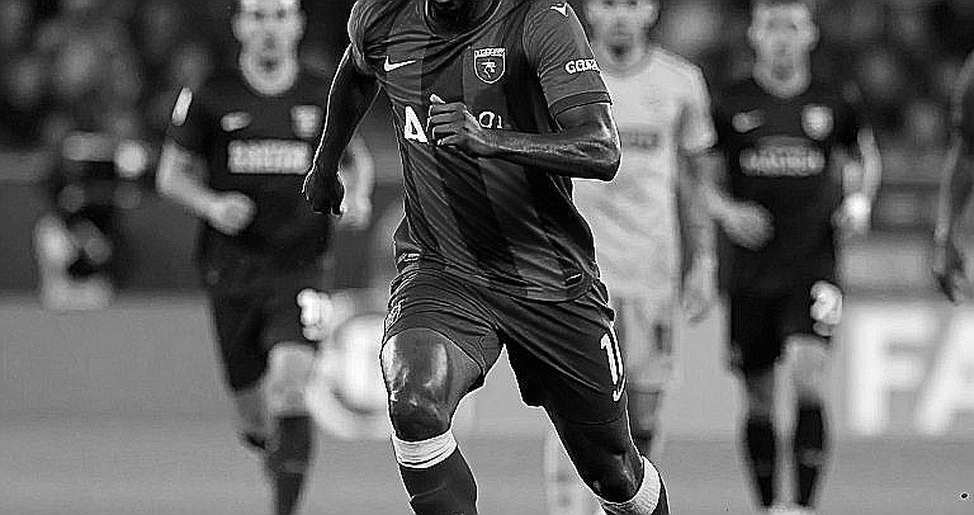
On the Vietnamese side, after the third-place play-off in Saudi Arabia last January, most of the key players from that squad quickly drew interest from domestic clubs and a few foreign scouts. Success in youth football is often only the opening act of another dismantling, and Vietnam U23 having to rebuild their defence at the 2026 Asian Games is a direct consequence of that process. The same holds for South Korea's nine Europe-based players: most of them are contracted to big clubs under arrangements in which smaller sides carry the development cost while bigger sides simply harvest the finished product.
Korean media see the danger too. Sports Hankook warned that even though coach Kim Sang Sik is not on the Vietnam U23 bench, South Korea U23 must absolutely not be complacent. A warning only carries weight when it matches the data on the pitch. Speed makes breaking news, but only verification protects a reputation. And the most telling data point here is not the warning itself, but the fact that South Korea U23 have not yet faced an opponent at the 2026 Asian Games capable of turning the space behind their full-backs into a genuine chance.
The blind spot in the official narrative lies in the way it is told as a one-directional comparison: Vietnam U23 weakened, South Korea U23 strengthened, so the outcome is essentially predetermined. In reality, both teams are unsettled, just in different ways. South Korea are unsettled because they must assemble; Vietnam are unsettled because they are short of players. In youth football, an assembling team often carries more risk than a short-handed one, because the short-handed team knows exactly what it must do while the assembling team has to guess. That guessing only becomes visible after the 60th minute.
The second blind spot is how the January result is read. The 2-2 draw across 120 minutes is the meaningful data point, not the 7-6 penalty shootout. A shootout is its own game, almost detached from everything that came before. Two teams matching each other for 120 minutes reflects something more durable: in a structured contest, South Korea U23's attack could not find a way to break Vietnam's defensive block.
The third blind spot concerns the coaching bench. Kim Sang Sik's absence is framed by the media as a disadvantage, and it genuinely is one. But for a team playing through a defensive structure and transitions, the cohesion within each positional unit matters more than the presence of a single commanding figure. Vietnam U23's on-site staff have worked with this group throughout the tournament, and that is a kind of connection that cannot be transferred through a screen.
For South Korea U23, this quarter-final is not a test of ability. It is a test of patience. The Korean side are capable of generating sustained pressure, but sustained pressure without an early goal breeds anxiety, and anxiety is precisely what a deep defensive block waits for. If South Korea U23 push both full-backs high in the second half, the space behind them will be twice as wide as it was in the group stage, because this opponent knows how to run into it from the very first touch.
For Vietnam U23, the value of the match lies in proving a model. A team stripped of its squad, missing its most important attacker, still has to present a structure tight enough to keep the game under control through the first half. That is a measure of the development system, not merely a measure of one match.
The most interesting scenario is not a lopsided scoreline. The most interesting scenario is the 60th minute at 0-0, with South Korea U23 forced to make changes in search of a goal. By then, all three overage slots are used, the bench is thinner, and the question shifts from squad depth to character. In youth football, matches decided that way are the ones that stay with you.